Introduction
For HR Tech and benefits platforms, a poor iPaaS choice compounds fast: implementation delays stretch into months, custom mappings break with each API update, and data inconsistencies erode customer trust before your product even gets a fair evaluation.
The right iPaaS compresses customer onboarding from weeks to hours, eliminates manual data reconciliation, and frees engineering teams to focus on core product development.
The cost of getting this wrong is concrete. Organizations spend 30–50% of their total integration budget on ongoing maintenance alone — API version updates, error resolution, and security patches.
The iPaaS decision shapes time-to-value, integration maintenance costs, data accuracy, and your capacity to scale customer connections. For benefits and HR Tech teams, few infrastructure choices carry more direct business impact.
TL;DR
- iPaaS connects applications, automates workflows, and eliminates point-to-point integrations through a cloud-based platform
- Choosing the best iPaaS depends on connector depth, data normalization, deployment speed, compliance certifications, and TCO—not brand recognition
- General-purpose platforms cover broad use cases, but domain-specific unified APIs deliver pre-normalized, benefits-ready data models out of the box
- Zero-maintenance integrations and automatic syncs should be non-negotiable at scale
- Test vendors against real data workflows—connector breadth and sync reliability matter more than feature lists
What is iPaaS?
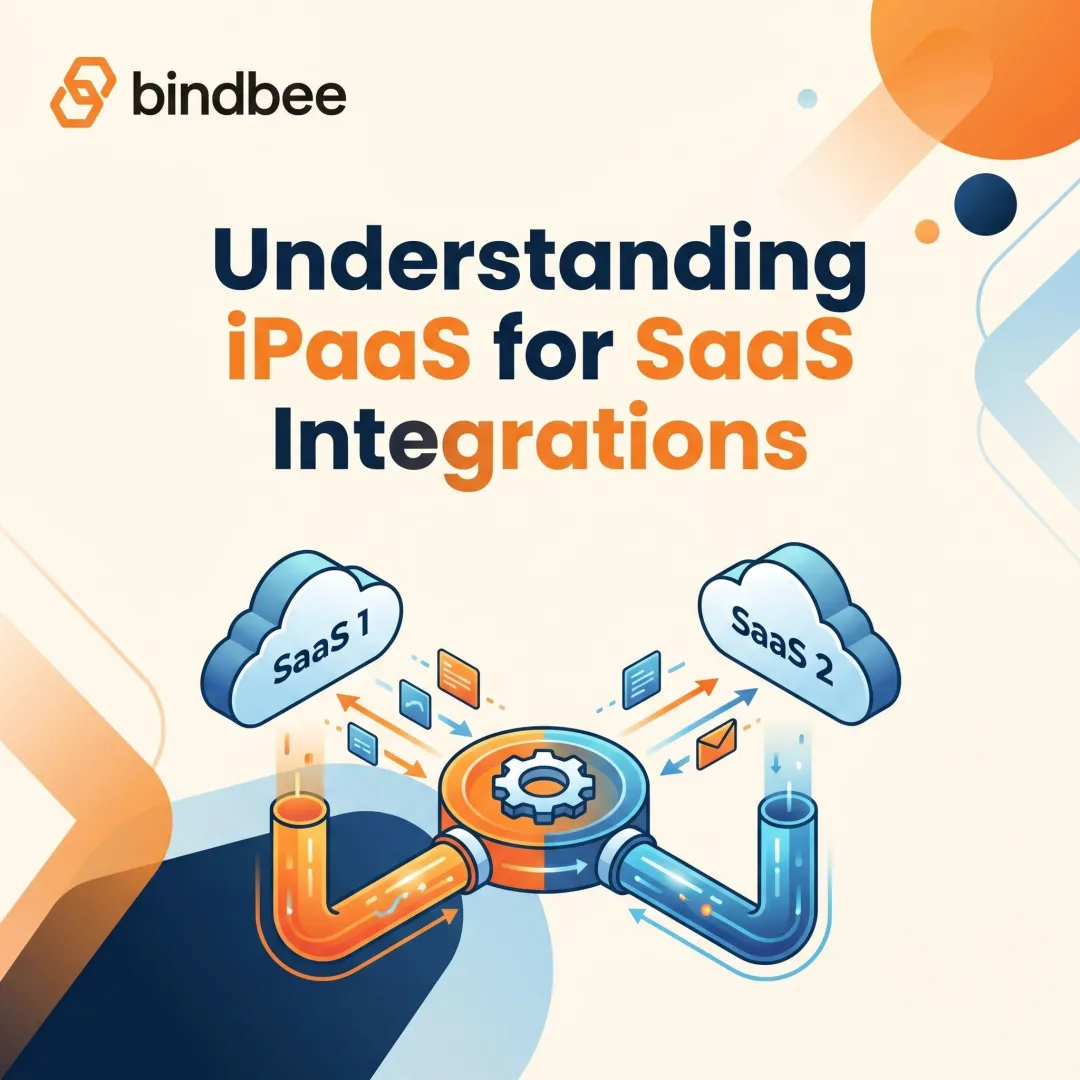
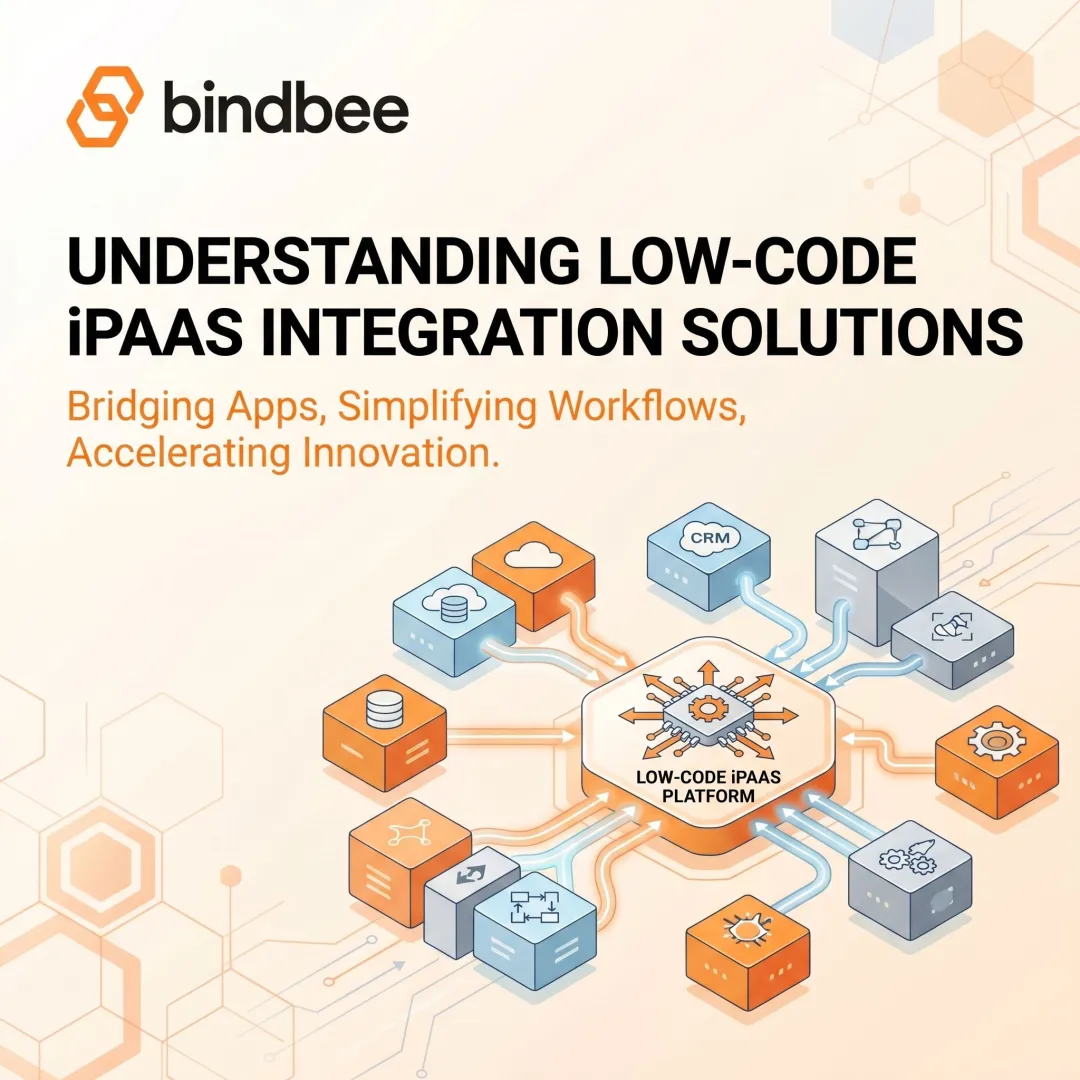
iPaaS (Integration Platform as a Service) is a cloud-hosted suite of services that enables organizations to build, execute, monitor, and govern integrations between applications, data sources, and APIs without building or maintaining custom point-to-point connectors. According to Gartner, iPaaS platforms facilitate data consistency, multistep processes, and composite services, typically via intuitive low-code or no-code developer environments.
The global iPaaS market is projected to reach $21.38 billion by 2035, growing at a CAGR of 35.4%, driven primarily by the proliferation of cloud applications. Within HR specifically, organizations now operate an average of 26 HR modules in 2024 compared to just 10 in 2020—creating urgent demand for centralized connectivity.
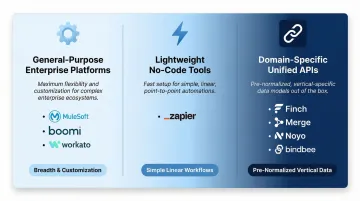
The iPaaS landscape includes three distinct categories, each suited to different use cases:
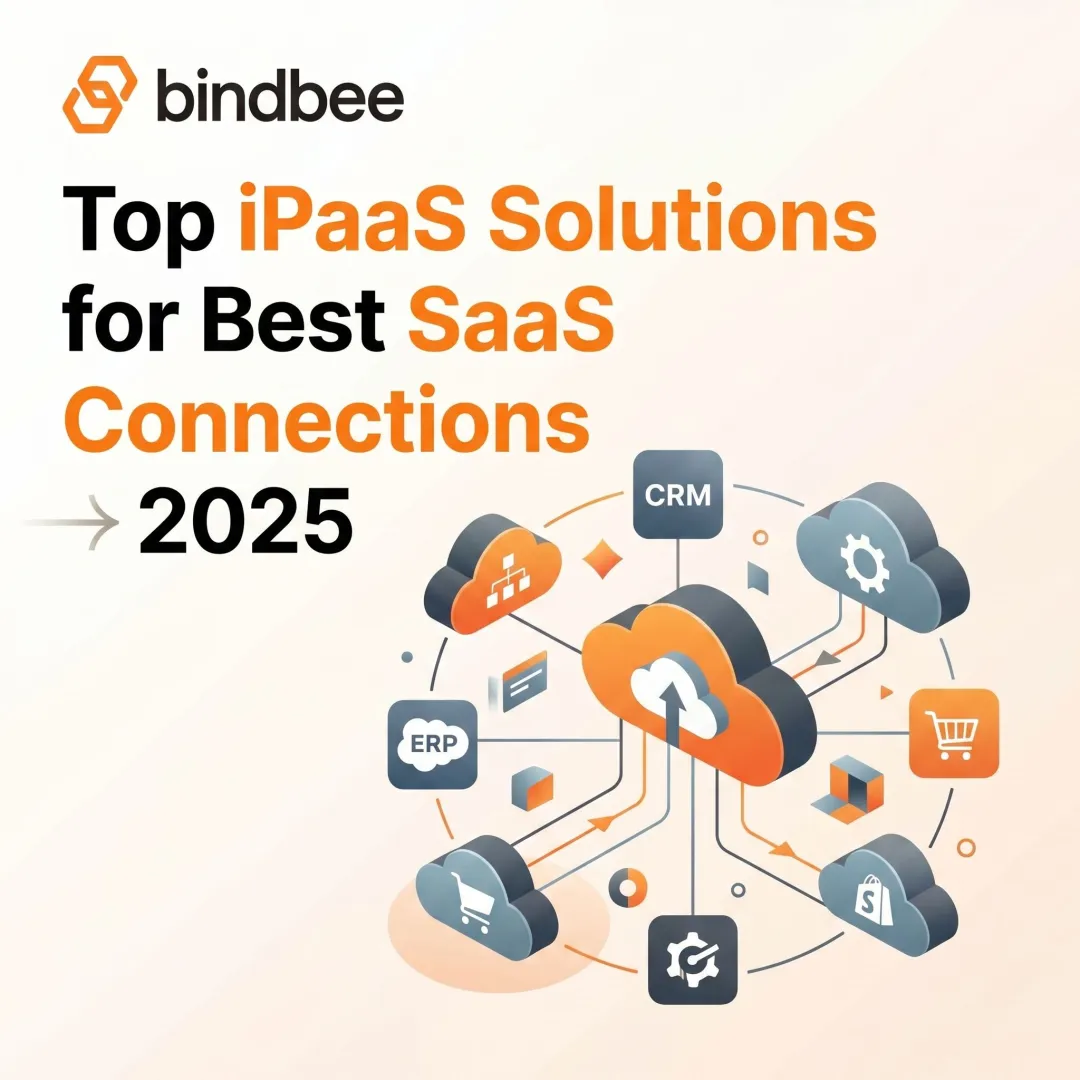
General-purpose enterprise platforms (MuleSoft, Boomi, Workato) connect combinations of on-site and cloud-based processes across multiple organizations. These platforms excel at breadth and customization but require significant implementation expertise.
Lightweight no-code automation tools (Zapier) allow users to automate workflows by connecting web applications through simple triggers and actions. These tools are ideal for simple, linear workflows but lack the depth required for complex data transformations.
Domain-specific unified APIs (Finch, Merge, Noyo, Bindbee) aggregate and normalize data from multiple systems within a specific category, such as HRIS and payroll, delivering standardized data through a single endpoint.
Core Components of iPaaS
Pre-built Connector Library and API Management Layer
Connectors abstract away the complexity of individual system APIs, letting teams integrate applications without writing custom authentication and endpoint logic for each system. Instead of building separate connections to ADP, Workday, BambooHR, and 20+ other HRIS platforms, teams integrate once with an iPaaS and gain access to all supported systems through a standardized interface.
Workflow Automation and Data Transformation Engine
Data mapping and normalization is where most budget iPaaS tools break down at scale. Moving data between systems is straightforward; reconciling mismatched schemas is not.
For example, employment status might be ACTIVE, PENDING, or INACTIVE in one system, while another uses onboarding, active, leave, or terminated. Without pre-built normalization, development teams spend months manually mapping these disparate fields.
Monitoring, Governance, and Alerting Layer
Enterprise-grade iPaaS must provide real-time sync monitoring, webhook notifications for key events, audit trails, and error handling—especially when dealing with sensitive employment or benefits data. When an eligibility sync fails or a new hire record doesn't propagate correctly, immediate alerting prevents coverage gaps that create liability for employers.
Why HR Tech and Benefits Platforms Rely on iPaaS
HR Tech and benefits platforms turn to iPaaS to achieve critical operational outcomes:
- Eliminate manual data reconciliation between HRIS and benefits carriers
- Enable real-time eligibility updates that prevent coverage gaps
- Automate lifecycle workflows for new hires, terminations, and life events
- Free engineering resources to focus on core product instead of integration maintenance
- Reduce payroll errors that cost an average of $291 per error to fix
- Accelerate customer onboarding by removing integration as a bottleneck
The alternative—manual processes and point-to-point builds—creates substantial financial risk. Organizations relying on traditional, non-automated payroll processes experience a nearly 20% error rate, and for a 1,000-employee company, correcting payroll errors can cost up to $922,131 annually.
What to Consider When Choosing the Best iPaaS
iPaaS selection criteria differ significantly based on your industry, data sensitivity, and integration complexity. What works for a CRM workflow automation tool may be completely inadequate for a platform handling employee benefits enrollment, dependent data, and carrier connections.
The following six factors connect technical capabilities to the business outcomes that actually matter: onboarding speed, data accuracy, compliance, and scalability.
Connector Breadth and Domain Coverage
A platform with 600 generic connectors is far less valuable than one with 60 deeply built connectors for your specific ecosystem. Depth of a connector matters more than the raw count. A marketplace with 100 deep, bidirectional integrations is more valuable than one with 500 shallow, one-way syncs.
Ask vendors specific questions about connector depth:
- Does the integration merely sync employee records, or does it also handle pay changes, benefit elections, and org structure updates?
- Are data flows bidirectional, or read-only?
- How frequently is data synced—real-time, hourly, daily?
- What percentage of the source system's data model is covered?
KPI this influences: Time-to-onboard new customers. Every missing connector is a custom build that delays launch and consumes engineering time. The average enterprise uses 897 applications, but only 29% are integrated, leaving 71% of business applications disconnected—a gap that deep connectors help close.
Data Normalization and Schema Standardization
Raw API access to multiple systems is not the same as normalized data. Different HRIS systems represent the same data—employment status, dependent relationships, enrollment elections—in inconsistent schemas. The iPaaS must handle this translation without pushing the burden onto the buyer's engineering team.
Benefits-specific data models are a signal of domain maturity. Platforms built for HR and benefits should offer distinct models for employee benefits, employer benefits, and dependent benefits—not just generic "employee" and "company" objects. Ask vendors whether their data models are pre-built for your vertical or require custom mapping for every new connector.
Without normalization, your team spends months building transformation logic for each new integration, recreating the same problem point-to-point builds created in the first place.
Speed of Deployment and Time-to-Value
Deployment speed is a competitive differentiator. The difference between setup time of less than one day versus four to eight weeks for native API builds directly determines how quickly a platform can go live with new employer or carrier connections.
| Integration Approach | Average Deployment Timeline |
|---|---|
| Native API Builds (Custom) | 1 to 3 months |
| General-Purpose iPaaS | 3 to 6+ months |
| Unified APIs | Days to weeks |
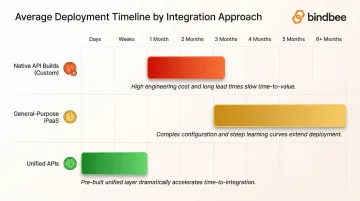
Source: Truto Blog
Pre-built authentication components—such as Magic Link-style flows that let customers authorize connections without engineering involvement—and SFTP-to-API bridges for legacy systems reduce implementation timelines. These capabilities should be evaluated as part of the deployment speed assessment.
For B2B SaaS companies, time to value directly impacts Net Revenue Retention (NRR). Companies offering sophisticated value realization and adoption journeys produce NRR around seven percentage points higher than peers with basic practices.
Security, Compliance, and Data Governance
HR and benefits data is among the most sensitive enterprise data—containing PII, health information, and financial details. The global average cost of a data breach reached a record $4.88 million in 2024, with employee PII involved in 37% of breaches.
Compliance certifications must be current, audited, and independently verified — not self-declared. Confirm the following before signing:
- SOC 2 Type II: Audited data security controls covering security, availability, processing integrity, confidentiality, and privacy
- ISO 27001: Information security management systems standard
- HIPAA compliance: Required if health data is involved
- GDPR readiness: Essential if serving EU customers
Enterprise procurement reality: Over 78% of enterprise buyers refuse to engage with SaaS vendors that lack SOC 2 compliance.
KPI this influences: Audit readiness, enterprise customer win rate, and liability exposure in the event of a breach.
Scalability and Maintenance Model
The hidden cost of "self-serve" iPaaS is maintenance burden. Platforms that require your team to monitor, update, and maintain connectors when source APIs change create ongoing engineering overhead that compounds as the number of integrations grows.
Enterprises spend an average of 30-50% of their total integration budget on ongoing maintenance, including API version updates, error resolution, and security patches. For organizations with 20+ custom-built integrations, annual maintenance costs can exceed $500,000.
Zero-maintenance platforms that handle connector updates automatically recover engineering bandwidth for core product work. Many engineering teams spend 40-50% of their time on maintenance and unplanned work—time that could be redirected to product innovation.
KPI this influences: Engineering bandwidth recovered for core product development. Research how much time your engineers currently spend maintaining existing integrations as a baseline for evaluating this factor.
Pricing and Total Cost of Ownership (TCO)
iPaaS pricing models vary significantly: per-connector, per-flow, per-API-call, per-record, or flat platform fee. The most transparent option is one that doesn't create surprise costs as you add new customers, systems, or data volumes. Opaque pricing erodes ROI projections quickly.
Common pricing approaches:
- MuleSoft: Subscription basis measured by Mule Flow and Mule Message capacity
- Boomi: Pay-as-you-go tier at $99 per month plus usage, alongside enterprise editions
- Workato: Platform fees and task consumption model
- Zapier: Tiered pricing based on tasks per month, starting at $19.99/mo
TCO should include license fees plus internal engineering hours for setup and maintenance, vendor support costs, and professional services required. A seemingly cheaper platform that requires three months of custom development to go live often costs far more than a higher-priced purpose-built solution.
Initial development is only 30% to 40% of total cost of ownership for custom integrations, with maintenance, updates, and adaptation making up the other 60% to 70%. Self-maintained integrations exceed third-party commercial solutions by 40-70% over time.
General-Purpose vs. Domain-Specific iPaaS: Why the Distinction Matters
General-purpose iPaaS platforms (MuleSoft, Boomi, Workato) are designed to connect anything to anything and excel at breadth. They're powerful tools for complex, bespoke cross-departmental orchestration. But they require your team to define the data models, build the field mappings, and maintain connectors as upstream APIs change.
For HR Tech and benefits platforms connecting to 20, 40, or 60+ HRIS and carrier systems, this means months of bespoke engineering per customer cohort.
Domain-specific unified APIs built for a specific vertical pre-normalize data across all connected systems into a consistent schema. They ship with purpose-built data models for that domain — benefits enrollment, dependent eligibility, life events — and maintain connectors on behalf of the customer, converting months of integration work into days.
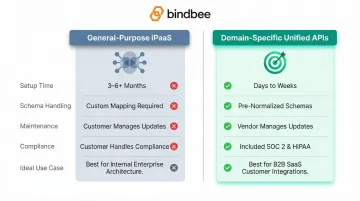
The right choice depends on what you're building and who's responsible for maintaining the integration layer over time.
Use Case Fit
General-purpose iPaaS is the right choice when:
- You need to connect a wide variety of unrelated SaaS tools (CRM, ERP, ticketing, marketing) across a business
- You have complex orchestration requirements spanning multiple departments
- You have certified developers/architects available for implementation
- Custom data transformation logic is a core competency
Domain-specific unified APIs are the right choice when:
- You need deep, reliable, continuously-maintained access to a defined ecosystem (HRIS, payroll, benefits carriers)
- You're building customer-facing integrations at scale
- Time-to-market is a competitive differentiator
- Your team should focus on core product, not integration infrastructure
Platform Comparison
| Feature | General-Purpose iPaaS | Domain-Specific Unified APIs |
|---|---|---|
| Setup Time | 3 to 6+ months | Days to weeks |
| Data Model | Custom mapping required | Pre-normalized schemas |
| Maintenance | Customer manages updates | Vendor manages updates |
| Compliance | Customer responsibility | Included (SOC 2, HIPAA, etc.) |
| Ideal Use Case | Internal enterprise architecture | B2B SaaS customer integrations |
Drata spent 80% less time managing customer integrations after switching to a domain-specific unified API approach — a concrete illustration of how the right architectural choice compounds over time.
How Bindbee Can Help
Bindbee is the integration standard for Employee Benefits and HR Tech: a unified API that normalizes data across 60+ HRIS, payroll, benefits, and carrier systems through a single endpoint. Purpose-built for benefits and HR platforms that need deep, always-current employment data without maintaining integrations themselves.
Key differentiators:
- Manages all connector updates automatically when source system APIs change
- Delivers real-time webhook notifications for life events: new hires, terminations, and dependent changes
- Goes live in under one day, compared to four to eight weeks for native API builds
- Certified SOC 2 Type II, ISO 27001, GDPR-ready, and HIPAA-compliant
Customers like Newfront, Healthee, Pasito, and Compport have seen a 76% reduction in onboarding time and 94% improvement in time-to-value. Compport's Senior Developer put it directly: Bindbee's "standardized dataset approach made the integration process smoother and helped us save a lot of time."
Conclusion
The right iPaaS decision comes down to fit — matching the platform's architecture, data model depth, maintenance model, and compliance posture to the specific integration demands of your product and customer base. Connector count and brand recognition are easy to measure; they're also the least predictive of long-term success.
The factors that actually matter:
- Data model depth — does it natively represent the entities your product depends on (employees, dependents, benefits elections)?
- Maintenance ownership — who absorbs the cost when an upstream HRIS changes its API?
- Compliance posture — does the platform hold the certifications your enterprise customers require?
- Onboarding velocity — how quickly can a new employer connection go live without engineering involvement?
As your platform scales and adds new employer, carrier, or HRIS connections, the integration layer either becomes a competitive advantage or a drag on growth. Evaluate your iPaaS as a long-term infrastructure investment, and revisit it as your connector requirements and compliance obligations evolve. Get this decision right and you eliminate a category of recurring engineering debt — one that compounds every time you add a new integration without it.
Frequently Asked Questions
What is the difference between iPaaS and a traditional API integration?
A traditional API integration connects two specific systems with custom code that must be built and maintained by the buyer's team. iPaaS provides a managed platform with pre-built connectors, data transformation, and governance tools that allow many systems to be connected without writing custom integration logic for each one.
How do I know if I need a domain-specific iPaaS or a general-purpose one?
If your platform connects to a defined ecosystem—HRIS, payroll, and benefits carriers—at scale, a domain-specific unified API delivers faster setup, pre-normalized data models, and lower maintenance overhead. General-purpose platforms work better when connecting diverse, unrelated SaaS tools across a business.
What security certifications should I look for in an iPaaS that handles HR or benefits data?
Require SOC 2 Type II (audited data security controls), ISO 27001 (information security management), HIPAA compliance (if health data is involved), and GDPR readiness (if serving EU customers). Require current, third-party-verified certifications — not self-declarations.
How long does it typically take to implement an iPaaS integration?
Implementation timelines vary by platform type. Native API builds take four to eight weeks per system, while purpose-built unified APIs with pre-built connectors can reduce this to less than one day.
What is the difference between iPaaS and ETL tools?
ETL tools are designed for batch data movement and transformation, typically into data warehouses for analysis. iPaaS platforms support real-time event-driven data flows, API-based application connectivity, and workflow automation across live systems—making iPaaS better suited for operational integrations like benefits enrollment syncs or employee lifecycle event handling.
How does choosing the wrong iPaaS increase integration maintenance costs?
When source system APIs change, platforms that push connector updates onto the buyer create growing engineering overhead across every integration they support. Zero-maintenance platforms handle those updates automatically, freeing engineering bandwidth for core product work and reducing total cost of ownership.