Whether you're an HR leader evaluating software or an HR tech product builder designing the next generation of tools, understanding the different categories of HR technology and how they create value is foundational. This guide covers a clear definition of HR technology, the key types, core benefits, how these systems connect, and what trends are shaping the future of the space.
TLDR:
- HR technology automates and optimizes workforce management—from recruitment and payroll to benefits and analytics
- The modern HR tech stack includes both all-in-one platforms (HRIS/HRMS/HCM) and specialized point solutions
- AI-powered tools now reduce time-to-hire by 60% and streamline processes that once consumed 57% of HR's time
- Integration is critical: 94% of business leaders want payroll software integrated across all HR systems
- Payroll errors cost an average of $291 to fix; automated systems reduce compliance exposure and financial risk
What Is HR Technology?
HR technology refers to the software platforms and automation tools organizations use to manage, streamline, and optimize human resources processes. These solutions span the entire employee lifecycle, including recruitment, onboarding, payroll, benefits administration, performance management, learning, and workforce analytics.
At the foundation level, most organizations use one of three umbrella systems:
| System | Core Focus | Key Capabilities |
|---|---|---|
| HRIS (Human Resource Information System) | Employee data & core HR | Records, benefits admin, basic payroll, reporting, self-service portals |
| HRMS (Human Resource Management System) | HRIS + talent management | Recruiting, onboarding, performance management, compensation planning |
| HCM (Human Capital Management) | Broadest scope | All HRMS functions plus engagement, advanced analytics, workforce planning, succession management |
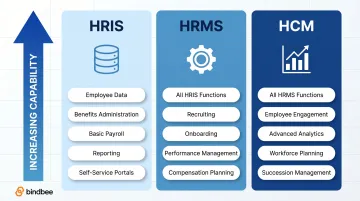
These terms are often used interchangeably, but they represent distinct levels of capability. Most organizations deploy a mix of all-in-one platforms alongside specialized point solutions — purpose-built tools for specific functions like applicant tracking, benefits enrollment, or learning management.
According to SHRM research, 50% of HR professionals report that their HR software performs overlapping functions, with recruiting and payroll being the most common areas of redundancy. That overlap means employee data often lives in multiple systems simultaneously — creating sync gaps, manual reconciliation work, and delayed reporting that compound as the tech stack grows.
Key Types of HR Technology
Applicant Tracking Systems (ATS) and Talent Management Platforms
ATS software manages the end-to-end recruitment workflow: job postings, resume screening, interview scheduling, candidate communications, and offer letters. Talent management platforms extend this foundation to cover onboarding, succession planning, career development, and internal mobility.
Today's leading ATS platforms leverage AI to automate resume screening and candidate matching. According to Tracker-RMS data, 86% of recruiters report that their ATS reduced time-to-hire, with 79% citing improved new-hire quality. An effective ATS can decrease the average hiring cycle by 60%.
Adoption is near-universal among enterprise organizations: 99% of Fortune 500 companies use ATS platforms, and 70% of large companies have implemented these systems.
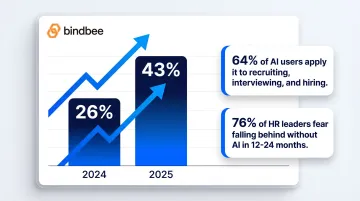
AI is accelerating this trend. SHRM's 2025 Talent Trends research found that 43% of HR professionals now use AI for HR tasks—nearly double the 26% adoption rate in 2024. Among organizations using AI, 64% apply it specifically to recruiting, interviewing, and hiring.
Payroll Management Systems
Payroll platforms automate wage calculations, tax withholdings, direct deposit, and compliance filings including W-2s, 1099s, and multi-state requirements. Modern payroll systems integrate tightly with time tracking and benefits platforms to ensure accuracy.
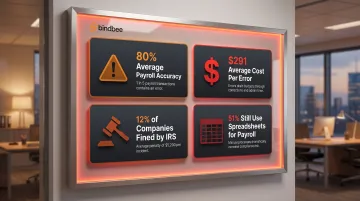
EY's 2022 HR Processing Risk and Cost Survey found that average payroll accuracy sits at just 80%, with each error costing $291 to remedy. Time and attendance errors occur at a rate of 1,139 per 1,000 employees annually — a volume that compounds quickly at scale.
Compliance failures carry measurable consequences: 12% of companies were fined by regulatory bodies like the IRS, with average penalties of $5,200. The highest reported fine reached $100,000. Even more concerning, 50% of employees will begin searching for new jobs after experiencing just two payroll errors.
Despite these risks, 51% of organizations still use spreadsheets for payroll processes, and 19% rely on manual paper-based systems.
Benefits Administration Platforms
Benefits administration tools manage the full lifecycle of employee benefits — plan selection, open enrollment, life event changes, and ACA/COBRA compliance reporting. These platforms must continuously sync data across HR systems, payroll, and insurance carriers, handling:
- Employee records and dependent relationships
- Plan elections and effective dates
- Life events: new hires, marriages, dependent additions, terminations
According to EY research, benefits errors carry significant costs — totaling $139,230 per 1,000 employees annually. High-cost categories include Health Savings Plan setup mistakes averaging $6,800 per incident and cafeteria plan errors averaging $499 each.
The root cause is integration fragmentation. Data handoffs between enrollment platforms, carriers, HRIS, and payroll introduce errors, delays, and reconciliation issues — and real-time synchronization, while critical, is rarely implemented well.
Performance Management and Learning Systems
Performance management platforms handle goal setting, continuous feedback, 360-degree reviews, and calibration processes. Learning Management Systems (LMS) deliver and track training at scale, from onboarding courses to compliance certifications and professional development programs.
51% of organizations have performance management modules bundled into their HRMS/HRIS, while 17% have built custom performance software, according to HR.com's Future of Performance Management 2023 report.
The corporate LMS market reached $9.57 billion in 2024 and is projected to grow to $27.43 billion by 2030. Adoption is nearly universal among large organizations: 96% of large and mid-size companies use an LMS, while 81% of small companies have implemented learning platforms.
These systems directly impact productivity and retention. SHRM research shows that new hires are 50% more productive when they go through standardized onboarding delivered through HR technology.
Employee Engagement and Workforce Analytics Tools
Engagement platforms capture employee feedback through pulse surveys, eNPS (employee Net Promoter Score), and sentiment analysis. These tools surface retention risks and culture gaps before they escalate into turnover.
Gallup's State of the Global Workplace 2026 found that only 20% of employees globally were engaged in 2025 — the lowest level since 2020. Low engagement costs the world economy an estimated $10 trillion in lost productivity, representing 9% of global GDP.
Workforce analytics tools aggregate data across HR systems to generate dashboards on headcount, turnover, diversity metrics, labor costs, and predictive attrition modeling. Research from Visier shows that organizations with advanced people analytics maturity financially outperform benchmarks for Return on Assets and profitability.
Benefits of HR Technology
Efficiency Through Automation
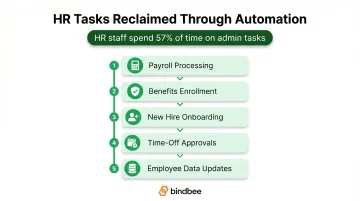
HR staff spend as much as 57% of their time on administrative tasks, leaving limited bandwidth for strategic work, according to Deloitte research. More than 50% of HR departments are understaffed, with 57% of HR professionals reporting they work beyond normal capacity.
Automation reclaims this time. Key administrative processes that benefit from automation include:
- Payroll processing and wage calculations
- Benefits enrollment and plan administration
- New hire onboarding workflows
- Time-off request approvals
- Employee data updates and record-keeping
AI in candidate screening alone delivers approximately 30% cost savings per hire, according to Deloitte's Power Human Resource Service Delivery with AI research.
Compliance and Risk Reduction
HR technology reduces compliance exposure through several automated controls:
- Automated record-keeping with enforced data retention policies
- Real-time flagging of regulatory changes (FLSA, ACA, GDPR)
- Audit trail generation for every data change
- Systematic compliance checks built into core workflows
Manual processes remain a leading source of compliance errors — and the numbers reflect this. 14% of companies faced payroll-related litigation in 2022, while 12% were fined by regulatory bodies. Automated compliance checks and systematic record-keeping prevent most of these penalties.
Data-Driven Decision-Making
Centralized HR platforms turn fragmented workforce data into actionable insights. Leaders gain the ability to:
- Predict turnover before it happens
- Identify skill gaps across teams
- Track DEI goals with reliable metrics
- Measure the ROI of HR programs
83% of respondents in Deloitte's 2023 High-Impact People Analytics research report that senior leadership supports people analytics initiatives—indicating growing recognition of HR data as a strategic asset.
Improved Employee Experience
Self-service portals let employees access pay stubs, update personal information, manage benefits elections, and submit time-off requests without waiting on HR. This reduces friction and improves satisfaction, particularly in hybrid and distributed workplaces.
Employee wellbeing technology extends this benefit. 82% of employees with access to benefits technology feel their employer cares about their health, and 80% of these employees report they are thriving in their roles, according to Mercer's Benefits Technology 2023 Report.
Faster, More Consistent Onboarding
HR technology automates the new hire workflow: provisioning system access, triggering benefits enrollment, assigning onboarding tasks, and tracking completion. Every step is logged and accountable.
The retention stakes are high. Voluntary turnover costs U.S. businesses $1 trillion annually, with replacement costs ranging from 50% to 200% of an employee's annual salary, according to Gallup research. Structured onboarding directly reduces that risk — software tools can cut onboarding time by up to 80%, accelerating time-to-productivity and lowering early-stage attrition.
How HR Tech Systems Connect: The Integration Layer
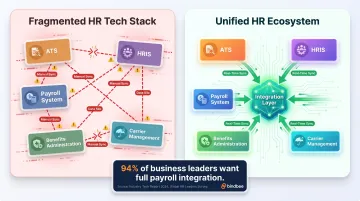
Most organizations run HR on multiple disconnected platforms. A typical stack includes:
- An ATS for recruiting
- An HRIS for employee records
- A payroll system for wage processing
- A benefits administration platform for enrollment
- A carrier management tool for insurance
When these systems don't communicate, teams face data silos, manual re-entry, eligibility errors, and delayed updates.
94% of business leaders want payroll software integrated across all HR systems, according to SSR's 2026 Payroll Statistics compiled from Forrester research. Yet only 44% of organizations have complete visibility across all payrolls in different locations.
The Role of HR Integrations
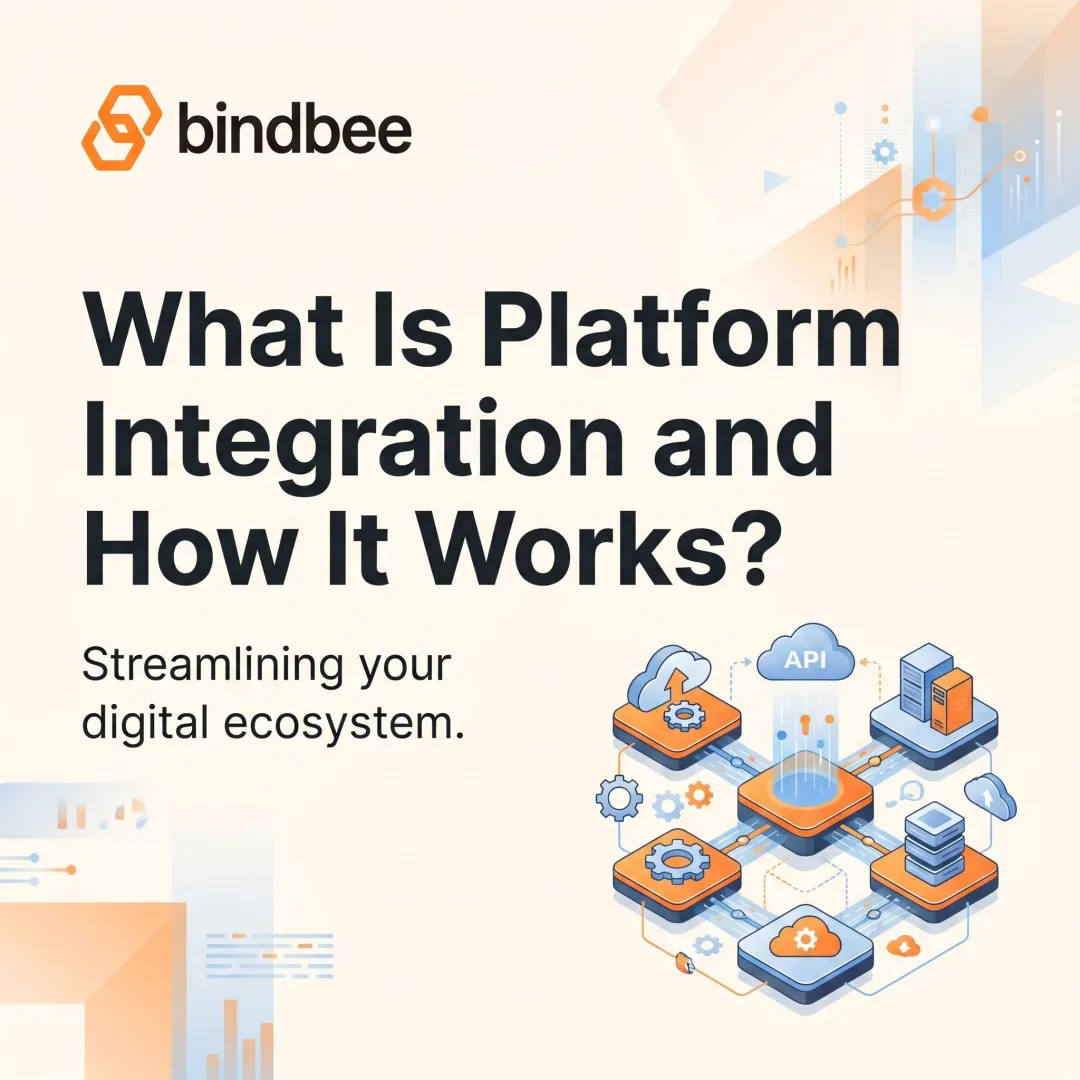
APIs and integration layers allow different HR systems to share data in real time—eliminating manual exports, reducing sync errors, and ensuring that a change in one system (such as a new hire or termination) automatically flows downstream to payroll, benefits, and carrier systems.
Scale is where this breaks down. IT departments spend an average of 22 hours per week per country setting up payroll integrations alone — and only 54% of organizations have automated reconciliations between payroll and other systems. The rest still rely on manual processes.
The Challenge for HR Tech Builders
Companies building HR tech products—benefits platforms, payroll tools, engagement software—face a real engineering problem when connecting to dozens of HRIS and payroll systems. Each has its own API, data model, authentication method, and sync logic. Native integrations are expensive to build and even more expensive to maintain.
A unified HR integration API solves this by normalizing data across systems into a single, consistent model. Bindbee, for example, connects to 60+ HR and payroll platforms—Workday, ADP, Rippling, SAP SuccessFactors, and others—through one API, so HR tech teams integrate once instead of rebuilding connections for every new customer.
What Good Integration Looks Like
Effective HR integrations require several capabilities:
- Real-time or near-real-time data sync to prevent eligibility errors
- Support for life events including new hires, terminations, and dependent changes
- Benefits-specific data models covering employee benefits, employer benefits, and dependent benefits as distinct objects
- Webhook notifications that trigger downstream workflows when data changes
These capabilities determine whether HR tech systems deliver accurate, timely information or create downstream errors in payroll and benefits administration.
HR Technology Trends to Watch
AI and Automation
AI adoption in HR climbed to 43% in 2025, up from 26% in 2024, according to SHRM's 2025 Talent Trends. AI is increasingly embedded in resume screening, candidate matching, predictive attrition modeling, and automated onboarding workflows.
76% of HR leaders believe they will fall behind peers if they do not implement AI solutions within 12-24 months, according to Gartner research. AI accelerates decision-making, but human oversight stays essential — especially in hiring and performance evaluation, where compliance and fairness risk is highest.
Cloud-Native and API-First Architecture
On-premise HR systems are giving way to cloud-based, API-first platforms. Cloud-based HR technology is projected to hold 62.16% market share by 2026, growing at 11.50% CAGR — the fastest growth rate by deployment type, according to Fortune Business Insights.
Cloud-native platforms deliver several operational advantages:
- Real-time data access across locations and time zones
- Easier third-party integrations through open APIs
- Automatic updates without IT-managed upgrade cycles
- Scalability for distributed and global workforces
Employee Wellbeing and Self-Service
HR tech increasingly encompasses wellbeing tools—mental health apps, financial wellness platforms, EAP integrations—alongside self-service portals that give employees direct control over their HR data.
The global corporate wellness market was valued at approximately $68.02 billion in 2025, growing at 6.12% CAGR, according to Mordor Intelligence. For HR tech builders, this means employee-facing features — not just backend automation — are now a meaningful factor in whether companies choose, keep, or switch platforms.
Frequently Asked Questions
What are HR technologies?
HR technologies are the software tools and platforms organizations use to automate and manage human resources functions—including hiring, payroll, benefits administration, performance management, and workforce analytics. They replace manual processes with digital workflows that reduce errors, cut administrative time, and keep the organization audit-ready.
What are HR technology platforms?
HR technology platforms are integrated software systems (such as HRIS, HRMS, or HCM suites) that combine multiple HR functions into a single interface. They enable HR teams to manage employee data, workflows, and reporting from one centralized location rather than toggling between disconnected tools.
What are the 5 types of HRIS?
The five main types are:
- Operational HRIS — employee data and basic HR administration
- Tactical HRIS — adds payroll and benefits processing
- Strategic HRIS — includes analytics and workforce planning
- Limited-function systems — single-purpose tools for specific tasks
- Comprehensive HRIS — full-suite platforms covering the entire employee lifecycle
What are the top 5 HRIS systems?
Widely recognized HRIS systems include Workday, ADP Workforce Now, BambooHR, SAP SuccessFactors, and Rippling. The right fit depends on company size and HR complexity — enterprise teams typically lean toward Workday or SAP, while mid-market companies often choose ADP, BambooHR, or Rippling.
What is the difference between HRIS, HRMS, and HCM?
HRIS handles core employee data — record-keeping, benefits administration, and basic reporting. HRMS builds on that with payroll, time tracking, and talent management. HCM is the broadest category, extending into strategic workforce planning, advanced analytics, and succession management across the full employee lifecycle.
How do HR technology systems share data with each other?
HR systems share data through APIs and integration layers that enable real-time or scheduled data sync between platforms. These integrations ensure that employee records, benefits elections, and payroll data stay consistent across all connected tools, eliminating manual data entry and reducing errors caused by fragmented systems.