Introduction
The operational challenge facing HR tech companies today isn't adoption — it's making systems actually work together. As organizations deploy more HR tools, the friction created by disconnected platforms becomes increasingly costly. Manual data entry delays onboarding workflows, stale employee records create compliance risks, and benefits enrollment data that lives in one system fails to sync with payroll in another.
This fragmentation compounds quickly. Organizations now use an average of 4 HR software tools, with larger enterprises deploying as many as 16 HR applications when ancillary systems are included. Each additional platform multiplies the integration challenge, creating data silos that erode both operational efficiency and employee experience.
This article covers what HR technology integration means, its core components, the benefits it delivers, the challenges you'll face, and how to choose the right approach — written specifically for HR tech product teams and benefits platforms building connected solutions at scale.
TLDR:
- 68% of organizations run disconnected HR platforms, leading to 23% more administrative time and 31% higher error rates
- Integration infrastructure determines onboarding speed for HR tech vendors — every manual connection adds engineering debt
- Automated integrations reduce data entry errors by up to 85% and deliver 345% ROI over three years
- The iPaaS market hit $8.5 billion in 2024 (up 23.4%); over 75% of large enterprises will rely on it by 2026
- Unified API platforms cut setup from 4-8 weeks to hours and eliminate ongoing maintenance overhead
What Is HR Technology Integration?
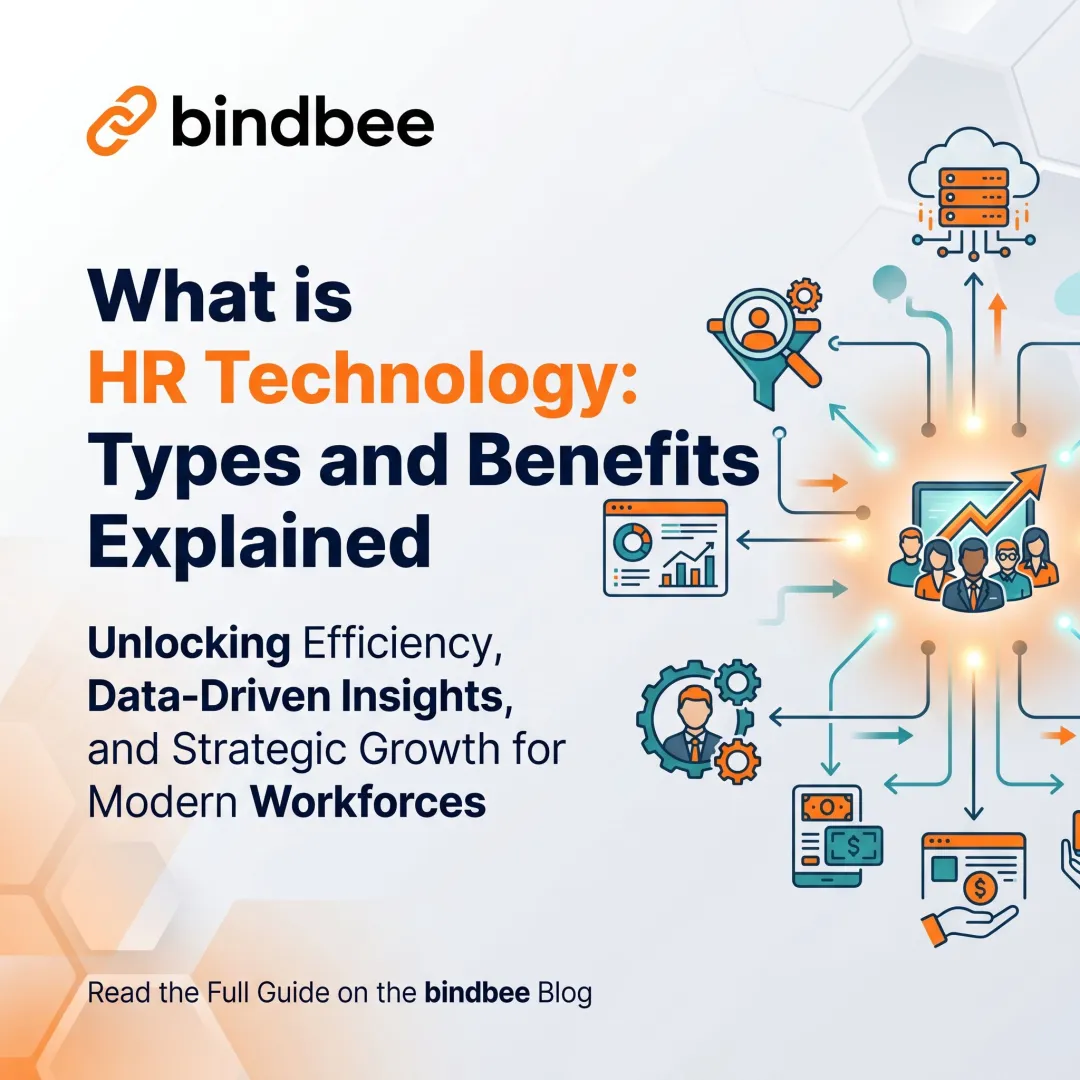
HR technology integration is the process of connecting disparate HR systems — HRIS, payroll, benefits administration, ATS, and more — so that data flows automatically between them without manual intervention. This goes beyond simply having multiple HR tools installed. Integration means these systems communicate in real time or near-real time, creating a unified operational backbone where employee data entered once propagates across all connected platforms.
When an employee updates their address in the HRIS, that change should automatically sync to payroll, benefits enrollment, and any other system that relies on that information. When a candidate receives an offer in the ATS, their record should flow seamlessly into the HRIS, triggering IT provisioning and benefits eligibility. This automatic data flow eliminates the manual re-entry that slows processes and introduces errors.
That challenge looks very different depending on whether you're an HR team using these tools — or a vendor building them.
The Product-Level Integration Challenge
There's a critical distinction between end-user HR tech adoption and the product-level integration challenge facing HR tech vendors. When an organization implements tools for its own use, it typically needs to connect a handful of systems. But when an HR tech vendor builds a benefits platform or workforce analytics tool, it must support connections to 60+ HRIS and payroll systems across its entire customer base.
The complexity compounds fast. Each employer client uses a different combination of systems — one might run on Workday and ADP, another on BambooHR and Gusto, a third on SAP SuccessFactors.
For the vendor, every new customer potentially requires a new integration build, and every existing integration requires ongoing maintenance as those systems evolve. The engineering cost of that maintenance is what separates HR tech companies that scale from those that stall.
Core Components of HR Technology Integration
Understanding which systems require integration — and why — helps clarify the scope of the challenge and the value delivered when connections work properly.
Human Resource Information Systems (HRIS)
HRIS platforms serve as the foundational data layer, storing employee records, organizational structure, payroll details, time and attendance data, and employment history. HRIS connectivity is the starting point for any integration strategy because it functions as the authoritative source of truth.
Without a live, accurate feed of employee data from the HRIS, downstream systems operate on stale information. Benefits platforms don't know who's eligible for coverage, payroll systems process outdated compensation data, and engagement platforms target employees who've already left the organization. The HRIS is where employee lifecycle events — new hires, role changes, terminations — are recorded, making it the trigger point for workflows across the entire HR tech stack.
Applicant Tracking and Recruitment Systems
ATS platforms manage candidate pipelines, offer letter workflows, and new hire records. Integrating ATS with HRIS creates a seamless handoff that eliminates manual data re-entry. When a candidate is marked as hired in the ATS, their information should automatically propagate to:
- HRIS for employee record creation
- Payroll for compensation setup
- IT systems for laptop and account provisioning
- Benefits platforms for enrollment eligibility
Without this integration, HR teams manually re-key candidate data into multiple systems, delaying day-one readiness and introducing errors. New hires may navigate 5 different platforms in their first week when onboarding tools aren't integrated, creating a fragmented first impression.
Benefits Administration Systems
Benefits platforms represent one of the most data-intensive integration points in the HR ecosystem. Unlike basic employee data, benefits require structured handling of three distinct data entities:
- Employer benefits: the catalog of plans the company offers
- Employee benefits: individual enrollment elections and active coverage details
- Dependent benefits: family member relationships, coverage elections, and effective dates
This data model complexity matters because benefits administration depends on real-time accuracy. Life events — new hires, terminations, marriages, births — trigger enrollment eligibility changes that must sync immediately. A new hire should become benefits-eligible on day one, not when the next scheduled batch sync runs. A terminated employee must be removed from coverage to avoid paying premiums for ineligible individuals.
Outdated eligibility information doesn't just create operational inefficiency — it triggers coverage errors and compliance violations. When dependent data is stale, employers risk covering ineligible family members or missing required coverage for qualifying dependents.
Payroll and Learning Management Systems
Payroll integrations ensure compensation data, deductions, and time-tracking inputs are synchronized accurately across systems. When payroll and HRIS are disconnected, teams spend approximately one-quarter of their time cleaning up discrepancies caused by mismatched pay rates, job codes, and titles.
LMS integrations tie employee development programs to HR records, automating enrollment triggers based on role changes or onboarding status. When a new manager is promoted, the LMS should automatically enroll them in leadership training. When compliance training deadlines approach, the system should trigger reminders based on current employee data.
Both categories break down the same way when HRIS data is stale: payroll processes outdated compensation figures, and LMS platforms assign training to employees who no longer exist in the system. This is what makes the underlying data infrastructure — not just the individual tools — the real determinant of HR tech stack performance.
The Long Tail of System-Specific Complexity
The breadth of these integration points means HR tech vendors face a long tail of system-specific quirks. Different data formats, authentication methods, and API structures vary widely across vendors:
- Workday features hundreds of SOAP and REST APIs, with name fields requiring navigation through 6 levels of nesting
- BambooHR made 4 major API and authentication changes in just 8 months during 2025
- Gusto releases new API versions as often as monthly, with a 200 requests/minute rate limit
- Rippling requires mandatory partner registration and customers must purchase an Identity & Access Management package
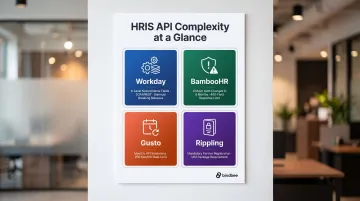
This fragmentation illustrates why each additional HRIS integration multiplies maintenance burden. No two vendors share authentication flows, data schemas, rate limits, or versioning cadences.
Key Benefits of HR Technology Integration for Streamlined Operations
Integration infrastructure delivers measurable operational, financial, and strategic value across multiple dimensions.
Operational Efficiency Through Automation
Integrated HR systems eliminate repetitive manual tasks that otherwise consume significant HR and engineering bandwidth:
- Payroll processing and deduction management
- Benefits enrollment updates triggered by life events
- Onboarding provisioning across IT, payroll, and benefits systems
- Time-off balance synchronization
- Organizational chart updates
The productivity gains are substantial. Automated HR systems save over 7 hours per week per HR staff member, and HR automations have risen by 599% over the past two years. For HR tech vendors, this automation doesn't just improve internal efficiency — it becomes a core product differentiator that helps customers justify their purchase.
Additional efficiency metrics:
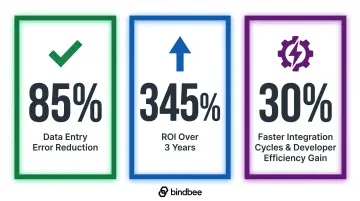
- Automated integration reduces data entry errors by up to 85%
- Integration suites deliver 345% ROI over three years — recouped across reduced error handling, faster builds, and lower maintenance overhead
- iPaaS cuts integration development cycles by 30% and increases developer efficiency by 30%
Data Accuracy and a Single Source of Truth
When HR systems are integrated, employee data is updated in one place and propagated automatically, reducing errors caused by manual re-entry. This creates a single source of truth where every connected system reflects the same current state.
Stale data is especially costly in benefits contexts. Outdated eligibility information triggers incorrect coverage decisions, exposing employers to compliance violations and financial penalties. Siloed HR data leads to 23% more time spent on administrative tasks and 31% higher error rates in data management.
Poor data quality carries massive costs: organizations lose an average of $12.9 million per year due to data quality issues, with over 25% losing more than $5 million annually. Those losses flow directly downstream to the employee experience — which integration also shapes.
Enhanced Employee and Candidate Experience
Integration directly shapes how employees and candidates experience your organization:
- Faster onboarding: New hires get day-one access to systems, benefits enrollment, and equipment — no waiting for manual provisioning across ATS, HRIS, payroll, and IT.
- Self-service updates: Employees change personal information once and see it reflected across payroll, benefits, and directory systems immediately.
- Life event automation: Dependent additions, role changes, and address updates trigger workflows across connected systems without employees re-submitting the same information.
The experience gap is measurable. 69% of employees encountered at least one barrier when interacting with HR technology in the past year, yet organizations recognized for exceptional engagement show 23% higher engagement, 29% higher profit, and 72% lower turnover. Removing friction from HR interactions is one of the clearest levers for closing that gap.
Compliance and Auditability
Integrated systems create consistent, auditable data trails across payroll, benefits, and employee records — reducing the risk of regulatory violations. This is especially critical in benefits administration, where HIPAA compliance and accurate dependent data directly affect legal exposure.
HIPAA violation penalties escalate sharply based on culpability. Fines range from $145 per violation for reasonable efforts to $2.19 million per year for willful neglect. The largest OCR settlement on record was $16 million against Anthem Inc. Integration infrastructure that maintains accurate, auditable records helps mitigate this exposure.
Scalability for Growth
For HR tech vendors, integration infrastructure determines how fast they can onboard new employer clients. Every new customer connection built manually adds to engineering debt. When a benefits platform must support 60+ HRIS systems, building native integrations one-by-one becomes unsustainable.
Integrated systems that normalize data across platforms allow vendors to scale their customer base without proportionally scaling their engineering team. Bindbee, for example, enables connections in hours rather than the 4–8 weeks typical of native API builds, cutting weeks of engineering work into a single day's setup.
Common Challenges in HR Technology Integration
For HR tech vendors, integration challenges aren't just technical inconveniences — they directly affect engineering costs, time-to-market, and customer retention. Here's where most teams run into trouble.
Data Silos and Fragmented Systems
Many organizations have accumulated HR tools over time that were never designed to communicate. Siloed systems create inconsistent employee records where the HRIS says one thing, the benefits platform says another, and payroll operates on a third version of the truth.
The scope of this fragmentation is significant: 68% of organizations use disconnected HR platforms, and 71% of business applications remain unintegrated across all departments. Workers lose approximately 2 hours daily searching for basic information because systems aren't connected.
The Integration Maintenance Burden
Building a native API integration to a single HRIS is one project; maintaining it across software updates, API version changes, and authentication rotations is an ongoing engineering commitment. For HR tech vendors supporting connections to dozens of employer systems, this maintenance burden consumes engineering bandwidth that should go toward core product development.
The total cost of ownership makes this concrete:
- Initial development accounts for only 30-40% of total cost; maintenance consumes 60-70%
- Self-maintained integrations cost 40-70% more than third-party commercial solutions over time
- Enterprises spend 30-50% of their integration budget on ongoing maintenance
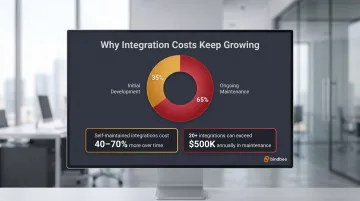
For organizations with 20+ custom integrations, annual maintenance can exceed $500,000. This is a critical differentiator when evaluating build vs. buy decisions — the engineering cost isn't the initial build, it's the perpetual maintenance.
Data Normalization Across Systems
Each HRIS and payroll platform structures its data differently — different field names, date formats, relationship models, and custom fields. Normalization (mapping varied data structures into a consistent, usable format) is one of the most underestimated challenges in HR tech integration.
A few real-world examples show how quickly this gets complicated:
- Workday name fields require navigating 6 levels of nesting; SOAP errors always return HTTP 500, requiring nested fault response parsing
- Workday issues 2 major product releases per year (March and September), each potentially introducing breaking changes
- Gusto releases new API versions as often as monthly; versions are supported for a minimum of 12 months
- BambooHR made 4 major API/auth changes in 8 months; imposes a 400-field limit per employee request
Without normalization infrastructure, connecting a new employer system can require weeks of custom mapping work even when APIs are available. This mapping complexity multiplies when supporting dozens of systems, each with unique quirks.
Security and Compliance Complexity
HR data is among the most sensitive in any organization — it encompasses personal information, compensation data, dependent details, and health benefit elections. Ensuring integrations are SOC 2 Type II, ISO 27001, GDPR, and HIPAA compliant is non-negotiable, especially when data passes through third-party connectors.
This compliance surface area expands with every new system integration added. Each connection introduces potential security vulnerabilities, data breach exposure, and regulatory risk. Managing it internally requires dedicated security and legal resources — a staffing investment most HR tech vendors aren't positioned to absorb. That's precisely where integration infrastructure decisions move from technical to strategic.
Choosing the Right Integration Approach
The integration approach you choose determines engineering effort, time-to-market, and ongoing operational burden.
Point-to-Point vs. Unified API
Three main approaches exist for HR system integration:
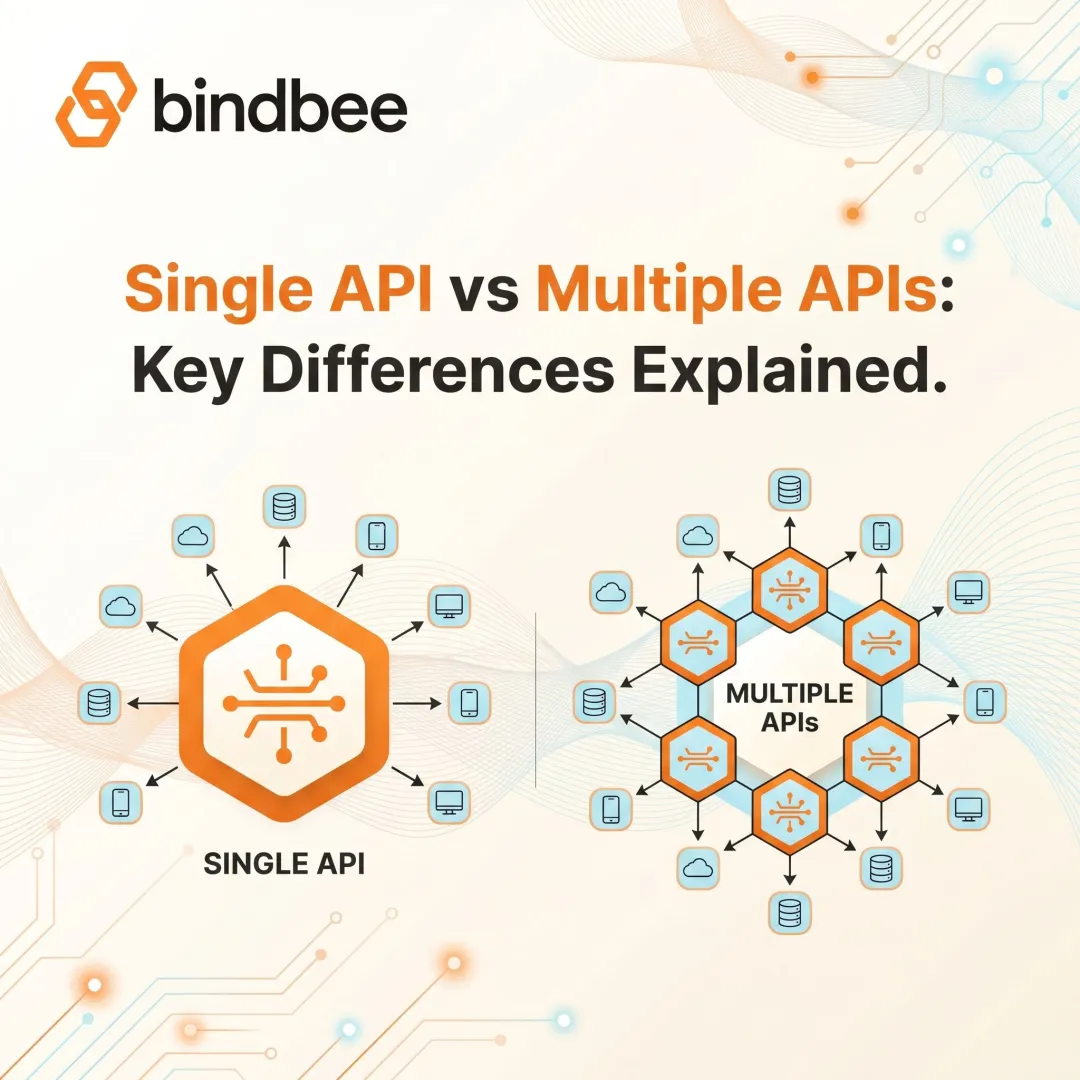
1. Point-to-point native integrations — building directly to each system's API 2. iPaaS/workflow automation platforms — orchestrating connections between tools 3. Unified API layers — normalizing data from multiple HR systems through a single connection
Tradeoff comparison:
| Dimension | Point-to-Point Native | iPaaS | Unified API |
|---|---|---|---|
| Build time | 4-8 weeks per HRIS | Faster with pre-built connectors | Hours to days |
| Maintenance burden | 60-70% of TCO | Connector updates managed | Handled by provider |
| Scalability | Linear effort per vendor | Better than native | Zero additional effort per vendor |
| Data model | Unique per vendor | Varies | Normalized/standardized |
| Best for | Deep single-vendor customization | Complex multi-app orchestration | Rapid multi-vendor HRIS coverage |
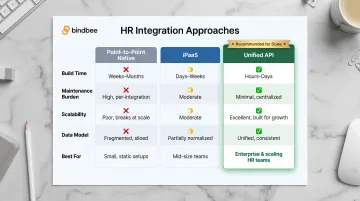
Native integrations offer deep customization but require ongoing maintenance per system. Unified APIs cut setup time from weeks to hours and eliminate per-system maintenance overhead entirely.
The right approach depends on two specific constraints facing your engineering team.
Strategic Decision Framework
For HR tech vendors deciding which approach to use, those two questions are:
- How many employer systems do you need to support?
- How much engineering bandwidth can you afford to allocate to integration maintenance?
When the answer is "many systems" and "limited bandwidth," a unified API with pre-normalized data models becomes the strategic choice. This enables teams to ship integrations faster and focus engineering resources on core product differentiation rather than connector upkeep.
The iPaaS market grew 23.4% to $8.5 billion in 2024, and by 2026, over 75% of large enterprises will rely on iPaaS as a core integration strategy. For HR tech vendors still building native integrations one at a time, that market shift has a direct cost: competitors using platform-based approaches are onboarding employers faster.
Real-Time Sync and Webhook Support
Not all integration approaches handle timing the same way — and in benefits administration, timing is everything. Batch-sync works for historical reporting and payroll reconciliation, but life event processing breaks down without real-time updates.
A new hire should trigger enrollment eligibility the same day, not at the next scheduled sync. A dependent addition during a qualifying life event must propagate immediately to ensure accurate coverage. 54% of enterprises now prioritize real-time data exchange over batch processing — a signal that HR tech vendors who still rely on nightly syncs are building on an architecture their buyers are actively moving away from.
Emerging Trends Shaping HR Technology Integration
Several converging trends are redefining expectations for integrated HR technology.
AI-Powered HR Workflows
Artificial intelligence is now layered on top of integrated HR data to power predictive analytics, automated decision support, and personalized employee experiences. 39% of HR functions have adopted AI, and 92% of CHROs are accelerating AI integration.
However, AI's value in HR depends entirely on the quality and freshness of the underlying data. Solid integration infrastructure is a prerequisite, not an afterthought. The gap between AI adoption and value realization is stark: 88% of HR leaders say their organizations have not yet realized significant business value from AI tools.
When 68% of organizations run disconnected HR platforms with 31% higher error rates, AI models are being fed incomplete or inconsistent data.
Real-Time Data and Webhook-Driven Architectures
The shift from scheduled batch syncs to event-driven, webhook-based data flows is redefining what "integrated" means in HR tech. Life events — terminations, dependent changes, open enrollment elections — now require instant system updates.
Integration platforms that support built-in webhooks and incremental sync are becoming the standard expectation. 54% of enterprises prioritize real-time data exchange, reflecting the demand for immediate visibility and response rather than waiting for overnight batch jobs.
Embedded Integration Experiences
HR tech vendors are increasingly offering self-serve, embedded integration flows to their customers — allowing employers to connect their HRIS to a new platform in minutes rather than weeks. This shift (from IT-led integration projects to self-serve embedded connections) is changing how vendor onboarding is measured.
Time-to-value is becoming a key competitive differentiator. 90% of B2B buyers say a vendor's ability to integrate significantly influences whether they are added to a shortlist, and integrations are raised in 60% of all sales deals.
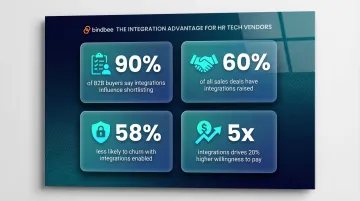
The retention impact is just as pronounced: customers with integrations enabled are 58% less likely to churn, and businesses with 5 integrations are willing to pay 20% more for the same core product.
Frequently Asked Questions
What is HR technology integration?
HR technology integration is the process of connecting HR systems — HRIS, payroll, benefits, ATS — so data flows automatically between them, eliminating manual data entry and creating a unified view of the workforce.
What are the benefits of using HR technology?
Core benefits include reduced administrative burden through automation, improved data accuracy, faster onboarding, better employee experiences, and stronger compliance. Those benefits become even more pronounced when the underlying systems share data in real time rather than operating in isolation.
What is an example of HR technology?
Examples include HRIS platforms (Workday, BambooHR, ADP), applicant tracking systems (Greenhouse, Lever), benefits administration platforms, payroll systems, and LMS tools. Connecting these systems through a unified API eliminates the data silos that form when each tool operates independently.
What is the role of technology in human resource development?
HR technology gives leaders access to people analytics that surface skill gaps, turnover risks, and engagement patterns across the workforce. When systems are integrated, that data updates automatically — so decisions are based on current information, not last month's export.
What are the biggest challenges in HR technology integration?
The top challenges are data silos across disconnected systems, the engineering cost of maintaining native integrations (60-70% of total cost), data normalization across vendors with different formats, and ensuring security and compliance (HIPAA, SOC 2) across all connected systems.
How do HR tech companies connect to multiple HRIS systems at scale?
HR tech vendors typically choose between building native integrations (high maintenance cost), using iPaaS platforms, or adopting a unified API layer. A unified API normalizes data across dozens of HRIS and payroll systems through a single connection, enabling faster employer onboarding and lower ongoing maintenance costs.