

Bindbee Payroll API: Use Cases, Benefits, and Models
Summarise the blog with AI
Payroll integrations tend to break at the worst possible moment. A late-stage deal depends on a specific payroll provider. An employer's onboarding stalls because deductions are not syncing. Engineering time gets pulled into fixing a payroll edge case instead of shipping roadmap features. For B2B HR Tech and employee benefits platforms, this pattern is familiar and expensive.
Most teams reach this point after trying to scale payroll integrations on their own. Each new HRIS or payroll system takes weeks to build and never truly stabilizes. APIs change. Retroactive payroll updates surface. Multi-EIN employers expose data gaps. What starts as a one-time integration quickly turns into ongoing maintenance that sales, product, and engineering all feel.
This is why teams start searching for a payroll API that goes deeper than surface-level connectivity. The Bindbee payroll API is built for platforms that need reliable payroll behavior in production, not demos. It focuses on HRIS, payroll, ATS, and benefits systems where accuracy, timing, and data depth directly affect revenue, onboarding speed, and customer trust.
In this guide, we examine how the Bindbee payroll API addresses these challenges and where it fits for teams evaluating long-term payroll integration strategies.
At a Glance
- Payroll integrations shift from feature work to core infrastructure once deductions, contributions, and employment data directly affect revenue and customer trust.
- Building payroll integrations in-house creates compounding costs due to schema changes, retroactive updates, and multi-EIN employer complexity.
- Deep payroll data models are required for liability calculations, compensation analysis, and workforce planning, not surface-level syncs.
- Normalized payroll and HRIS data allow analytics and planning workflows to remain stable despite underlying payroll vendor differences.
- A cost-flexible, all-in-one payroll API reduces integration sprawl while protecting engineering focus and long-term product velocity.
Why Enterprises Look for Payroll API Integrations
Enterprise HR, benefits, and retirement platforms operate across dozens of employer payroll systems. Payroll APIs become mandatory when scale, accuracy, and revenue depend on consistent payroll data across vendors.
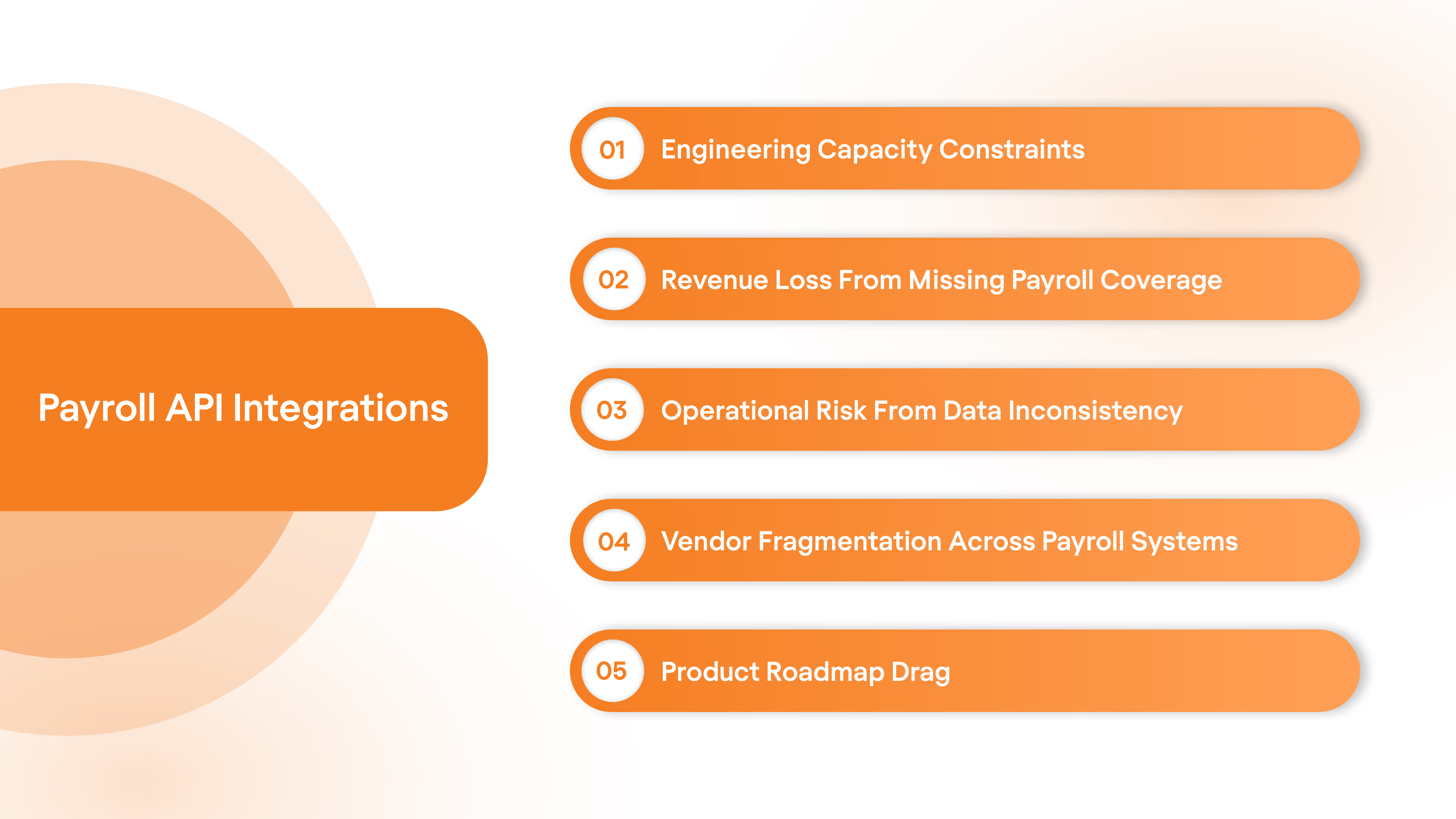
- Engineering Capacity Constraints: Building and shipping a single payroll integration consumes weeks of senior engineering time, followed by recurring work to handle vendor-specific edge cases, breaking changes, and version drift.
- Revenue Loss From Missing Payroll Coverage: Enterprise buyers require support for their existing payroll provider during procurement. Lack of payroll integrations directly blocks deals or forces concessions during late-stage negotiations.
- Operational Risk From Data Inconsistency: Payroll errors such as incorrect deductions, delayed contributions, or stale employee status propagate into benefits, retirement, and compliance workflows, creating downstream financial and support exposure.
- Vendor Fragmentation Across Payroll Systems: Enterprises support employers running different payroll vendors simultaneously, each with distinct schemas, pay cycles, file formats, and update behaviors that cannot be handled with one-off connectors.
- Product Roadmap Drag: Product and platform teams divert effort away from core features and analytics to maintain payroll connectors, slowing delivery of capabilities that differentiate the product in competitive evaluations.
See how a benefits platform reduced payroll data complexity, sped up onboarding, and improved reliability by learning How Clever Benefits Streamlined Payroll and Benefits Data Integration with Bindbee's Unified API
How the Bindbee Payroll API Reduces Payroll Integration Risk and Effort
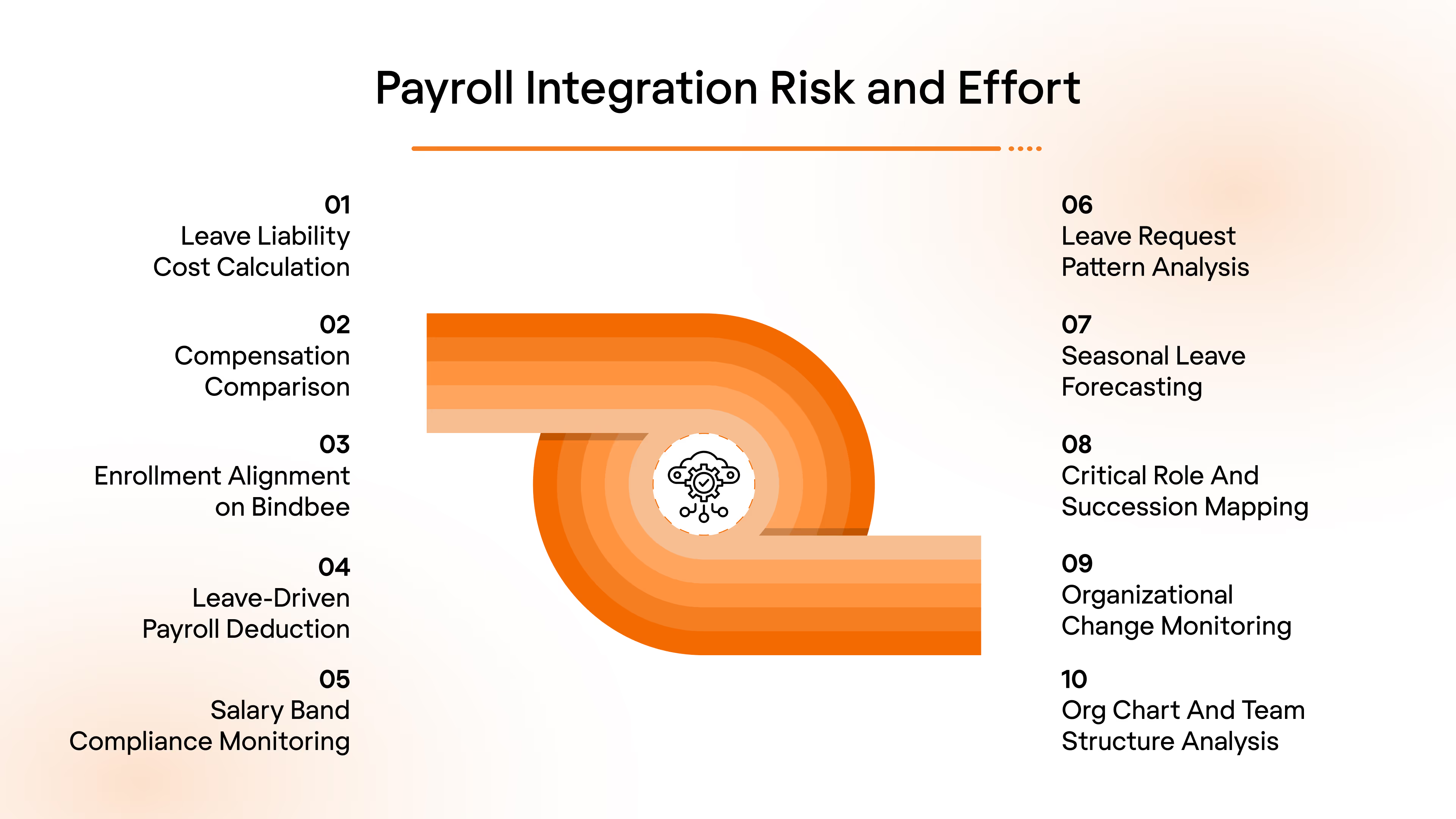
Bindbee reduces payroll integration risk by normalizing payroll and HRIS data at depth, allowing complex analytical and operational use cases to run reliably across vendors without custom integration logic.
1. Leave Liability Cost Calculation
Accurate leave liability depends on consistent leave accrual and payroll-linked compensation data.
- Unified Leave Balances: Standardized time-off and accrual models across payroll and HRIS systems.
- Payroll-Linked Cost Mapping: Leave balances align with compensation and pay frequency for financial reporting.
- Cross-Vendor Consistency: Liability calculations remain accurate regardless of the underlying payroll provider.
2. Compensation Comparison Across Locations
Geographic compensation analysis breaks when payroll data differs by vendor and structure.
- Normalized Compensation Fields: Salary, hourly rates, and pay cadence standardized across systems.
- Location-Aware Attributes: Payroll data mapped with office and region metadata.
- Comparable Outputs: Eliminates vendor-driven skew in cross-location pay analysis.
3. Benefits Deduction and Enrollment Alignment on Bindbee
Payroll benefit deductions break when each provider encodes deductions, contributions, and eligibility differently. Bindbee removes this risk by normalizing deduction data at the field and semantic level.
- Unified Deduction Models: Pre-tax, post-tax, statutory, and voluntary benefit deductions normalized across payroll systems.
- Enrollment-to-Payroll Mapping: Active benefit enrollments are mapped directly to corresponding payroll deductions.
- Eligibility-Aware Deduction Validation: Deductions validated against employment status, hours worked, and compensation rules.
4. Leave-Driven Payroll Deduction and Cost Impact
Leave management creates financial risk when payroll execution is disconnected from time-off records.
- Leave-to-Payroll Execution Mapping: Approved leave translated into paid, unpaid, or partially paid payroll outcomes.
- Automatic Pay Adjustments: Salary, hourly, and shift-based pay adjusted correctly for unpaid or excess leave.
- Policy and Accrual Enforcement: Payroll reflects accrual limits, carryover rules, and excess leave handling consistently.
5. Salary Band Compliance Monitoring
Salary band enforcement requires precise alignment between payroll and policy.
- Band-Aware Compensation Mapping: Payroll data mapped to defined salary ranges.
- Exception Detection: Identifies out-of-band compensation automatically.
- Compliance-Ready Views: Supports internal audits and review cycles.
6. Leave Request Pattern Analysis
Understanding leave behavior requires consistent tracking across systems.
- Unified Leave Event Models: Requests and approvals standardized across HRIS and payroll.
- Frequency and Timing Analysis: Allows identification of usage patterns.
- Process Optimization Inputs: Data supports approval and staffing improvements.
7. Seasonal Leave Forecasting
Seasonal planning depends on stable historical leave and payroll eligibility data.
- Historical Leave Normalization: Multi-year leave data remains comparable across vendors.
- Payroll Eligibility Alignment: Forecasts reflect active, payroll-eligible employees.
- Capacity Risk Visibility: Anticipates coverage gaps before impact.
8. Critical Role And Succession Mapping
Succession planning requires an accurate employment and compensation context.
- Role-Centric Employment Models: Payroll-linked role data remains consistent over time.
- Compensation Context: Identifies risk tied to cost and role criticality.
- Cross-System Continuity: Maintains accuracy despite HRIS or payroll changes.
9. Organizational Change Monitoring
Tracking org changes requires consistent structural data across time.
- Employment Lifecycle Tracking: Captures joins, exits, and internal movement.
- Structure Normalization: Org changes remain comparable across payroll systems.
- Trend Analysis Support: Allows long-term structural insights.
10. Org Chart And Team Structure Analysis
Accurate org visualization depends on reliable role and reporting data.
- Standardized Reporting Relationships: Unified team and manager mappings.
- Cross-Functional Visibility: Supports analysis of matrix and cross-team structures.
- Size and Composition Insights: Allows evaluation of team scale and balance.
By supporting these ten payroll-driven use cases on normalized data,Bindbee removes integration fragility from analytics, planning, and compliance workflows that depend on long-term accuracy.
See how Bindbee simplifies HRIS, payroll, and ATS integrations with a single unified API. Book a demo to evaluate it against your real use cases.
Payroll Data Models and Integration Depth
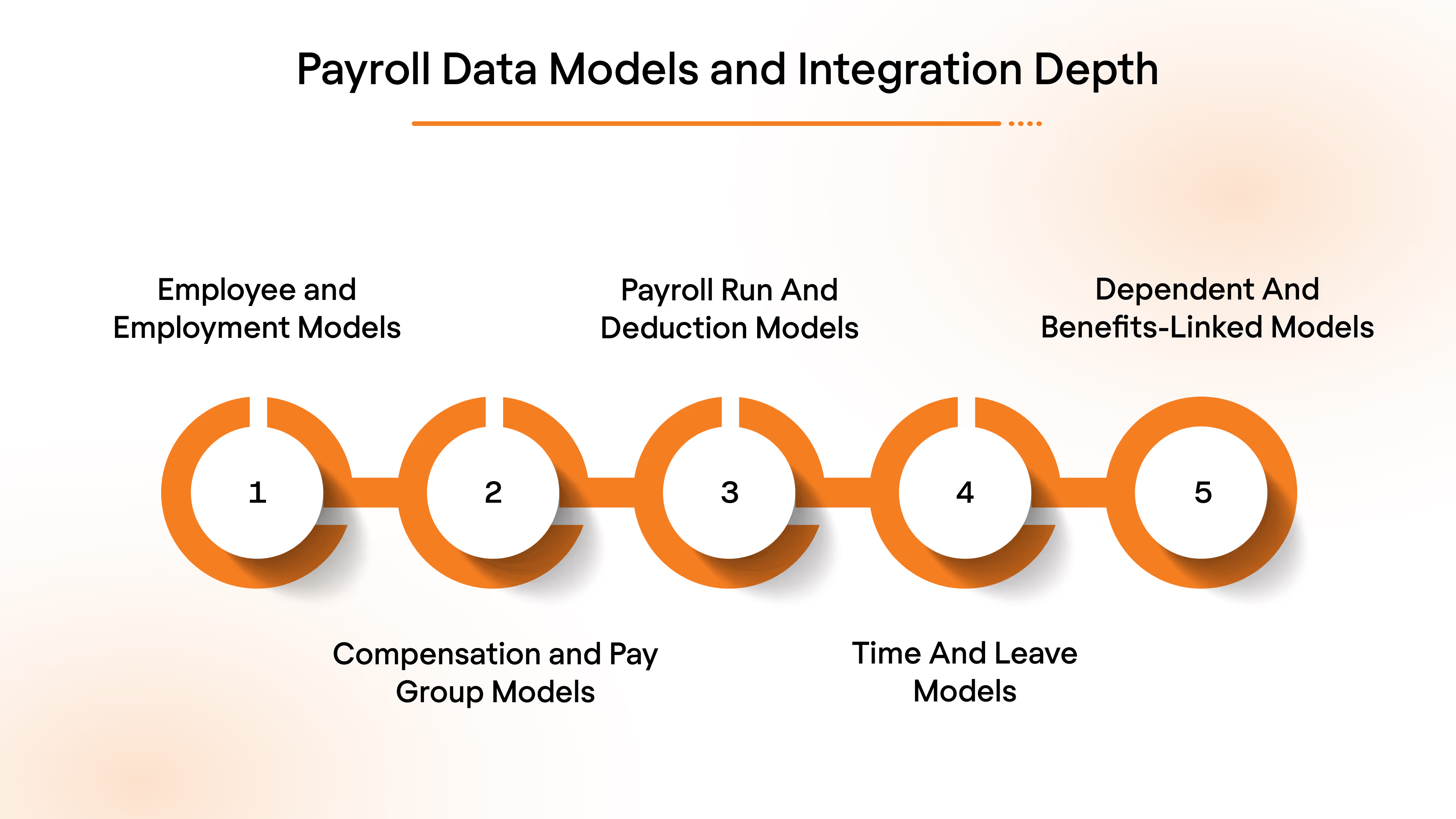
Enterprise payroll workflows require more than surface-level employee data. Bindbee provides deep, normalized payroll models that support deductions, contributions, and lifecycle changes across diverse payroll systems.
- Employee and Employment Models: Unified representations of employee identity, job status, hire and termination events, and employment type guarantee that downstream systems reflect the payroll-eligible workforce state accurately.
- Compensation and Pay Group Models: Standardized handling of salary, hourly rates, pay frequency, and pay group assignment allows correct payroll calculations across vendors with differing compensation structures.
- Payroll Run And Deduction Models: Normalized payroll run objects capture gross pay, net pay, employer and employee deductions, effective dates, and payroll cadence to support benefits and retirement workflows.
- Time And Leave Models: Time-off, balances, and timesheet entries are mapped into consistent structures, allowing accurate accrual tracking and payroll liability calculations.
- Dependent And Benefits-Linked Models: Support for dependents, coverage tiers, and payroll-linked benefit deductions allows enrollment, reconciliation, and contribution accuracy across benefits and retirement platforms.
By exposing deep payroll models rather than shallow field mappings, Bindbee supports production-grade payroll and benefits use cases without requiring vendor-specific logic.
Who the Bindbee Payroll API Is Built For
Bindbee is designed for platforms where payroll data is a core dependency, not a peripheral feature. Its API supports organizations that require reliable payroll connectivity to scale revenue, operations, and customer onboarding in the U.S. market.
| Segment | Primary Roles | Core Payroll Requirements | Why Bindbee Fits |
|---|---|---|---|
| HR Tech SaaS Platforms | CTO, VP Engineering, Head of Product | Employee lifecycle sync, payroll-linked compensation data, real-time status updates, timesheet write-back | Deep unified payroll models reduce custom connector work while preserving data consistency across vendors. |
| Employee Benefits Platforms | Head of Product, Benefits Ops Lead, VP Operations | Accurate payroll deductions, dependent mapping, and eligibility tracking | Normalized deduction and dependent models support enrollment, reconciliation, and claims workflows. |
| 401(k) Providers and TPAs | Head of Integrations, VP Operations, Implementation Lead | Timely contribution posting, participant updates, and multi-payroll normalization | Canonical payroll and contribution models reduce missed contributions and onboarding friction. |
| Mid-Market and Enterprise SaaS | Platform Engineering, Architecture Teams | Stable APIs, predictable integration behavior, audit-ready data | Centralized monitoring, retries, and consistent schemas reduce operational payroll risk. |
| U.S.-Focused Platforms | Compliance, Security, Legal Teams | HIPAA readiness, data security, contractual safeguards | U.S.-first posture with compliance artifacts supports enterprise procurement and reviews. |