

Best Practices for B2B API Integration
Summarise the blog with AI

As a CTO or VP of Engineering at an HR Tech or benefits platform, you know how much time and energy go into connecting with your partners’ systems. Each new vendor connection can take weeks to build, requires constant updates as APIs change, and often triggers firefighting when data mismatches occur. In fact, 71% of teams take 3 or more weeks to ship a single integration, which directly slows your roadmap and pulls focus away from features that actually differentiate your product.
This is where modern B2B API integration frameworks can transform your operations. By connecting multiple systems through a unified, reliable, and secure API, your team can accelerate time-to-market, reduce maintenance burden, and ensure data consistency across HR, payroll, and benefits workflows. This approach helps you deliver smoother partner experiences while improving data accuracy across systems.
In this blog, we’ll explore what B2B API integration is, how it connects business systems, and the best practices to implement it effectively.
Key Highlights:
- B2B API integration connects HR, payroll, and benefits systems across organizations to enable secure data exchange, automation, consistency, and scalable partner connectivity.
- Business systems integrate by defining data flows, choosing the right API or file-based mechanisms, implementing security controls, testing across scenarios, and maintaining integrations as vendors evolve.
- Reliable integrations depend on consistent API design, clear documentation, strong security and compliance controls, observability, resilient error handling, real-time updates, and continuous testing.
- Lack of modern B2B API integration leads to slow partner onboarding, high maintenance effort, data inconsistencies, operational errors, and lost deals in competitive sales cycles.
What is B2B API Integration and Why It Matters?
B2B API integration refers to the process of connecting different business systems using application programming interfaces (APIs) to share data, trigger workflows, and automate operations. Unlike internal integrations, B2B APIs often bridge systems across organizations, including partners, vendors, and customers.
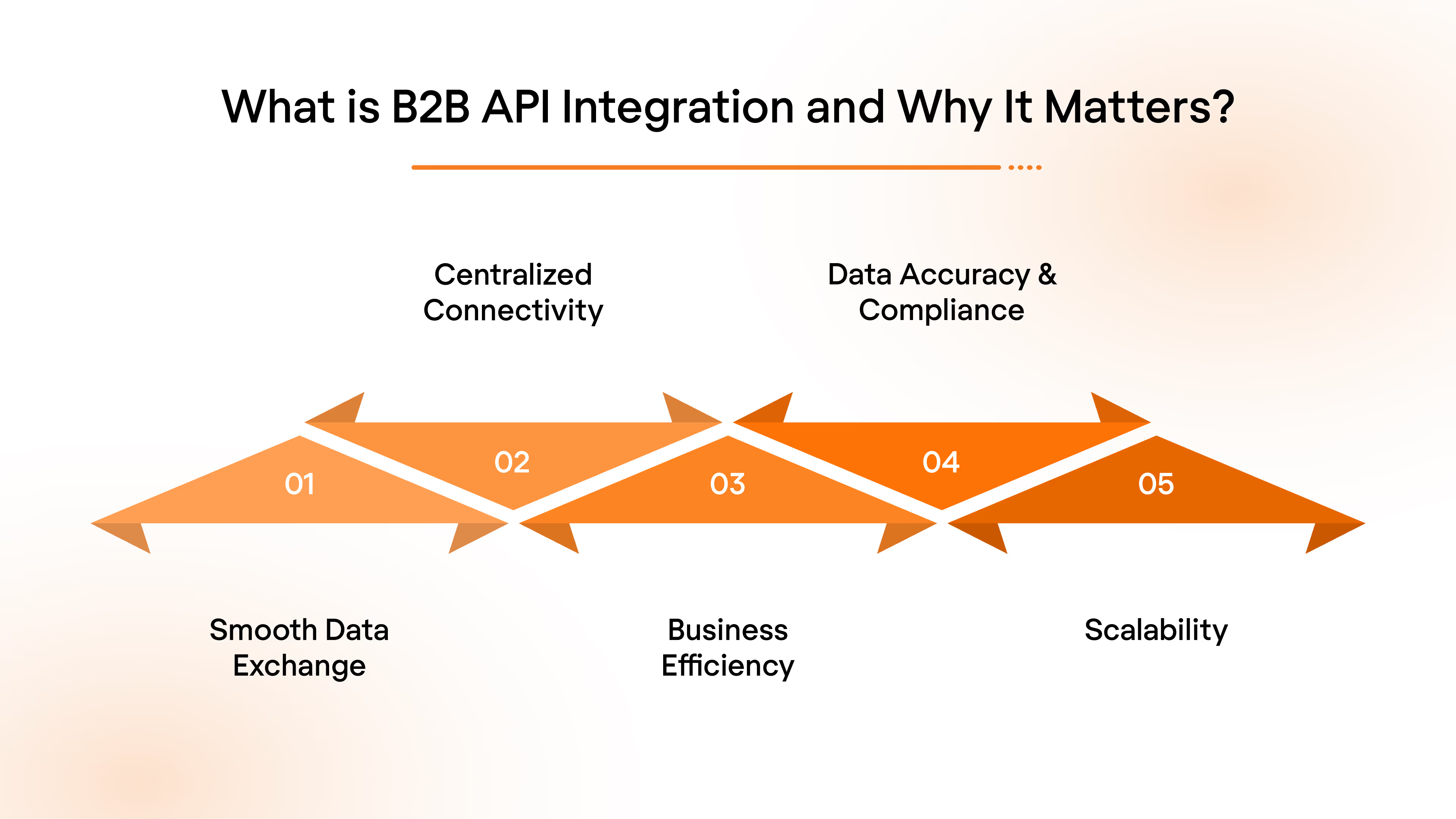
Here’s why it matters:
- Smooth Data Exchange: APIs allow your systems to share employee, payroll, and benefits data in real time or through scheduled updates.
- Centralized Connectivity: A robust API framework replaces fragile point-to-point connectors, reducing engineering effort and maintenance overhead.
- Business Efficiency: Automated data flows help you speed up partner onboarding and remove repetitive manual processes.
- Data Accuracy & Compliance: Proper API integration ensures reliable payroll deductions, benefits enrollments, and adherence to regulatory standards.
- Scalability: A unified API approach allows you to integrate with multiple systems through a single connection, making growth easier and faster.
In short, strong B2B API integration isn’t just a technical necessity; it’s a driver of operational efficiency, customer satisfaction, and business growth. Next, let’s see exactly how APIs link business systems and streamline data flow.
Suggested Read: Complete Third-Party Integrations Guide for B2B SaaS 2025
How APIs Connect Business Systems?
APIs work as bridges between software applications. They expose data and functionality in a controlled, structured manner, allowing one system to request and receive information from another without manual intervention.
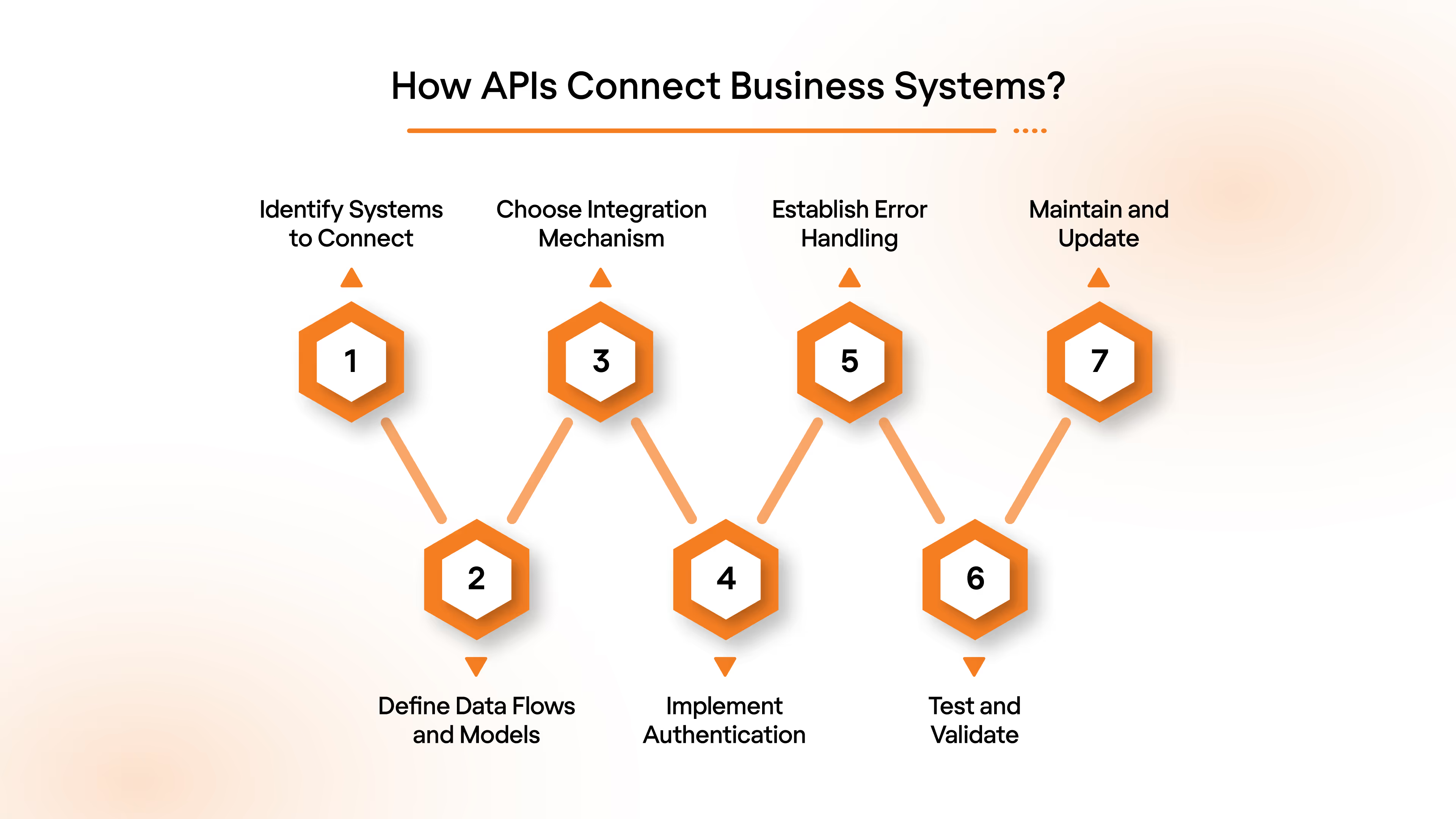
Here’s how you can integrate your systems efficiently:
- Identify Systems to Connect: Determine which platforms need to exchange data; HRIS, ATS, payroll systems, benefits platforms, or 401(k) providers. Understanding your source and target systems ensures that you map the right endpoints and data models from the start.
- Define Data Flows and Models: Map out which data points you need, how often updates should occur, and the canonical structure of each object (employee, payroll_run, time_off, compensation, dependents, etc.). By standardizing your data model, you ensure consistency and simplify downstream operations.
- Choose Integration Mechanism: Decide on the connection type for each system:
- RESTful APIs for modern, scalable platforms
- SOAP APIs for legacy systems with strict message formatting
- SFTP/file-based integrations for batch transfers
- Event-driven webhooks for real-time updates
- Implement Authentication and Security: Use OAuth, API keys, or magic-link authentication to secure each connection. Encrypt your data in transit and at rest, and implement audit logging to maintain compliance and data integrity.
- Establish Error Handling and Monitoring: Build automated retries, queued processing, and alert mechanisms for failed updates. You can track logs, affected customers, and data discrepancies using dashboards, helping you detect and resolve issues faster.
- Test and Validate: Conduct comprehensive testing of each connector to ensure data accuracy, timing, and reliability. Include scenarios for new hires, terminations, payroll deductions, and benefits enrollment to simulate real-world conditions for your systems.
- Maintain and Update: Continuously monitor API changes, vendor updates, and system anomalies. Adjust mappings and workflows proactively to prevent downtime or operational errors, keeping your integrations running smoothly over time.
By following these steps, you can connect multiple business systems efficiently, providing a unified, reliable, and scalable integration layer that reduces your engineering overhead and operational risk.
Next, let's explore the best practices to make these integrations reliable and scalable.
Best Practices for Successful B2B API Integration
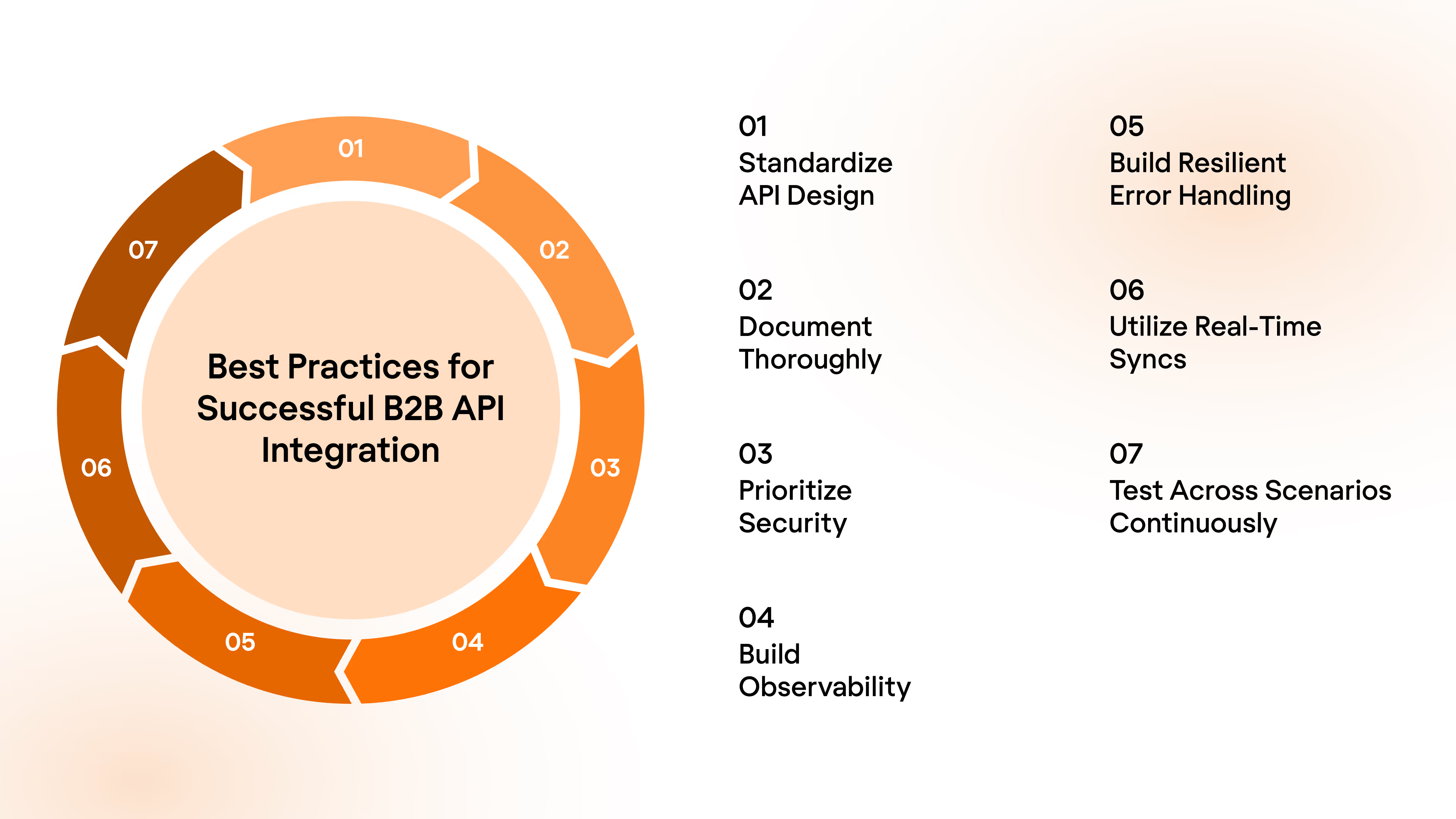
Successful B2B API integration requires a combination of technical precision, operational planning, and strategic foresight. Here are the key practices that can help your business execute integrations efficiently:
1. Standardize API Design and Contracts
Integration failures often stem from inconsistent data formats and unstable endpoints. Standardizing your API design ensures every integration behaves predictably, reducing engineering effort and preventing misalignment between systems.
Key Actions:
- RESTful/GraphQL: Adopt standard principles with predictable endpoints for easier integration.
- Canonical Models: Define unified data structures for similar fields across vendors.
- Contract-First: Design API contracts before coding to avoid misalignment.
- Versioning: Maintain backward compatibility with clear version control.
2. Document Thoroughly and Keep it Updated
Documentation is more than a reference; it’s a tool that accelerates integration adoption, reduces support queries, and keeps your teams aligned.
Key Actions:
- Endpoint Examples: Provide sample requests, responses, and authentication methods.
- Interactive Testing: Offer API explorers or sandboxes for hands-on testing.
- Continuous Updates: Refresh docs with every API change or version release.
- Troubleshooting Tips: Highlight common pitfalls and quick fixes for your developers.
3. Prioritize Security and Compliance
Security isn’t just a checkbox; it’s crucial when exchanging sensitive business and employee data. Integrations must protect data at every stage, reducing the risk of breaches or compliance violations.
Key Actions:
- Encrypted Channels: Secure your API calls using HTTPS/TLS.
- Strong Authentication: Implement OAuth 2.0 or scoped API keys.
- Role-Based Access: Enforce least-privilege principles for users and services.
- Audit & Monitoring: Track API activity for compliance and anomaly detection.
4. Build Observability and Monitoring
APIs will occasionally fail; proactive monitoring ensures you detect issues before they impact end-users. Observability reduces downtime and gives your teams confidence in the reliability of integrations.
Key Actions:
- Track Metrics: Monitor latency, throughput, and error rates.
- Real-Time Alerts: Get notified immediately of anomalies or failures.
- Operational Dashboards: Visualize logs and metrics for quick diagnostics.
- Issue Analysis: Use logs to identify recurring problems and optimize integrations.
5. Build Resilient Error Handling and Recovery Mechanisms
Even well-designed APIs can face network interruptions or unexpected input. You can prevent small failures from becoming system-wide issues with resilient error handling, improving reliability and user trust.
Key Actions:
- Automated Retries: Retry failed requests with exponential backoff.
- Queued Processing: Queue operations that fail temporarily for later execution.
- Clear Error Messages: Provide actionable error codes for faster debugging.
- Fallback Workflows: Maintain alternate paths for critical processes during failures.
6. Utilize Real-Time Syncs Where Possible
Real-time data flows ensure systems stay up to date and reduce unnecessary overhead from polling or manual updates. Event-driven architecture helps your workflows stay responsive and accurate.
Key Actions:
- Webhooks: Trigger updates instantly when data changes.
- Selective Polling: Use polling only when webhooks aren’t supported.
- Optimized Payloads: Minimize latency by sending only necessary data.
- Transaction Logs: Keep a record of events for auditing and troubleshooting.
7. Test Across Scenarios Continuously
Testing isn’t a one-time activity; it’s a continuous practice to ensure integrations remain stable and predictable, even as vendors or your system evolve.
Key Actions:
- Unit & Integration Tests: Validate each component and the full workflow.
- Edge Case Simulations: Test unusual scenarios to prevent failures in production.
- Cross-System Testing: Verify consistency across multiple partner systems.
- Continuous Integration: Embed tests into deployment pipelines for automated validation.
In the following section, let's examine the risks of neglecting API integration.
Suggested Read: Unified Integration: Complete 2025 Guide + Code Examples
Common Challenges Businesses Face Without B2B API Integration
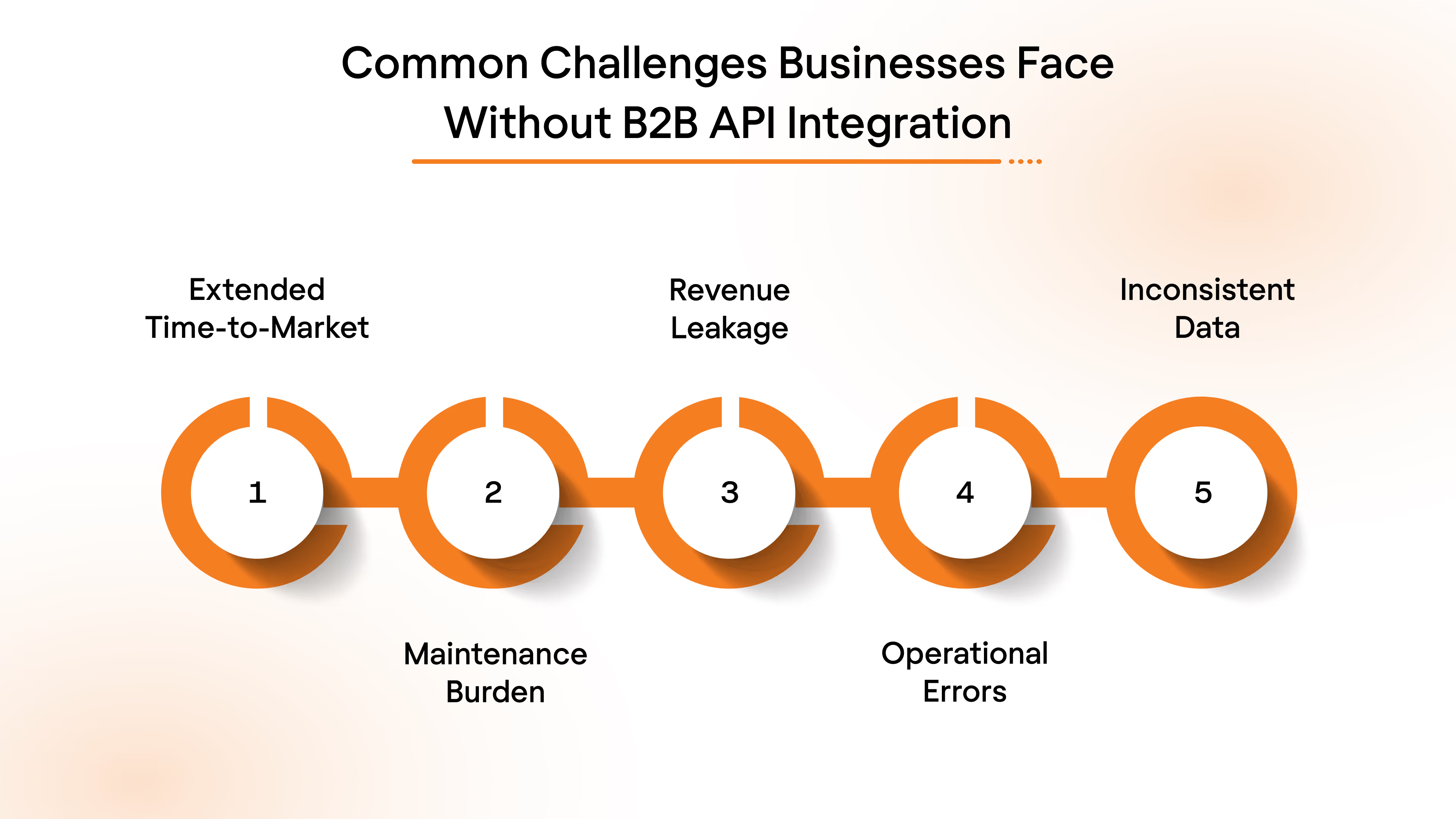
Even robust platforms can cause headaches if you neglect or poorly implement API integrations. Common challenges include:
- Extended Time-to-Market: Building integrations in-house can take 1–1.5 months per vendor. Complex cases take even longer. Delays can slow your product launches and sales cycles.
- Maintenance Burden: Vendor API changes, SOAP to REST migrations, and legacy file formats require ongoing developer effort. This distracts your team from building core features.
- Revenue Leakage: Prospects often demand specific integrations. If your product lacks them, you risk losing deals to competitors with more robust connectivity.
- Operational Errors: Manual processes or brittle integrations increase the risk of payroll mistakes, incorrect deductions, or benefits mismanagement. This can create customer support churn and damage your trust.
- Inconsistent Data: Without normalization and monitoring, your systems may have mismatched employee, compensation, or time-off data, creating compliance and audit issues.
Understanding these challenges underscores the importance of adopting modern API integration practices.
Having seen the risks, let’s explore how Bindbee addresses these challenges with a unified, compliant integration platform.
How Bindbee Supports Reliable B2B API Integration?
Bindbee’s unified API platform addresses the challenges above with a vertical-first, compliance-focused approach to HR, payroll, and benefits integrations.
Here’s how we can assist you:
- Prebuilt Connectors: Bindbee offers 50+ prebuilt connectors covering Workday, ADP Workforce Now, Gusto, Rippling, BambooHR, Oracle HCM, SAP SuccessFactors, UKG, Personio, Paychex, Paycom, Paylocity, QuickBooks, Xero, and more. SFTP adapters are available for legacy systems, ensuring broad coverage for diverse employer environments.
- Deep Integration Models: Each integration supports 16–17 normalized models, employees, payroll runs, compensation, dependents, time-off, groups, and pay_groups. This depth ensures operational workflows, reporting, and analytics function without missing data points.
- Real-Time and Event-Driven Sync: Event-driven webhooks and low-latency polling keep data consistent across systems. Deduction changes, demographic updates, and time-off requests sync immediately, reducing manual intervention and errors.
- Operational Tooling and Monitoring: Dashboards provide visibility into logs, impacted customers, and integration health. Automated retries, queued processing, and self-healing mechanisms reduce downtime and manual troubleshooting.
- Compliance and Security by Design: Bindbee is SOC 2 and ISO 27001 aligned, GDPR-ready, and HIPAA-compliant. Data encryption, scoped authentication, and audit logging protect sensitive information while ensuring legal and regulatory requirements are met.
- Developer and UX Experience: Clean documentation, interactive API explorers, sample SDKs, and embeddable connection flows empower engineering teams while simplifying employer onboarding. Magic-link authentication lets clients connect HR/payroll systems in minutes without complex setup.
By utilizing Bindbee, you can reduce engineering effort, accelerate onboarding, improve data accuracy, and close deals faster.
Final Thoughts
B2B API integration has become essential for HR Tech, benefits platforms, and payroll-adjacent SaaS providers. Following best practices, such as unified APIs, real-time syncing, compliance-first design, and operational tooling, ensures your integrations are reliable, scalable, and secure.
For HR Tech and benefits companies, Bindbee offers a solution that delivers deep, prebuilt integrations, operational tooling, and compliance-first architecture. Book a demo with us today and see how a unified API can transform your HR, payroll, and benefits workflows.
FAQs
1. What business requirements should be identified before API integration?
Before API integration, you should define data types, integration goals, workflows, security needs, compliance requirements, performance expectations, and system compatibility. Clarifying use cases, volumes, and success metrics helps you avoid rework and ensures the API supports your operational and business objectives.
2. How to choose the right API for B2B integration?
You should evaluate APIs based on compatibility with your systems, data coverage, security standards, reliability, documentation quality, scalability, and vendor support. Clear SLAs, versioning policies, and long-term roadmap alignment ensure the API fits both current needs and future growth.
3. How does OAuth improve authentication in B2B integrations?
OAuth improves authentication by allowing secure, token-based access without sharing credentials. You can grant limited, time-bound permissions to partners, reduce security risks, and maintain better control over access. This approach supports compliance while simplifying partner onboarding and credential management.
4. What role does middleware play in API implementation?
Middleware acts as a bridge between systems by handling data transformation, routing, validation, and error management. You can use it to standardize integrations, manage workflows, improve reliability, and reduce direct dependencies between applications, making integrations easier to maintain and scale.
5. What scalability factors to consider in B2B APIs?
You should consider traffic spikes, concurrency limits, rate limiting, data volume growth, and response times. Support for horizontal scaling, caching, asynchronous processing, and robust monitoring helps your APIs handle increasing partner demand without performance or reliability issues.