

Benefits of an Integrated HR Payroll System
Summarise the blog with AI
Ever noticed how HR and payroll data refuse to line up, even after multiple attempts to fix them?
When your product depends on accurate employee records, contribution data, or payroll deductions, even a small data mismatch can create big downstream issues. And if you're supporting multiple HRIS or payroll systems, those inconsistencies multiply fast.
Are you constantly dealing with slow employer onboarding, missing payroll fields, unreliable data syncs, or engineering teams tied up maintaining one-off connectors? If you're building HR Tech or a benefits platform, these challenges directly affect your product's reliability. This blog explores the key benefits of an integrated HR and payroll system and why it matters.
Key Takeaways
- Disconnected HR and payroll systems create sync errors, slow onboarding, and a heavy maintenance load for your engineering and ops teams.
- An integrated HR payroll system keeps employee data consistent, accurate, and real-time across your platform, powering everything from payroll to benefits workflows.
- Signs you need integration include lost deals, onboarding delays, data mismatches, and a team buried in one-off connector maintenance.
- Core benefits include faster onboarding, reduced errors, compliance accuracy, better reporting, and lower long-term integration costs.
- A strong integration solution should offer real-time syncing, deep HR/payroll models, prebuilt connectors, robust monitoring, and enterprise-grade compliance.
What Is an Integrated HR Payroll System?
An integrated HR payroll system connects your HR data, such as employee details, time off, benefits, and job status, with payroll processes in a single, unified view. Instead of treating HR and payroll as separate systems, it allows information to flow automatically between them, so every update in HR is instantly reflected in payroll.
For HR Tech or benefits platforms, this integration means you can automatically sync accurate employee and payroll data across your product without manual exports, duplicate data entry, or delays.
Now that you understand what an integrated HR payroll system is, let’s look at a few clear signs that show you need to integrate HR payroll system.
5 Signs You Need an Integrated HR Payroll System
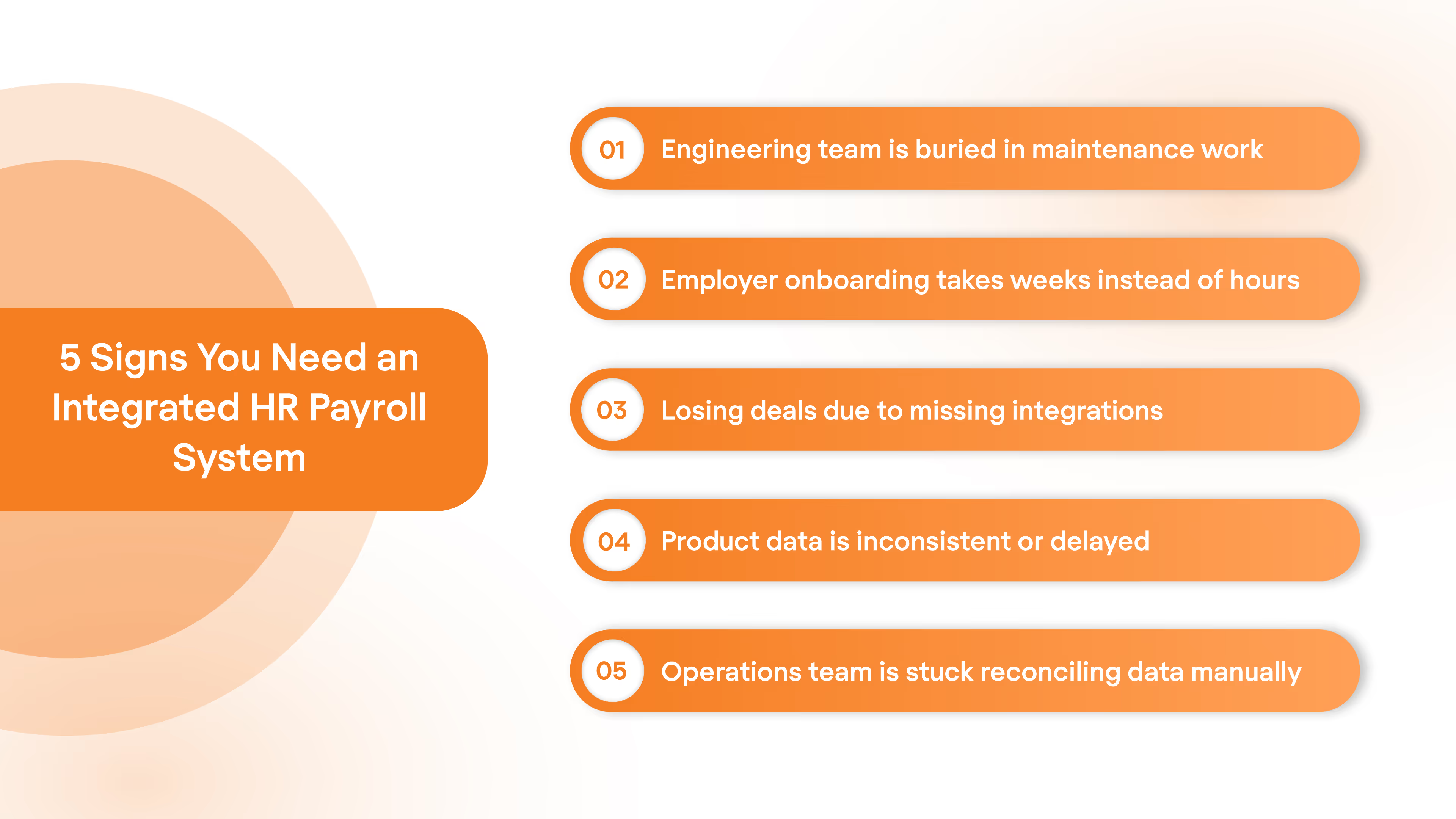
When your product depends on accurate HR and payroll data, even small disconnects can lead to big operational issues. Here are the signs it’s time to adopt an integrated HR and payroll system:
- Your engineering team is buried in maintenance work. You’re constantly fixing API changes, CSV imports, or one-off connectors instead of focusing on product innovation.
- Employer onboarding takes weeks instead of hours. Each new customer requires a custom setup or manual data mapping to their HRIS or payroll system.
- You’re losing deals due to missing integrations. Prospects expect you to support the systems they already use and walk away when you can’t.
- Your product data is inconsistent or delayed. Payroll deductions, employee status, or benefits data don’t sync in real time, leading to errors downstream.
- Your operations team is stuck reconciling data manually. Benefits ops or implementation teams spend hours fixing mismatches between HR and payroll systems.
If any of these signs are familiar to you, integrating HR and payroll through a unified system can help you scale faster, reduce maintenance pain, and deliver a more reliable experience to your clients.
Now that you know the warning signs, let’s look at how integration can actually transform your product and operations.
Also Read: Payroll Deductions: Guide for Employers & Payroll Providers
Benefits of an Integrated HR and Payroll System
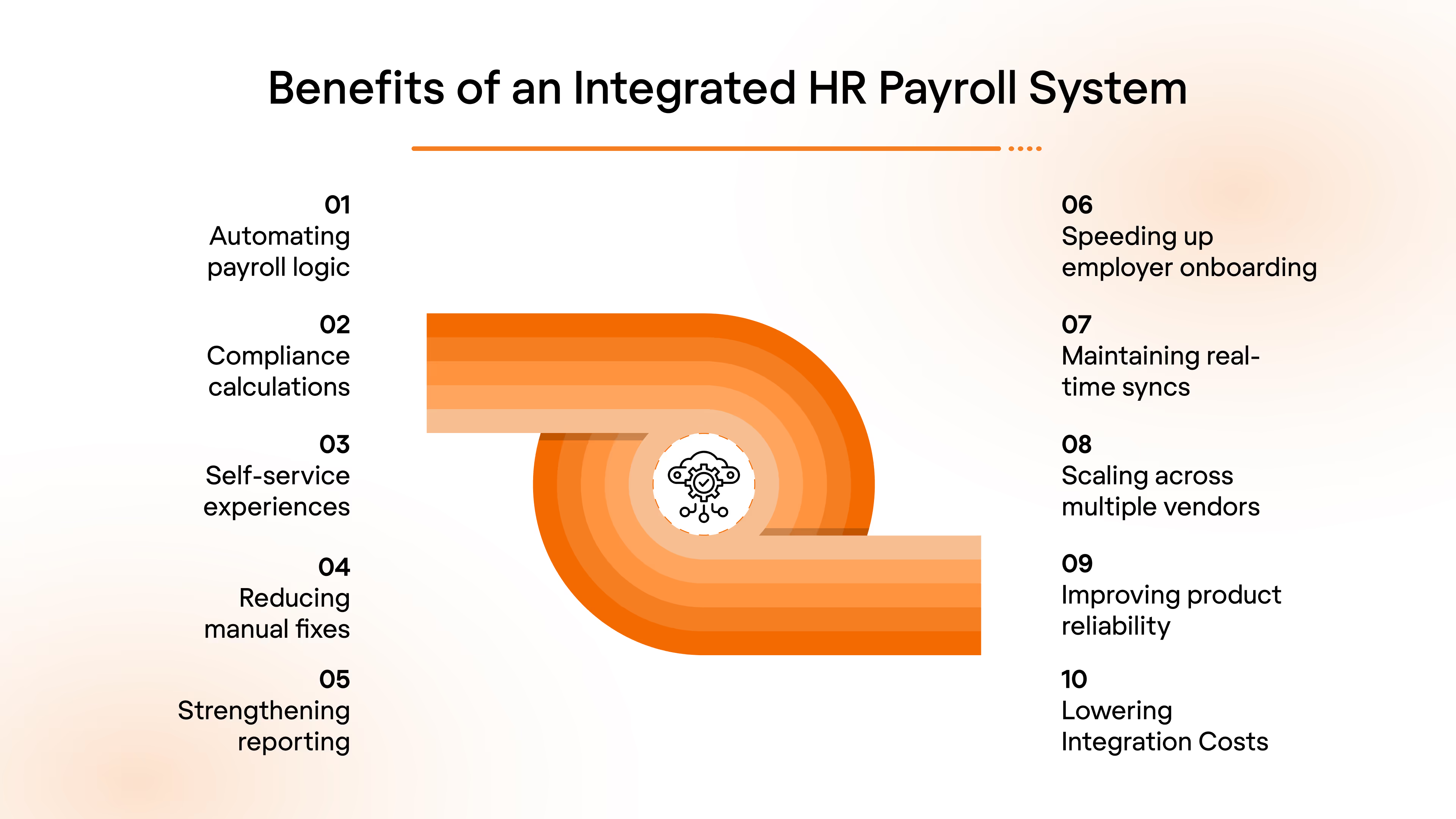
Your HR tech and benefits product only performs well when the underlying data is accurate, timely, and consistent. Separate HR and payroll systems create gaps that lead to sync issues, duplicate records, and repetitive cleanup work for your engineering and ops teams. A connected HR-payroll setup removes those silos and gives you one reliable data layer for every workflow your platform supports.
Here are the key benefits an integrated HR and payroll system brings to your product:
1. Automating payroll logic with clean employee data
When payroll is tied directly to HR records, pay runs, deductions, and adjustments update automatically. You avoid manual file uploads, inconsistent salary data, and the support load caused by error-prone imports. This ensures employees are paid correctly and on time, reducing support tickets and strengthening your platform’s credibility.
2. Keeping compliance calculations up to date
Tax rules and benefits requirements shift often. Integration helps your product stay aligned with current regulations, so audits, filings, and payroll-linked benefits calculations run accurately without extra engineering work. It also reduces the risk of penalties and simplifies reporting for your customers, giving your platform a competitive advantage.
3. Supporting unified self-service experiences
A connected system lets employers present pay, benefits, and time-off details in one place. If your HR tech platform surfaces these views, integration keeps every change accurate and up to date. Employees get immediate access to updated information, improving satisfaction.
If you are building an HR or benefits platform, Bindbee helps you deliver this experience effortlessly. With its self-service features, Bindbee empowers employees to manage their benefits independently by viewing pay, coverage, and time-off details in one place. This not only enhances engagement but also reduces administrative workload for your customers.
4. Reducing manual fixes and day-to-day admin work
Without integration, your team and your customers spend time reconciling HRIS and payroll data. With synced systems, repetitive corrections drop, freeing engineering and ops for higher-value work. This efficiency allows your team to focus on product innovation rather than firefighting integration issues.
5. Strengthening reporting and analytics
When HR and payroll data live in a single stream, you can offer cleaner insights into benefits usage and time-off patterns without complex joins or external exports. Your platform can deliver actionable insights to your clients faster, helping them make informed HR and benefits decisions.
6. Speeding up employer onboarding
Integrated systems make it easier for new clients to connect their HRIS or payroll accounts. Faster onboarding reduces drop-offs and shortens the time it takes for employers to start using your platform. This streamlined process improves customer experience and accelerates your platform’s adoption rate.
7. Maintaining real-time syncs across workflows
Updates like hires, terminations, and compensation changes move instantly across HR, payroll, and benefits logic. Your platform stays aligned without manual intervention. Real-time data ensures that critical processes, such as benefits enrollment and payroll deductions, never miss a beat.
8. Scaling across multiple vendors with less engineering effort
As your customer base grows, you encounter a wider set of HRIS and payroll systems. A unified integration approach reduces the need for custom builds and helps your team support more systems smoothly. This flexibility lets your product grow without increasing your engineering team's maintenance overhead.
9. Improving product reliability
Clean, timely data leads to fewer sync failures and smoother employer experiences. That consistency boosts trust in how your platform handles sensitive payroll-linked data. Reliable integrations make your platform a preferred solution for many clients, improving retention and advocacy.
10. Lowering Integration Costs
By connecting HR and payroll data in a single system, your platform eliminates the need to build and maintain separate connectors for each HRIS or payroll vendor. This reduces ongoing engineering effort and lowers long-term operational expenses.
Once you understand how an integrated HR and payroll system can transform your platform’s efficiency, the next step is knowing what to look for in a solution that truly delivers those results.
What Are the Main Features of a Good Integrated Payroll HR System?
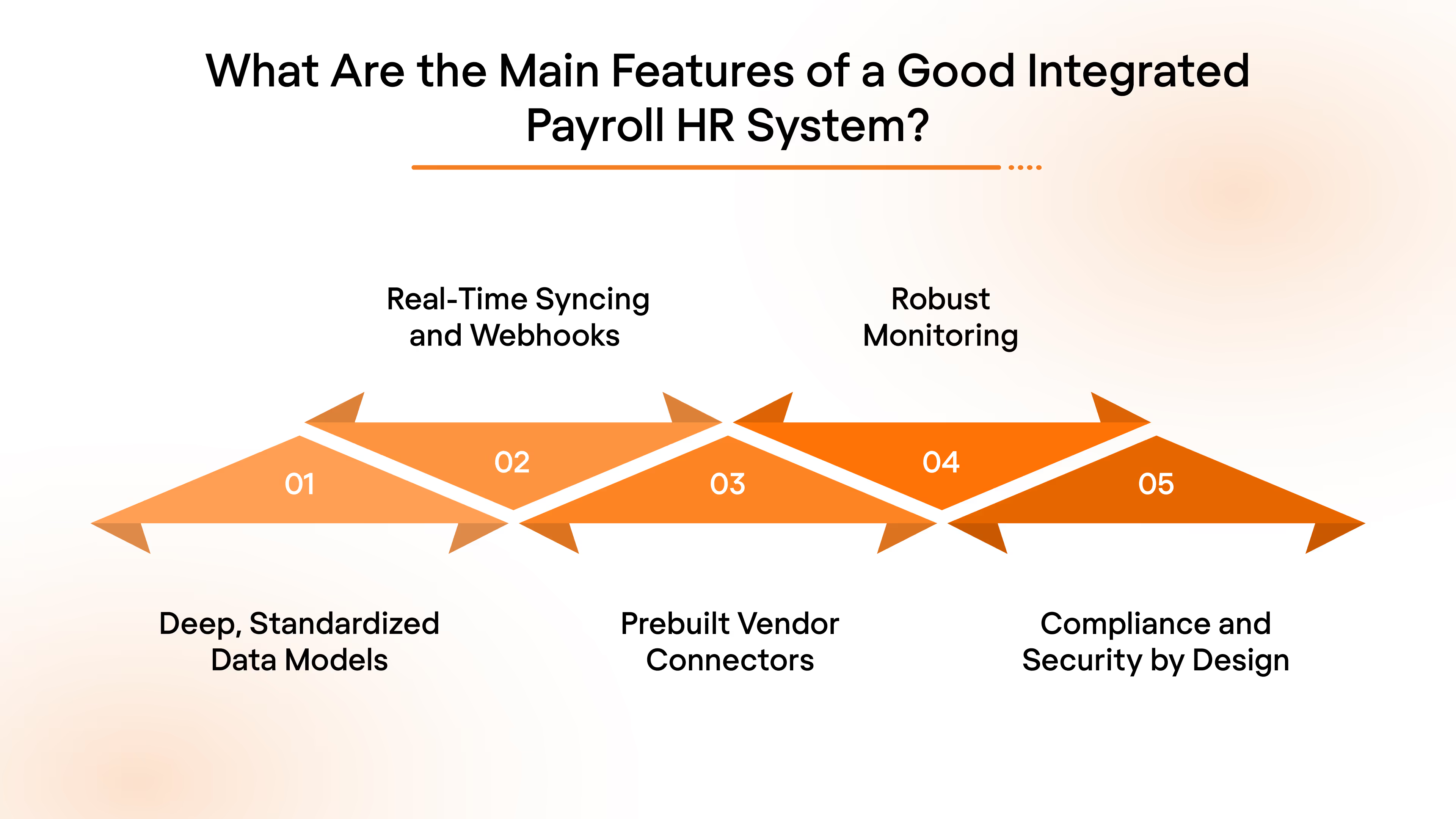
As a product or engineering leader building HR or benefits software, you need an integration framework that’s reliable, scalable, and capable of handling the real-world complexity of data. A strong integrated HR payroll system should maintain data accuracy, compliance, and user trust at scale.
Here are the key features to look for:
1. Deep, Standardized Data Models
Choose a system that supports comprehensive HR and payroll entities, including employees, employment, compensation, deductions, time off, and dependents. This depth ensures your platform can cover complex use cases, not just surface-level data syncs.
2. Real-Time Syncing and Webhooks
Data should update instantly across HR and payroll systems. Real-time syncs and webhook-driven updates prevent delays and keep your platform aligned with live employee changes such as new hires, pay adjustments, or terminations.
3. Prebuilt Vendor Connectors
A strong integration system includes prebuilt integrations with leading HRIS and payroll platforms such as ADP, Gusto, Workday, Rippling, or Paychex. This lets your product support more employer clients faster, without dedicating months of engineering time to build each connector.
4. Robust Monitoring and Error Handling
Integration issues are inevitable; what matters is visibility and recovery. Look for built-in dashboards, retries, and error logs that help your ops or support teams identify and resolve sync problems quickly, without developer intervention.
5. Compliance and Security by Design
Since you’re handling sensitive employee and payroll data, look for solutions that include SOC 2 or ISO 27001 compliance, encryption in transit and at rest, access control, and audit logs. This protects both your customers and your reputation.
If you are evaluating integration options, Bindbee brings all these capabilities together in one platform. Its unified API offers deep HR and payroll data models, real-time syncing, and prebuilt connectors, including ADP, Gusto, and Workday. With SOC 2, ISO, GDPR & HIPAA compliant, Bindbee helps your HR or benefits platform scale faster while keeping data accurate and protected.
Also Read: Unified API: The Secret to Effortless Integrations
Conclusion
Integrating HR and payroll systems is a strategic move that directly affects your platform’s efficiency, reliability, and scalability. Whether you’re building HR Tech or a benefits product, unified data flow helps you eliminate sync issues, reduce manual work, and deliver faster onboarding, accurate payroll logic, and stronger compliance.
If you are building an HR Tech SaaS or benefits platform and need a scalable way to connect with multiple HRIS and payroll systems, Bindbee is built for you. We offer a unified API that connects your product with multiple systems, including Workday, ADP, Paychex, UKG, and more, without any code. It’s designed to reduce engineering time, improve data accuracy, and speed up onboarding for your clients.
Here is how Bindbee helps HR tech platforms:
- Seamless Integrations: Effortlessly connect with 60+ HR and payroll systems via a unified API, eliminating the need to build custom connectors.
- Ensure Data Accuracy: Maintain real-time, error-free employee records across platforms with automatic data synchronization.
- Boost Operational Efficiency: Automate enrollment processes, claims tracking, and approvals to reduce manual tasks and administrative overhead.
- Enhance Scalability: Easily manage more employers and benefit offerings as your customer base grows, without adding tech complexity.
- Elevate Employee Experience: Enable self-service tools for benefits management with always-up-to-date data, improving user satisfaction and engagement.
Ready to reduce integration complexity and grow your platform faster? Book a demo today and see how easy it is to scale HR and payroll connectivity.
FAQs
1. Does integration help with compliance and regulation requirements?
Yes. Integrated systems help ensure that payroll calculations, tax withholdings, benefit deductions, and reporting comply with current regulations. Automatic flows reduce the risk of missed updates and compliance errors.
2. Is it just about convenience, or does it actually reduce errors?
It materially reduces errors. By entering data once and sharing it across HR and payroll modules, you avoid manual duplication, mismatches, and human errors that often occur when data is transferred manually.
3. Can integration reduce overall administration time and costs?
Yes. With automated workflows, less manual data entry, and fewer disparate systems to manage, HR and payroll teams save time, and platforms reduce long-term maintenance and overhead.