


How Bindbee Streamlines HR Tech Integrations at Scale
Summarise the blog with AI
.avif)
If you build HR tech, you already know where things break: integrations. One customer is on ADP, another on Bamboo, another on a legacy payroll system that has no standard fields. You spend weeks normalizing data, mapping edge cases, and keeping sync jobs alive.
Bindbee removes that friction.
With a unified employment API and standardized data flows, it streamlines HR tech integrations so your team can deliver features, not debug connectors.
In this article, we break down how Bindbee helps modern HR products streamline integrations at scale.
At a glance:
- HR tech integrations are slow and costly because every HRIS, payroll, ATS, and benefits system uses different schemas, workflows, and edge cases.
- Fragmented data causes onboarding delays, constant maintenance, payroll errors, and compliance risk across the entire customer lifecycle.
- Bindbee solves this by offering one unified API that connects to 60+ HR systems, normalizes employment data, and maintains all connectors on your behalf.
- Real-time and daily syncs keep employee, payroll, benefits, and time data accurate without manual cleanup or engineering intervention.
- Magic Link and pre-built connectors shorten customer onboarding, creating faster go-live and higher satisfaction.
- Automated monitoring, Logs, and Issues reduce integration troubleshooting, with customers like Budgie Health cutting integration management workload by 90%.
The Real Problem with HR Tech Integrations
Before any HR product can deliver value, it has to integrate with whatever HRIS, payroll, ATS, or benefits system the customer already uses. That’s where most teams hit friction. The employment ecosystem isn’t standardized, and each new customer brings a different set of systems, workflows, and edge cases your engineering team must absorb.
Here’s what makes integrations so painful:
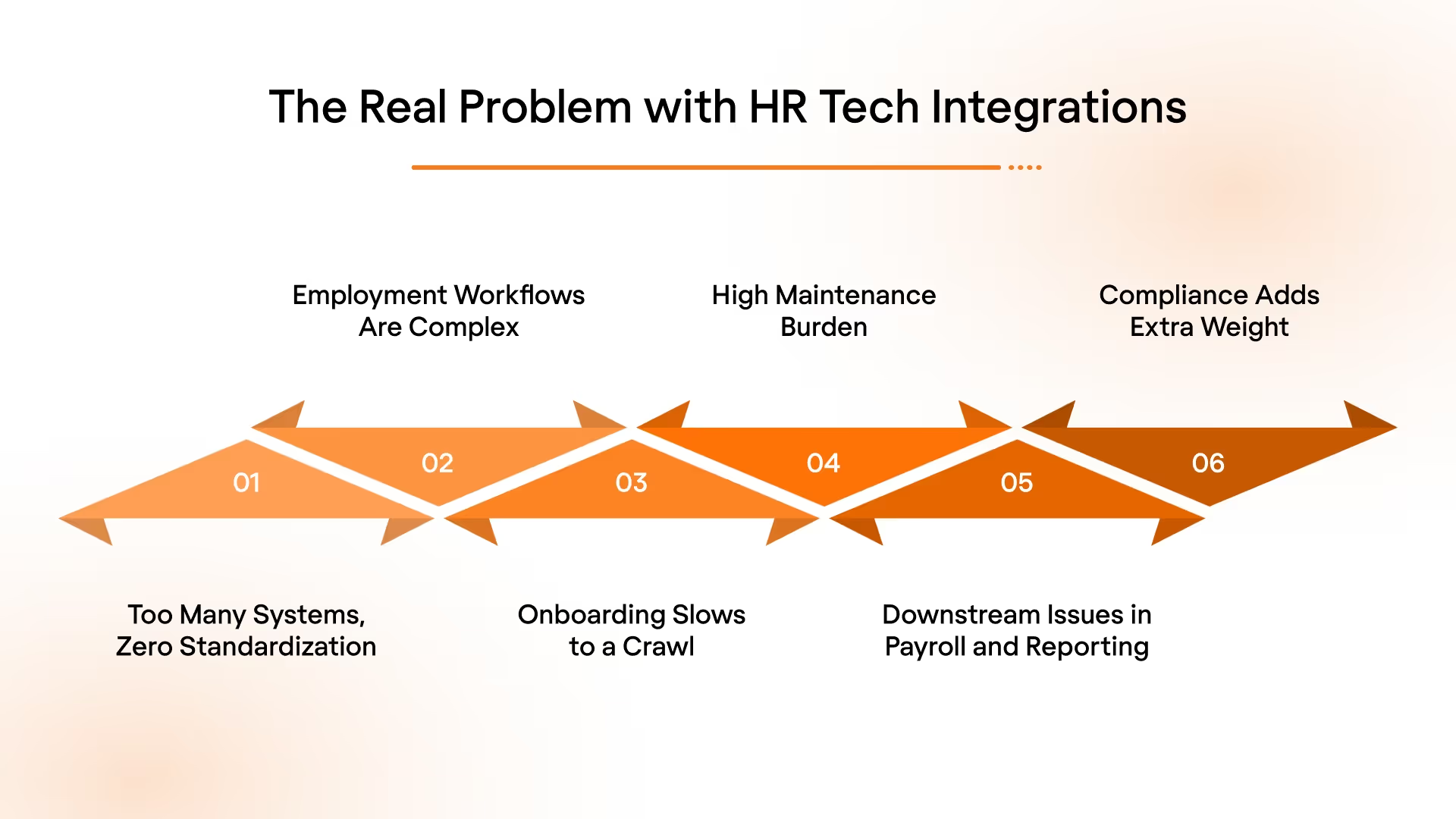
1. Too Many Systems, Zero Standardization
Every customer uses a different HRIS, payroll, ATS, or benefits tool, and none of them share a common data structure. Your team ends up mapping fields, rewriting logic, and handling exceptions for every system, every time.
2. Employment Workflows Are Complex
Onboarding, terminations, job changes, time tracking, deductions, and taxes all behave differently across platforms. Missing fields, inconsistent formats, and partial data create a constant stream of edge cases that slow engineers down.
3. Onboarding Slows to a Crawl
Integrations stretch onboarding timelines by weeks because teams must normalize data, test payloads, and reconcile mismatches before a customer can even go live.
4. High Maintenance Burden
Even after launch, connectors break due to API updates, expired credentials, or provider-specific quirks. Engineering becomes a help desk for integration failures instead of building the product.
5. Downstream Issues in Payroll and Reporting
Inconsistent data leads to incorrect payroll runs, GL mismatches, and customer complaints. What starts as an HR integration issue becomes a finance and operations issue, too.
6. Compliance Adds Extra Weight
SOC 2, ISO, GDPR, and HIPAA requirements add another layer of work. Managing sensitive employee data across dozens of external systems only increases the burden.
All of this leads to the same outcome: integrations become a drag on your roadmap. Instead of focusing on the product, your engineering team is stuck maintaining connectors, fixing data issues, and managing exceptions.
Also read: HR Integrations: Build vs Buy Decision for Maximum ROI
How Bindbee Rebuilds HR Integrations the Right Way
Bindbee gives B2B HR tech companies a single, reliable integration layer for the entire employment ecosystem. It centralizes HRIS, payroll, ATS, and benefits data into a consistent model, enabling faster onboarding, cleaner workflows, and significantly lower engineering effort.
Here’s how Bindbee streamlines HR tech integrations at every level:
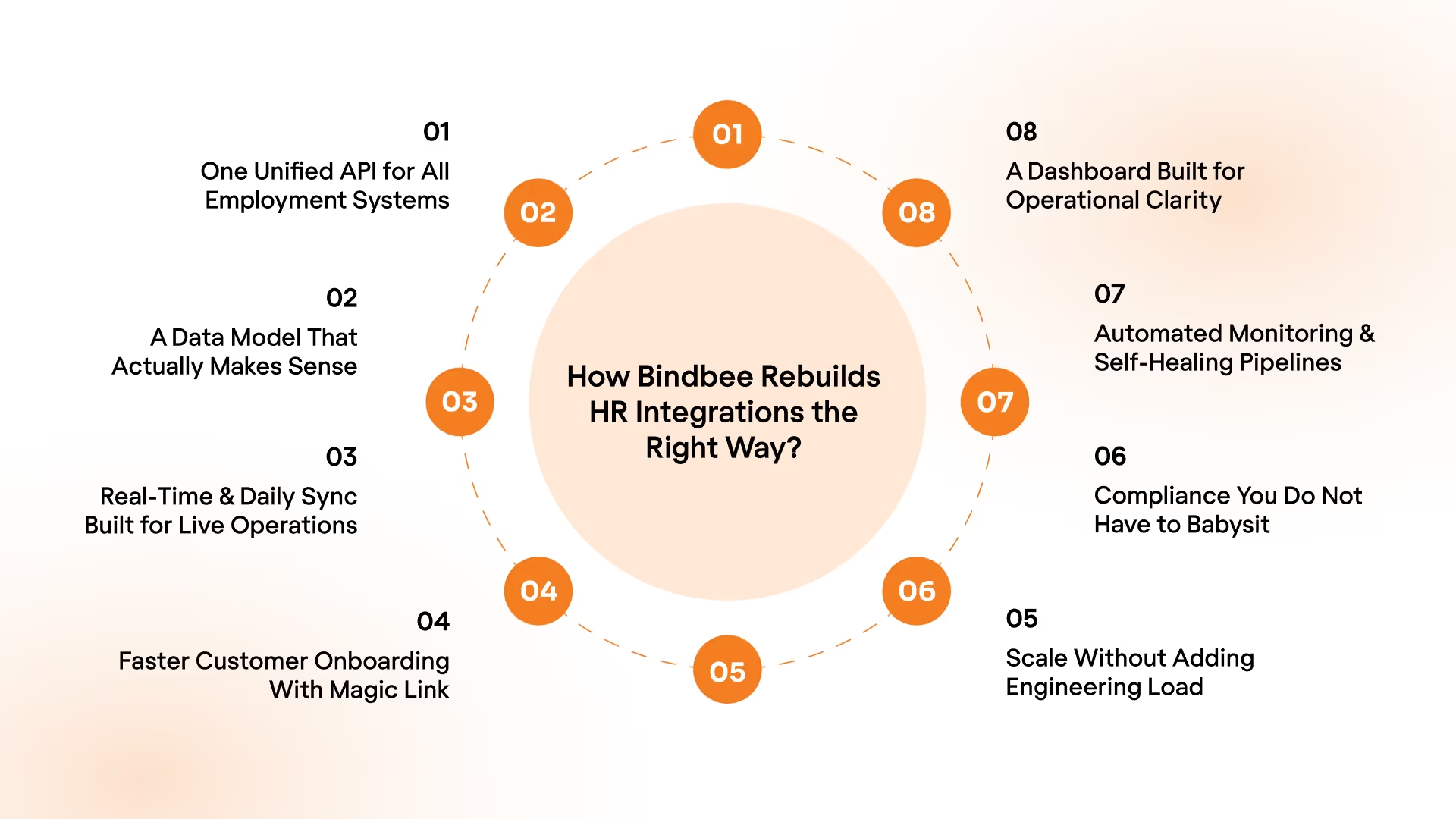
1. One Unified API for All Employment Systems
Bindbee replaces dozens of individual HRIS, payroll, ATS, and benefits connectors with a single unified API. Your product instantly taps into a network of more than 60 systems, including ADP, Workday, BambooHR, UKG, Paylocity, Deel, and Rippling.
Customers connect their systems in less than 5 minutes, not months, and Bindbee maintains every integration on your behalf. No custom builds, no platform-specific quirks, and no rewriting logic for every new customer.
2. A Data Model That Actually Makes Sense
The biggest integration failures happen because HR systems do not share a schema. Bindbee solves this by normalizing everything:
- Employees
- Jobs
- Time entries
- Deductions
- Contributions
- Status changes
- Demographics
Your product receives predictable, structured data that maps cleanly into your workflows without endless conditional logic.
3. Real-Time and Daily Sync Built for Live Operations
Workforce data cannot be stale. Bindbee captures updates instantly and keeps the rest in frequent, reliable sync cycles. New hires, terminations, salary updates, plan changes, dependents, PTO, and payroll details stay fresh across systems, which removes the constant cleanup that normally follows integration delays.
4. Faster Customer Onboarding With Magic Link
Bindbee’s Magic Link lets customers connect their HR or payroll system in minutes without writing any front-end code. Pre-built connectors and standardized flows compress integration timelines from months to days and help customers go live faster.
5. Scale Without Adding Engineering Load
As you grow, your integration surface grows with you. Bindbee absorbs that complexity. You do not have to expand your engineering team, build new connectors, or rewrite integrations for new customer systems. The unified API scales with your product, not against it.
6. Compliance You Do Not Have to Babysit
Bindbee carries SOC 2, ISO, GDPR, CCPA, and HIPAA controls at the infrastructure layer. Sensitive employment data stays protected, encrypted, and stored with region-specific residency when required. Your team gets enterprise-level security without maintaining it themselves.
7. Automated Monitoring and Self-Healing Pipelines
Bindbee prevents issues before customers notice them.
- Logs provide real-time visibility into every request and response.
- Issues automatically detect failed syncs, expired credentials, and mismatched fields.
- Automated workflows resolve common failures early, reducing support tickets and engineering fire drills.
8. A Dashboard Built for Operational Clarity
Bindbee’s Dashboard gives your team a central place to view connections, logs, issues, and integration health. Instead of digging through debugging tools, teams get answers instantly and can resolve customer questions fast.
Bindbee gives HR tech teams the integration layer they have been trying to build internally for years: one connection, clean data, reliable syncs, and a system that absorbs the messy realities of HR platforms so your product does not have to.
Also read: Unified API: The Secret to Effortless Integrations
What Teams Gain When They Switch to Bindbee
Bindbee replaces months of custom integration work with a single employment API that delivers measurable gains across engineering, operations, and customer onboarding.
Here is what the ROI looks like in real terms.
- Faster Time-to-Market: Bindbee customers ship HRIS and payroll integrations up to 10 times faster, with end-users completing setup in under 5 minutes. This accelerates customer go-live and shortens sales cycles.
- Significant Reduction in Engineering Hours: Bindbee replaces dozens of one-off integrations with a single API, cutting engineering work significantly. Newfront, for example, reduced engineering time on integrations by more than 90 percent, saving over $800,000 annually and freeing their team to focus entirely on product innovation.
- Major Drop in Support Workload: Bindbee’s automated syncs, standardized schemas, and proactive error monitoring significantly reduce integration-related support issues. Logs and Issues give teams instant visibility, not guesswork. Budgie Health cut integration management workload by 90 percent, eliminating constant troubleshooting.
- Faster Customer Onboarding: Bindbee’s pre-built connectors and guided setup flows turn long integrations into quick wins. Papershift cut onboarding time by 85 percent and reduced integration deployment from 90 days to under 24 hours, helping new customers go live almost instantly.
Bindbee already processes more than 100,000 data syncs daily across HRIS, payroll, and benefits systems, proving its ability to scale without adding engineering or operational strain.
Wrapping Up
HR integrations are messy because the ecosystem is fragmented. Every HRIS has its own schema, its own quirks, and its own limitations.
Bindbee simplifies that world.
A single integration unlocks a wide range of systems, delivers normalized data, prevents sync failures, and cuts engineering and onboarding time by massive margins.
For teams tired of building the same integrations again and again, Bindbee offers a scalable, stable alternative.
See how Bindbee can streamline your HR tech integrations. Book a demo.
FAQs
1. Can Bindbee handle complex HR workflows like benefits, time-off, or payroll data?
Yes. Bindbee normalizes employee demographics, employment, time-off, dependents, benefits, payroll runs, deductions, and contributions across all connected systems.
2. Does Bindbee support real-time data syncs?
Yes. Bindbee offers both real-time and daily sync options and uses webhooks to push updates instantly.
3. Is Bindbee secure and compliant?
Bindbee meets SOC 2, ISO, GDPR, HIPAA, and CCPA requirements, with security and compliance built directly into the infrastructure.
4. How does Bindbee reduce engineering and support workload?
With standardized schemas, proactive monitoring, and self-healing pipelines, teams avoid building custom connectors, reduce debugging time, and eliminate repetitive integration maintenance.
5. What types of companies typically use Bindbee?
HR tech, employee benefits providers, payroll platforms, insurtech, and B2B fintechs that rely on accurate employment data.


.avif)