
Technical Guides

What Is Real-Time Data Synchronization and Why It Matters

Published on:
December 24, 2025

Ever noticed how quickly your workflows fall apart when your HR, payroll, or benefits data lags? 

In HR Tech, even a few minutes of stale data can cause payroll mistakes, incorrect deductions, missed eligibility updates, or delayed contributions. Real-time data sync has become essential for platforms that need reliable, accurate, always-up-to-date information.

Are you also dealing with outdated payroll records, slow HRIS updates, or eligibility data that constantly falls behind? If you're building HR Tech, running benefits operations, or managing retirement/401(k) data flows, this blog explores what real-time data sync actually is, why it matters, and how it helps you deliver a more accurate, automated, and dependable product experience.

Key Takeaways

  • Real-time data sync keeps your HR, payroll, and benefits systems updated instantly as changes happen, without batch delays.
  • One-way sync pulls data into your platform, while two-way sync pushes and pulls data between systems.
  • Key benefits include fewer payroll mistakes, faster onboarding, better eligibility accuracy, reduced manual effort, and stronger compliance.
  • You can build your own sync logic, use vendor-native APIs, or adopt a unified API platform to speed up implementation and reduce maintenance.
  • Challenges include inconsistent vendor APIs, timing conflicts, high upkeep, and the need for secure, compliant data handling.
  • Bindbee helps you manage all of this through a single unified API with deep models, live webhooks, dashboards, and real-time sync for 60+ HR and payroll systems.

What is Real-Time Data Synchronization?

Real-time data synchronization means updating information across all connected systems the moment a change occurs. Instead of waiting for hourly or daily batch files, events like new hires, terminations, deduction updates, or dependent changes flow into your platform immediately.

For you as an HR Tech or benefits platform leader, real-time sync ensures your product always reflects the latest employee, payroll, and eligibility data without delays, manual fixes, or operational risk.

Now that you know what real-time data sync means, let’s look at why it plays such a critical role in modern HR, payroll, and benefits platforms.

Why is Real-time Data Synchronization So Important?

Real-time data sync matters because your platform depends on precise HR, payroll, and eligibility information to run core workflows. When data falls behind, even briefly, you see payroll discrepancies, incorrect deductions, disrupted benefits processes, and a spike in support issues. With real-time sync, employers get a smoother experience, and your product becomes more dependable.

Here are the key reasons why it matters:

  • It prevents payroll mistakes caused by outdated employee or compensation data.
  • It keeps deductions, eligibility details, and dependent records aligned across systems.
  • It reduces manual reconciliation work and lowers the volume of support tickets.
  • It strengthens product reliability during employer onboarding and ongoing operations.
  • It builds customer trust by keeping data consistently up to date.

Now that you know why real-time sync matters, let’s look at the different types.

Also Read: Why Data Integration Is Important and Its Benefits

Types of Real-Time Data Synchronization

Real-time data sync can work in different ways depending on how your product needs to exchange HR, payroll, and benefits information. Understanding the types helps you decide how data should move between your platform and employer systems without delays or errors.

Here are the main types:

1. One-way Real-time Data Sync

This means data moves in a single direction, usually from an HRIS or payroll system into your product. It’s ideal when you only need to receive updates, like employee changes, deductions, compensation updates, or contribution events, without writing anything back.

2. Two-way Real-time Data Sync

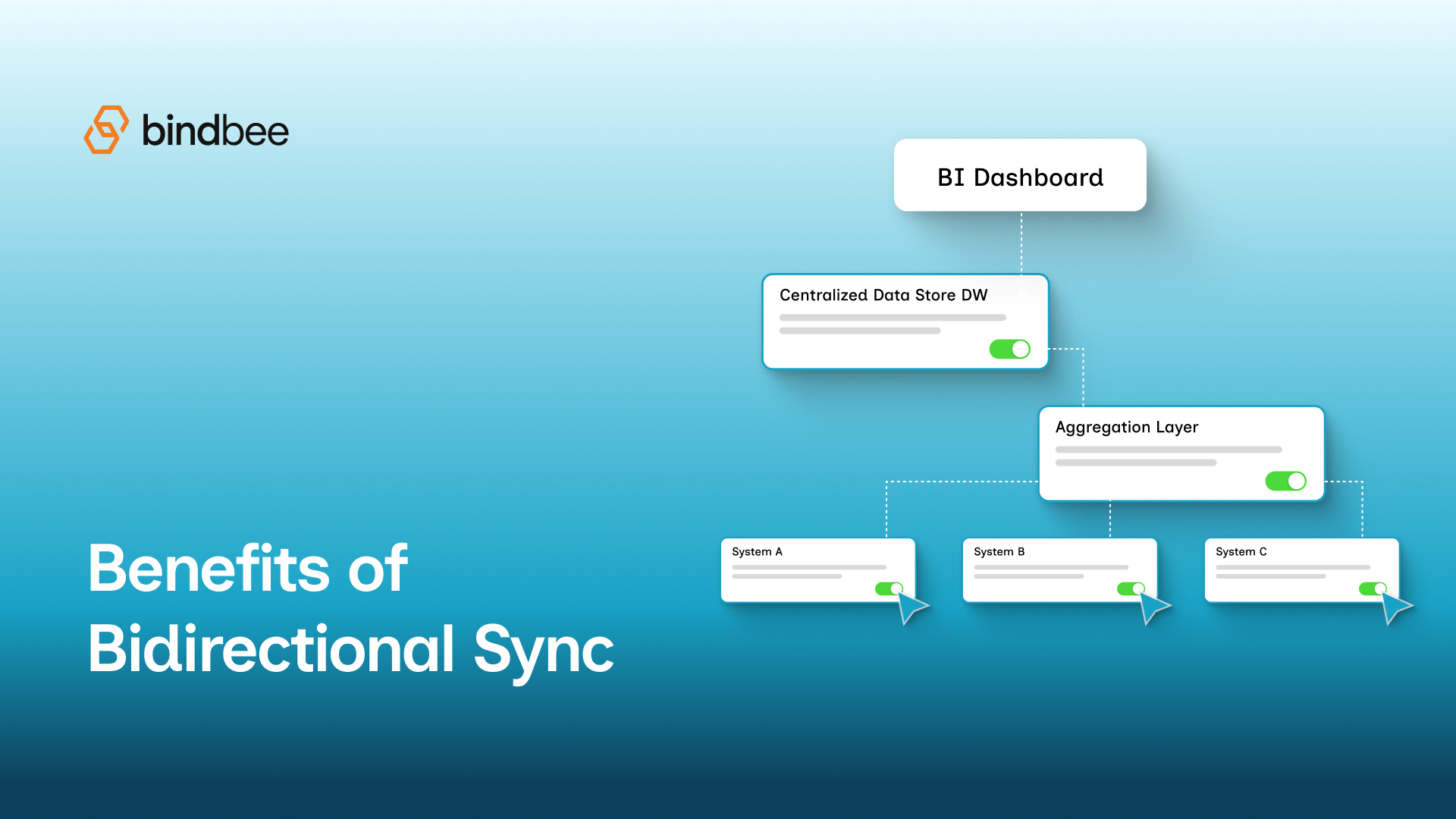
This means data flows both ways between systems. You not only read information but also push updates back, such as payroll deductions, contribution amounts, or status changes. This type requires stronger validation, conflict resolution, and monitoring, as both sides can modify data.

Now that you know the types, let’s look at the key benefits it brings to your platform.

Benefits of Real-Time Data Synchronization

Real-time data sync helps you keep HR, payroll, benefits, and retirement workflows accurate without delays or manual cleanup. When every update moves instantly across systems, you avoid product issues, operational slowdowns, and customer frustration.

Here are the key benefits:

Benefits of Real-Time Data Synchronization

1. Fewer Payroll and Deduction Errors

When employee or compensation data changes, your product receives it immediately before the payroll cycles close. This prevents incorrect deduction amounts, missing contributions, and outdated tax or status information. 

For benefits and retirement platforms, this means cleaner payroll files and fewer contribution reversals or corrections later.

2. Faster Employer Onboarding

Real-time sync gives you instant access to complete employee rosters, pay groups, compensation details, and eligibility data the moment an employer connects their HRIS or payroll system. 

This removes long setup timelines, reduces back-and-forth with employer admins, and helps you activate accounts faster without manual data prep.

3. Accurate Eligibility, Dependent, and Coverage Data

Benefits platforms rely on timely updates around dependents, qualifying events, coverage start/end dates, and demographic changes. 

With real-time sync, those updates flow into your product as soon as they happen, reducing enrollment mismatches, ensuring correct plan rules, and preventing billing issues tied to stale or missing information.

4. Lower Operational Load and Fewer Manual Fixes

Your operations team doesn’t need to verify data manually, chase employers for updated spreadsheets, or reconcile changes after payroll runs. Real-time sync keeps data aligned across HRIS, payroll, and your platform, which reduces manual tickets, cleanup work, and the risk of human error during busy cycles.

5. More Dependable Product Workflows

Your product features, such as PTO balances, scheduling, compensation modeling, and benefit calculations, rely on current data. Real-time sync ensures calculations and workflows run correctly without waiting for nightly updates. This improves overall product stability and reduces unexpected workflow failures for your customers.

6. Faster Issue Detection and Resolution

When data flows instantly, you see problems immediately, such as invalid deductions, missing demographic info, or unexpected payroll changes. This gives your support or integrations team a chance to fix issues before payroll deadlines or benefits windows close.

7. Stronger Compliance, Reporting, and Audit Accuracy

401(k), benefits, and payroll workflows depend on timely and precise data. Real-time updates ensure contribution amounts, employment status changes, participant demographics, and deductions reflect the correct time and effective date. 

This reduces audit risk, improves data lineage, and helps you meet strict compliance and reconciliation requirements.

8. Higher Customer Satisfaction and Better Retention

When employers see accurate balances, up-to-date contributions, correct deductions, and a smooth onboarding process, they trust your platform more. 

Real-time sync removes friction from their daily workflows, reduces support frustration, and helps your product stand out as reliable, resulting in higher retention and stronger long-term relationships.

To fully unlock these benefits, it’s important to understand the various ways to implement real-time data synchronization.

Also Read: What Is Two-Way Sync? How It Keeps Your Data Accurate Across Systems

How to Sync Data in Real Time

There are several ways to build real-time data sync depending on your product needs, engineering capacity, and how many HR or payroll systems you connect to. Each approach comes with different costs, latency constraints, and maintenance requirements. 

As a leader building HR Tech, benefits, or retirement workflows, you need to choose an approach that scales without creating ongoing operational overhead. Here are the primary ways to implement real-time sync:

How to Sync Data in Real Time

1. Build Your Own Sync Solution

Building your own solution gives you full control over your sync logic, error handling, and data flows. You design the architecture, manage event ingestion, and handle all vendor-specific differences. This works best if you only integrate with a few systems and have the engineering bandwidth to maintain them long-term. 

The challenge is that HRIS and payroll vendors behave differently, so every connector requires custom logic, schema mapping, and ongoing maintenance.

2. Use Native Data Sync Options

Many HR, payroll, and benefits systems offer their own native real-time or near–real-time sync options. These may include event-based notifications, outbound webhooks, or streaming APIs. 

Using native capabilities can reduce development time, but every system exposes data differently, which means you still need custom handling, mapping, and reliability tooling on your side.

3. Use Third-Party Data Sync Tools

Third-party sync platforms or unified APIs handle the heavy lifting of connecting to many HRIS, payroll, and benefits systems for you. This is useful when you support multiple vendors, need faster speed-to-market, or want to avoid ongoing maintenance. 

These tools typically provide normalized data models, unified webhooks, and built-in retry mechanisms, reducing the operational effort required from your team.

If you also want a purpose-built solution for HR, payroll, and benefits integrations, Bindbee offers a unified API with deep data models, real-time sync, and 60+ prebuilt connectors designed to help you scale faster with less engineering overhead.

With multiple solutions, it's important to evaluate which one best fits your product and needs.

Also Read: Unified API: The Secret to Effortless Integrations

How to Choose the Right Real-Time Data Synchronization Tool

Choosing the right real-time sync solution depends on how many systems you connect to, how critical data accuracy is for your workflows, and how much engineering time you can commit to maintenance. Pick a tool that supports your operational needs without adding extra overhead or new data risks.

Here are the key factors to consider:

  1. Data models and depth of coverage: Confirm the tool supports the HR, payroll, benefits, and retirement entities you depend on, such as employees, employment, compensation, time off, deductions, contributions, dependents, and plan enrollment.
  2. Real-time capabilities (webhooks + polling): Verify the tool supports event-based updates with robust polling fallbacks, ensuring low latency when vendors support events and reliable coverage when they don’t.
  3. Error handling and reliability: Look for built-in retries, alerting, queueing, and automated recovery flows. These features reduce operational strain during payroll deadlines and benefits windows.
  4. Vendor coverage and scalability: Confirm the provider covers the HRIS and payroll integrations your customers use today and makes it straightforward to add new vendors as you scale.
  5. Compliance, security, and auditability: Verify certifications (SOC 2, ISO 27001 where relevant), encryption in transit and at rest, role-based access, audit logs, and retention policies that match your regulatory needs.
  6. Developer experience and integration time: Evaluate documentation, SDKs, sandbox environments, test tooling, and sample payloads. A strong developer experience reduces integration time and lowers onboarding friction.
  7. Support model and SLAs: Review the provider’s support SLAs, escalation paths, and vendor breakage responsibilities. Know who owns fixes when upstream APIs change.
  8. Ongoing maintenance effort and total cost: Assess how often your team will need to update mappings or handle schema changes? Balance that effort against the provider’s roadmap and pricing model.

While real-time sync offers clear advantages, it also comes with challenges.

Challenges in Real-Time Data Synchronization

Real-time data sync is powerful, but it’s not simple to build or maintain, especially when you connect to multiple HRIS, payroll, or benefits systems. You need to manage reliability, vendor limitations, and data consistency without slowing down your product or creating extra work for your team.

Here are the main challenges you may face:

Challenges in Real-Time Data Synchronization

1. Inconsistent or Limited Vendor APIs

Not all HRIS or payroll systems support real-time events or webhook-based updates. Many still rely on polling or file-based exchanges. This makes it hard to guarantee consistent, low-latency updates across all the employers you serve.

2. Data Conflicts and Timing Issues

Different systems may update the same employee record at different times, leading to mismatched values, race conditions, or partial updates. Without proper ordering and conflict resolution, your product may show incorrect or incomplete data.

3. High Engineering and Maintenance Costs

Building real-time sync requires custom event handling, retries, monitoring, data mapping, and schema updates for every vendor. As vendors change their APIs, your team must continuously update and maintain each integration.

4. Monitoring, Alerts, and Troubleshooting Complexity

Real-time systems generate large volumes of events, making it difficult to detect failures quickly. Without strong dashboards and alerting, your ops or support team may not notice issues until customers experience problems.

5. Compliance, Security, and Data Handling Risks

HR, benefits, and retirement data are sensitive. You must handle PHI/PII securely, manage access controls, support HIPAA/SOC 2 requirements, and ensure data integrity across internal and external systems, all while processing updates in real time

Conclusion

Real-time data synchronization is a core requirement for any HR Tech, benefits, or retirement platform that wants to scale reliably. From accurate payroll deductions and eligibility updates to faster employer onboarding and better compliance, real-time sync enables you to deliver a more stable and automated product experience. 

If you're looking to implement real-time data sync without building and maintaining dozens of integrations, Bindbee offers a proven solution. Bindbee is a US-based unified API built specifically for HRIS, payroll, and benefits data. 

It helps you connect to 60+ systems, including ADP, Workday, Rippling, UKG, and more, through a single, deeply normalized API so you can move faster without compromising data quality or compliance.

Key Bindbee features include:

1. Unified API Across 60+ HR & Payroll Systems

Connect to 60+ HRIS, ATS, and payroll systems using a single unified API; no need to build or manage one-off connectors. This gives you scalable, real-time sync without having to start from scratch for every vendor.

2. Deep Integration Models for Complex Use Cases

Bindbee exposes 17+ unified models per integration. These deep models allow you to support rich HR, benefits, and retirement workflows with real-time accuracy.

3. Prebuilt Operational Dashboards (No Code Required)

Track logs and sync failures instantly in Bindbee’s dashboards. Your support and ops teams can identify and resolve issues quickly without diving into code.

4. Create Webhooks in 3 Clicks for Live Event Monitoring

Get real-time alerts for critical events such as employee changes, connector errors, and model updates. Create webhooks in 3 clicks for events like sync, downtime, and data changes.

5. Real-Time Syncing for Live HR and Payroll Updates

Bindbee delivers real-time updates for employee status, contributions, and demographic data across connected systems. Your product stays accurate without batch jobs or manual refresh delays.

So, are you ready to offload integration work and scale with real-time data sync?

Book a demo today and see how easily you can power your HR, benefits, and payroll workflows!

FAQs

1. How is real-time sync different from batch sync?

With real-time sync, updates flow instantly. With batch sync, data transfers occur on a schedule (e.g., nightly or hourly), which means there can be delays between when data changes and when it's reflected.

2. How does real-time sync improve reliability and user experience?

Because updates happen immediately, systems remain consistent across platforms. Users see the latest information without refreshing, reducing confusion, errors, and manual reconciliation, which leads to smoother workflows and fewer support issues.

3. Can real-time sync handle data from many different sources consistently?

Yes, when implemented correctly using normalized data models, event‑driven architecture, and robust mapping/transform logic. This is particularly useful for platforms connecting to multiple HRIS, payroll, or benefits systems.

What Is Real-Time Data Synchronization and Why It Matters

Kunal Tyagi

CTO -
Bindbee
Thank you! Your submission has been received!
Oops! Something went wrong while submitting the form.

Related Blogs