


What is an Integration Partnership? Key Insights Explained
Summarise the blog with AI
.avif)
Even well-built SaaS platforms hit roadblocks when trying to connect with external systems. Each new partnership, whether it’s linking a CRM, payroll provider, or HRIS, can consume weeks of engineering effort, create ongoing maintenance demands, and delay core product development.
Integrations that should take days often drag into months. Every unique API, custom data schema, or misaligned roadmap adds complexity and costs your team valuable time. For growing software companies, these inefficiencies can slow down customer onboarding, limit market reach, and stall innovation.
Integration partnerships solve this by enabling software companies to collaborate strategically, to deliver deeper, smoother functionality to their users. Research shows that users with strong integrations are 58% less likely to churn, highlighting the value of these partnerships.
When executed well, they help your product become part of a broader connected network, unlocking faster deployments and stronger retention. In this blog, we’ll break down what an integration partnership really is, the types that exist, how they’re built, and what it takes to make them successful.
At a Glance:
- Integration partnerships help software companies connect systems easily, reduce engineering effort, and deliver smoother data flows, improving user experience and retention.
- Different partnership types, data syncs, embedded features, unified APIs, and custom builds support varied workflows and reduce operational complexity.
- Successful partnerships require strong technical alignment, clear business goals, reliable monitoring, and secure data handling to ensure long-term performance.
- Choosing the right partner simplifies integration, scales with business needs, and enables faster, more reliable HR, payroll, and benefits connectivity without heavy maintenance.
What is an Integration Partnership?
An integration partnership is a formal collaboration between two companies that lets their software systems work easily together. Instead of building point-to-point connections for every vendor or relying on manual data transfers, these partnerships ensure that systems communicate reliably and automatically.
It’s more than just linking platforms. Integration partnerships handle data consistency, workflow alignment, and operational reliability, so your teams can focus on strategic priorities instead of constantly troubleshooting integrations.
Here’s what it looks like in practice:
- You establish a single connection with your integration partner, and employee, payroll, or benefits data flows accurately across all connected systems.
- Real-time updates, automated syncs, and error-handling mechanisms reduce manual intervention and support tickets.
- Operational dashboards and alerts let your team monitor integration health, identify issues quickly, and resolve them before they disrupt payroll, deductions, or onboarding.
In short, an integration partnership turns a complex, error-prone process into a reliable, scalable, and strategic advantage for your business.
Also Read: The Complete Guide to Software Integration for Modern Businesses
What Types of Integration Partnerships Exist?
Integration partnerships come in different shapes and sizes, each designed to tackle unique business challenges. Choosing the right type ensures your HR, payroll, and benefits systems work together effortlessly while minimizing engineering overhead and operational risk.
Here’s a breakdown:
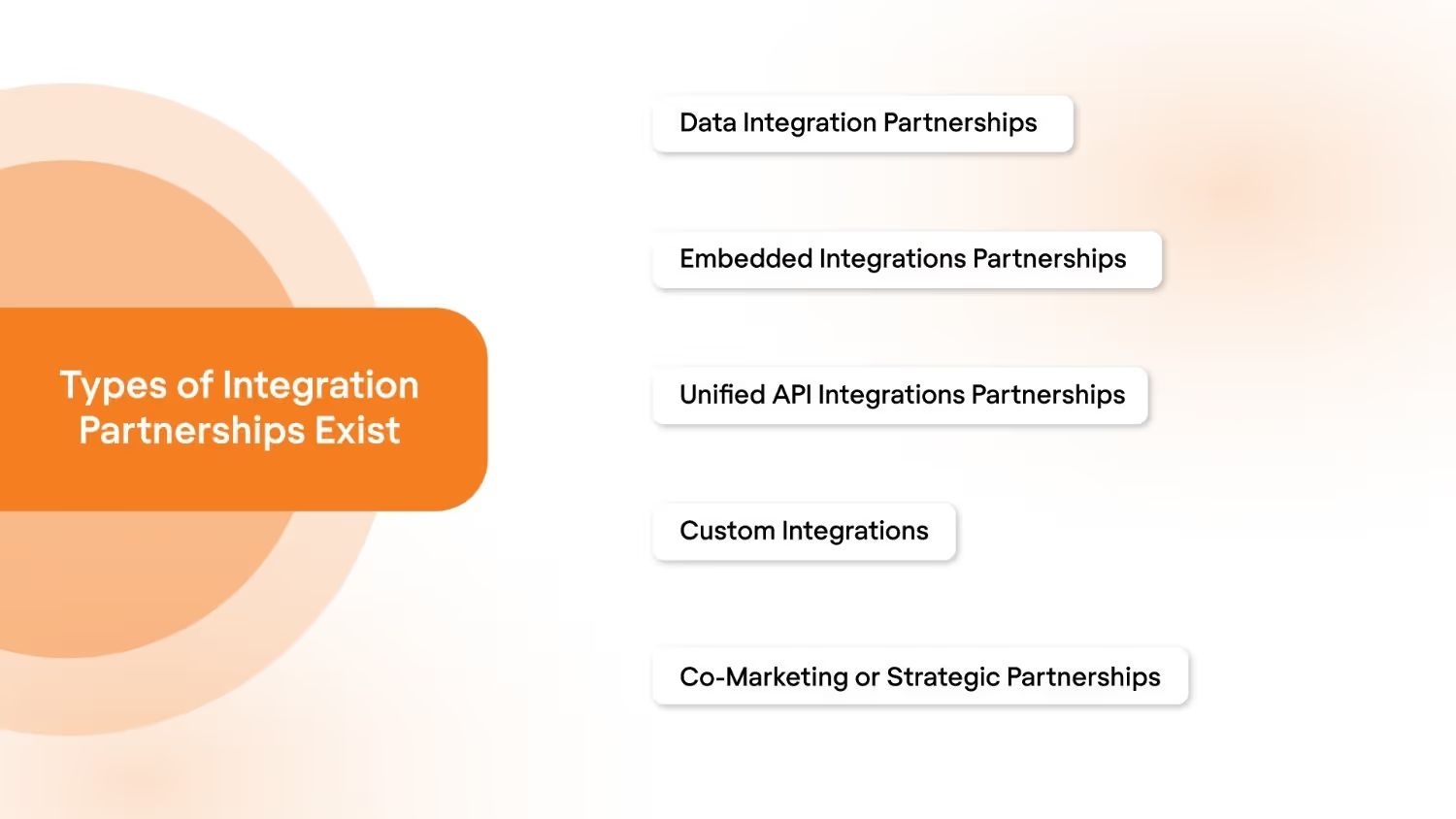
1. Data Integration Partnerships
These focus on keeping information consistent and accurate across multiple systems. Think employee profiles, compensation changes, and time-off balances flowing automatically from an HRIS to a payroll system.
Key Considerations:
- Volume and frequency of data updates.
- How errors are tracked and corrected.
- Compatibility between different vendor APIs or file-based systems.
Ideal Scenario: Organizations that need reliable data syncs without building complex technical workflows from scratch.
2. Embedded Integrations Partnerships
Embedded integrations allow your platform to host features from another system directly inside your interface. For example, employees might update their retirement contributions or enroll in benefits without ever leaving the HR portal.
Key Considerations:
- A smooth user experience is crucial.
- The integration must match your UI/UX standards.
- Security and permissions need to be managed across platforms.
Ideal Scenario: Platforms aiming to simplify workflows for end users while retaining control over the interface.
3. Unified API Integrations Partnerships
Unified APIs act as a single gateway to multiple systems, standardizing data and workflows. Instead of connecting to each HRIS or payroll vendor individually, you connect once and gain access to dozens of platforms with a consistent schema.
Key Considerations:
- Depth of data models (employee, payroll, benefits, dependents).
- Real-time or near-real-time sync capabilities.
- Operational tooling such as dashboards, error handling, and automated retries.
Ideal Scenario: Companies managing multiple vendors or complex workflows who want to reduce engineering time and operational risk.
4. Custom Integrations
Some workflows are too unique for prebuilt or standardized solutions. Custom integrations are designed from scratch to handle specific scenarios, like a niche payroll system or an unusual benefits structure.
Key Considerations:
- Development time and ongoing maintenance requirements.
- Potential for scaling to other vendors or clients.
- Documentation and support for operational teams.
Ideal Scenario: Businesses with specialized vendor needs or highly customized processes that require a tailored integration approach.
5. Co-Marketing or Strategic Partnerships
Integration doesn’t always stop at data. Some partnerships combine technical integration with joint marketing or strategic initiatives. For instance, two SaaS platforms might co-host webinars, create shared content, or offer bundled solutions.
Key Considerations:
- Alignment in business goals and the target audience.
- Joint operational responsibilities (support, SLAs).
- Branding and positioning consistency.
Ideal Scenario: Companies seeking growth opportunities through both technical collaboration and market visibility.
These partnerships ensure that your integrations are aligned with business goals while minimizing engineering effort. Next, let’s explore the different types of integration partnerships and when each is useful.
How Are Integration Partnerships Built?
Building a successful integration partnership requires careful planning, clear agreements, and ongoing optimization. Companies that skip steps or underestimate the complexity of integration risk face delays, failed deployments, and frustrated customers.
Here’s the process you can follow:
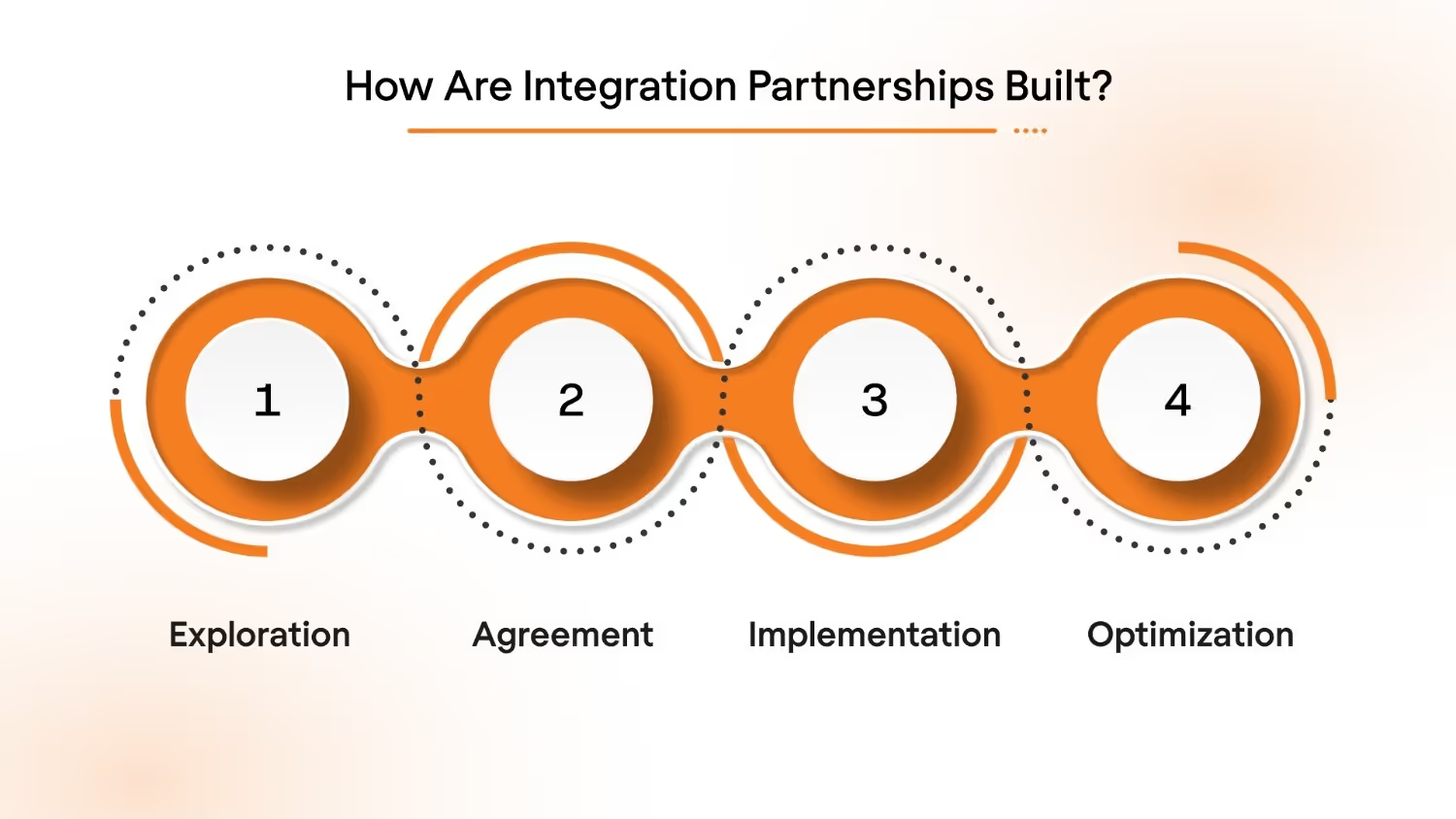
1. Exploration
The exploration phase begins with identifying potential partners and assessing alignment in business goals, technical capabilities, and target audiences. Questions to address include:
- Does this integration add meaningful value to both companies’ customers?
- Are technical architectures compatible?
- What level of support and operational commitment is feasible?
This stage often involves technical discussions, demos, and pilot testing. For HR Tech platforms, exploring unified API providers like Bindbee can help quickly determine if prebuilt integrations and partnerships cover necessary HR, payroll, and benefits workflows.
2. Agreement
Once a suitable partner is identified, companies formalize the partnership through contractual agreements. This stage outlines responsibilities, SLAs, intellectual property rights, and revenue-sharing models if applicable.
Key components often include:
- Scope of the integration
- Maintenance and support expectations
- Data security and compliance standards (HIPAA, SOC 2, GDPR-ready, etc.)
- Timelines and milestones for implementation
Clear agreements prevent misunderstandings and establish a framework for accountability.
3. Implementation
Implementation covers the technical work of building, testing, and deploying the integration. Depending on the type of partnership, this may involve:
- Mapping data fields across systems
- Configuring APIs or embedding interfaces
- Building automated syncs, webhooks, and error-handling mechanisms
- Providing operational dashboards for ongoing monitoring
For complex HR/payroll workflows, prebuilt unified APIs reduce this phase from months to days, allowing teams to focus on product features rather than maintenance.
4. Optimization
Integration partnerships are not set-and-forget. Optimization ensures the integration continues to deliver value over time. This involves:
- Monitoring performance and reliability
- Iterating on features based on user feedback
- Updating mappings for new vendor APIs or schema changes
- Automating error detection and self-healing where possible
A proactive approach ensures integrations and partnerships remain frictionless and aligned with evolving business needs.
By following these steps carefully, you ensure that each integration remains robust, adaptable, and valuable for both your team and your customers over time. Next, let's examine the benefits these partnerships deliver.
Suggested Read: Everything You Need to Know About Payroll API Integration
What Benefits Can You Gain from Integration Partnerships?
Integration partnerships aren’t just technical add-ons; they’re strategic growth drivers. By connecting systems, data, and workflows, these collaborations help your product deliver more value to customers while improving efficiency across teams.
Here’s how they create impact:
- Faster Time to Market: Working with established integration partners means you can launch new features or integrations faster without building everything from scratch.
- Expanded Ecosystem Reach: Partnering with trusted platforms exposes your product to new user bases and industries, opening up valuable distribution channels.
- Improved User Experience: Smooth data syncs eliminate double entry and manual uploads, allowing customers to manage everything in one place.
- Stronger Customer Retention: Integrated products become “sticky.” Once users connect your platform to tools they already rely on, switching away becomes harder.
- Shared Technical Expertise: Co-developing integrations means access to your partner’s engineering insights, documentation, and best practices, reducing trial and error.
- Revenue Growth Opportunities: Many integration partnerships lead to joint go-to-market campaigns, cross-selling, and co-marketing that drive measurable ROI.
These benefits collectively accelerate growth, improve customer satisfaction, and position your platform as an indispensable part of your clients’ technology ecosystem.
Also Read: Application Integration Benefits: Boost Productivity 2025
What Do You Need to Form a Successful Integration Partnership?
Successful integration partnerships require alignment on both technical and business dimensions.
Technical Requirements
Integration partnerships require robust technical foundations to ensure smooth, secure, and accurate data exchange.
- API Compatibility: Ensure systems can communicate reliably via APIs or other standard protocols (REST, SOAP, SFTP).
- Data Mapping & Normalization: Standardized schemas help avoid mismatches and simplify multi-system workflows.
- Monitoring & Error Handling: Operational tooling like dashboards, automated retries, and self-healing mechanisms minimize downtime.
- Security & Compliance: Encrypt data in transit and at rest, and comply with industry standards such as HIPAA, SOC 2, and GDPR-ready practices.
Business Requirements
Business alignment ensures that partnerships deliver mutual value, meet customer expectations, and are commercially sustainable.
- Shared Goals & KPIs: Align on what the partnership aims to achieve, including customer success, revenue, or operational efficiency.
- Clear SLAs & Support Expectations: Define responsibilities for maintenance, updates, and issue resolution.
- Effective Communication Channels: Maintain consistent touchpoints between technical and product teams.
- Customer-Centric Approach: Design the integration to simplify workflows, improve adoption, and solve actual pain points.
Meeting both sets of requirements ensures that integrations are technically robust and commercially sustainable. Next, let's discuss how to select the right partner that ensures
smooth operations and scalable integrations.
How to Select the Right Integration Partners?
Choosing the right integration partner can determine the success or failure of your workflows and customer satisfaction. Here are key considerations:
- Evaluate Technical Fit: Confirm that the partner’s APIs, schemas, and data models meet your platform requirements.
- Check Operational Reliability: Review monitoring, error-handling, and support capabilities.
- Consider Business Alignment: Ensure their goals, target markets, and vision align with your company.
- Assess Market Reputation: Look for partners with proven success, relevant case studies, and strong references.
- Scalability & Flexibility: Choose partners who can adapt to evolving business needs and handle multiple vendors or regions.
A unified API partner like Bindbee addresses these criteria by offering prebuilt integrations, operational tooling, and a U.S.-compliant security posture, allowing HR Tech and benefits platforms to focus on growth rather than connectors.
Challenges in Integration Partnerships and How to Overcome Them
While integration partnerships are valuable, they come with challenges. Proactively addressing them ensures smooth operations and long-term success.
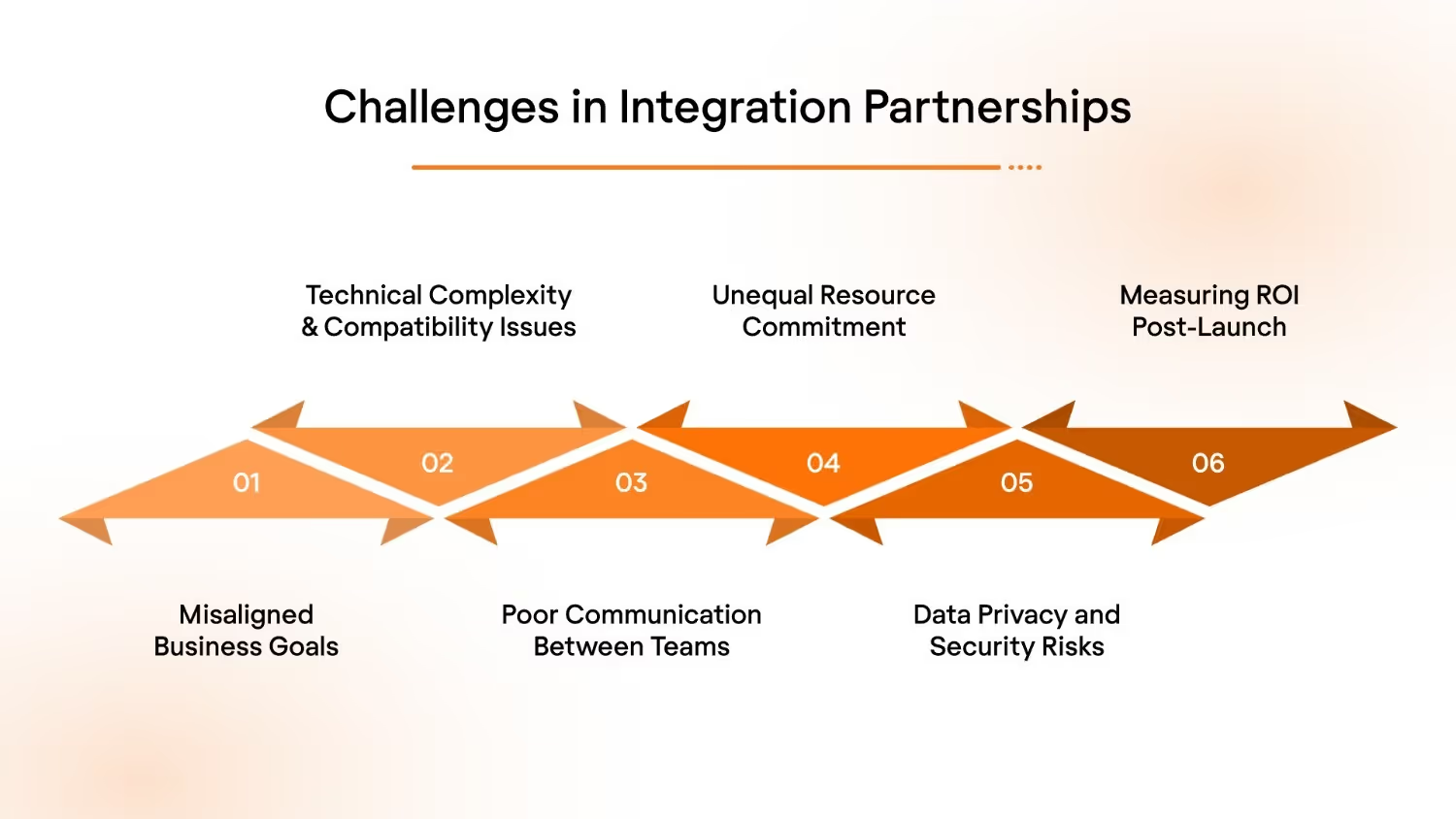
1. Misaligned Business Goals
When two companies pursue different outcomes, the partnership loses momentum fast. One might focus on user acquisition, while the other prioritizes feature expansion — leading to miscommunication and poor collaboration.
How you can fix it:
- Define shared success metrics like user growth, joint revenue, or feature adoption.
- Secure executive buy-in from both sides.
- Set a clear roadmap with milestones, responsibilities, and deliverables.
2. Technical Complexity and Compatibility Issues
Not all APIs or systems are built the same way. Poor documentation, outdated tech stacks, or inconsistent data formats can slow integration progress or create recurring errors.
How you can fix it:
- Conduct a technical discovery session before starting.
- Use standardized protocols like REST, OAuth 2.0, and JSON.
- Test integrations in sandbox environments.
- Utilize middleware solutions like Bindbee to simplify API management.
3. Poor Communication Between Teams
Integration projects often fail not because of bad code, but because of miscommunication. Product, engineering, and marketing teams may operate in silos, slowing decision-making and increasing rework.
How you can fix it:
- Schedule regular syncs (weekly or biweekly).
- Maintain shared documentation for tickets, notes, and timelines.
- Appoint partnership leads from each company.
4. Unequal Resource Commitment
Sometimes, one company invests more time and engineering resources than the other. This imbalance leads to frustration, missed deadlines, or even strained relationships.
How you can fix it:
- Clearly define roles and responsibilities upfront.
- Share resources fairly between technical and operational tasks.
- Track progress using dashboards or shared OKRs.
5. Data Privacy and Security Risks
Integrations often involve sensitive customer or employee data. Without strong security measures, the risk of data leaks, non-compliance, or breaches grows significantly.
How you can fix it:
- Follow compliance standards (SOC 2, GDPR, HIPAA).
- Encrypt and anonymize data in transit and at rest.
- Establish clear data ownership.
- Use secure tokens and limit permissions.
6. Measuring ROI Post-Launch
Once integrations go live, tracking their actual business impact can be tricky. Without concrete performance data, it’s hard to justify continued investment or expansion.
How you can fix it:
- Define measurable outcomes from the start (adoption, API calls, revenue uplift).
- Monitor performance using analytics dashboards.
- Review and optimize quarterly.
Following these practices ensures that integration partnerships are not only functional but also scalable and sustainable.
How Bindbee Can Facilitate Effective Integration Partnerships?
Bindbee simplifies the complexity of HR and payroll integrations, letting HR Tech and benefits platforms build dependable partnerships without draining engineering resources.
Here’s how it helps you:
- Prebuilt HR & Payroll Connectors: Bindbee connects your platform to 60+ HRIS, ATS, and payroll systems, including Workday, ADP, Gusto, and BambooHR. Legacy vendors are covered too with SFTP adaptors. This means integrations are ready to go, cutting weeks of engineering time.
- Deep Integration Coverage: Employee data, payroll runs, compensation, benefits, time-off balances, and more; all flows are handled across 16–17 unified models per integration. This ensures your platform supports complex workflows, not just surface-level field mappings, and reduces operational mistakes.
- Operational Tooling for Reliability: Real-time syncs, dashboards, alerts, automated retries, and self-healing mechanisms give teams the visibility and control to resolve issues quickly. Integrations stay reliable without constant technical oversight.
- Embedded SDKs & Magic-Link Flows: Your platform can embed Bindbee’s connection flows directly into its UI. HR teams and employees can link systems in minutes, providing an effortless, branded onboarding experience.
- Compliance-First Design: U.S.-based hosting, SOC 2 and ISO 27001 indicators, HIPAA support, and GDPR readiness ensure integrations meet strict security and legal standards. Your team can trust that sensitive HR and payroll data is handled safely.
- Accelerated Time-to-Value: With prebuilt mappings, operational tooling, and embedded flows, Bindbee helps customers onboard faster, reduces ongoing maintenance, and enables your sales team to close deals that require specific HR/payroll integrations.
By utilizing Bindbee, platforms can connect to multiple systems quickly, minimize operational risk, and deliver richer, more reliable experiences to their customers.
Keep Your Business Connected and Growing
Disconnected systems, manual data entry, and complex vendor workflows create unnecessary friction for HR Tech and benefits teams. Integration partnerships streamline workflows, maintain accurate data, and reduce the operational burden on your team.
See the impact with Bindbee. A unified API that connects 60+ HR, payroll, and benefits platforms in minutes, keeping employee data, payroll, and benefits flows accurate while freeing your team from constant maintenance.
Book a demo today and see how smooth integration partnerships can transform your operations.
FAQs
1. How does an integration partnership differ from a traditional partnership or collaboration?
Integration partnerships focus on connecting systems and processes for smooth workflows. Unlike traditional collaborations, they prioritize interoperability, shared data, and operational efficiency rather than just marketing or sales efforts.
2. What are the key components that make an integration partnership successful?
Clear communication, aligned objectives, compatible technologies, and mutual trust are essential. Defined roles, shared metrics, and ongoing monitoring ensure smooth integration and measurable results.
3. What types of businesses benefit most from integration partnerships?
Businesses with complex operations or multiple software systems, like SaaS providers, e-commerce platforms, logistics, and fintech, gain the most. Integration reduces manual work, streamlines processes, and improves customer experience.
4. What are common mistakes to avoid in managing integration partnerships?
Avoid unclear goals, mismatched technologies, poor communication, and neglecting monitoring or updates. Overlooking security, compliance, or team alignment can create friction and inefficiency.
5. What future trends are shaping the way integration partnerships evolve in 2025?
AI-driven automation, low-code/no-code platforms, cloud-first strategies, API standardization, and stronger cybersecurity are key trends. Businesses increasingly need scalable, flexible, and data-driven integrations.