Introduction
Modern businesses operate on a fragmented ecosystem of specialized software systems—HRIS platforms, payroll tools, benefits administrators, CRMs, and countless others—that rarely communicate with each other out of the box. This proliferation creates operational blind spots, duplicates data entry across systems, and leaves teams manually reconciling information that should flow automatically.
The numbers reflect this reality: the average enterprise uses 101 SaaS applications according to Okta's 2025 Businesses at Work report, while MuleSoft's Connectivity Benchmark puts the average at 897 applications with only 29% integrated.
Yet despite widespread use of the term "integration platform," most explanations stop at surface-level definitions. Product teams, IT leads, and tech buyers are often left uncertain about how these platforms actually function — and which type fits their use case.
This guide covers what an integration platform is, how it works through its core functional stages, and where it fits in real-world operations. Whether you're evaluating platforms or weighing custom integrations against a unified solution, you'll come away with a clear picture of the infrastructure that makes connected systems work.
TL;DR
- Integration platforms are middleware that connects apps and automates data flows — no custom point-to-point integrations needed
- They work in four stages: connect systems, transform data, orchestrate workflows, and monitor for errors
- Main types include cloud iPaaS, on-premises tools, API platforms, and domain-specific unified APIs
- 95% of IT leaders struggle to integrate data across systems, and custom integration work consumes 39% of team time
- Bindbee gives HR Tech and benefits companies a single API to connect 60+ HRIS systems, with no per-system integration builds
What Is an Integration Platform?
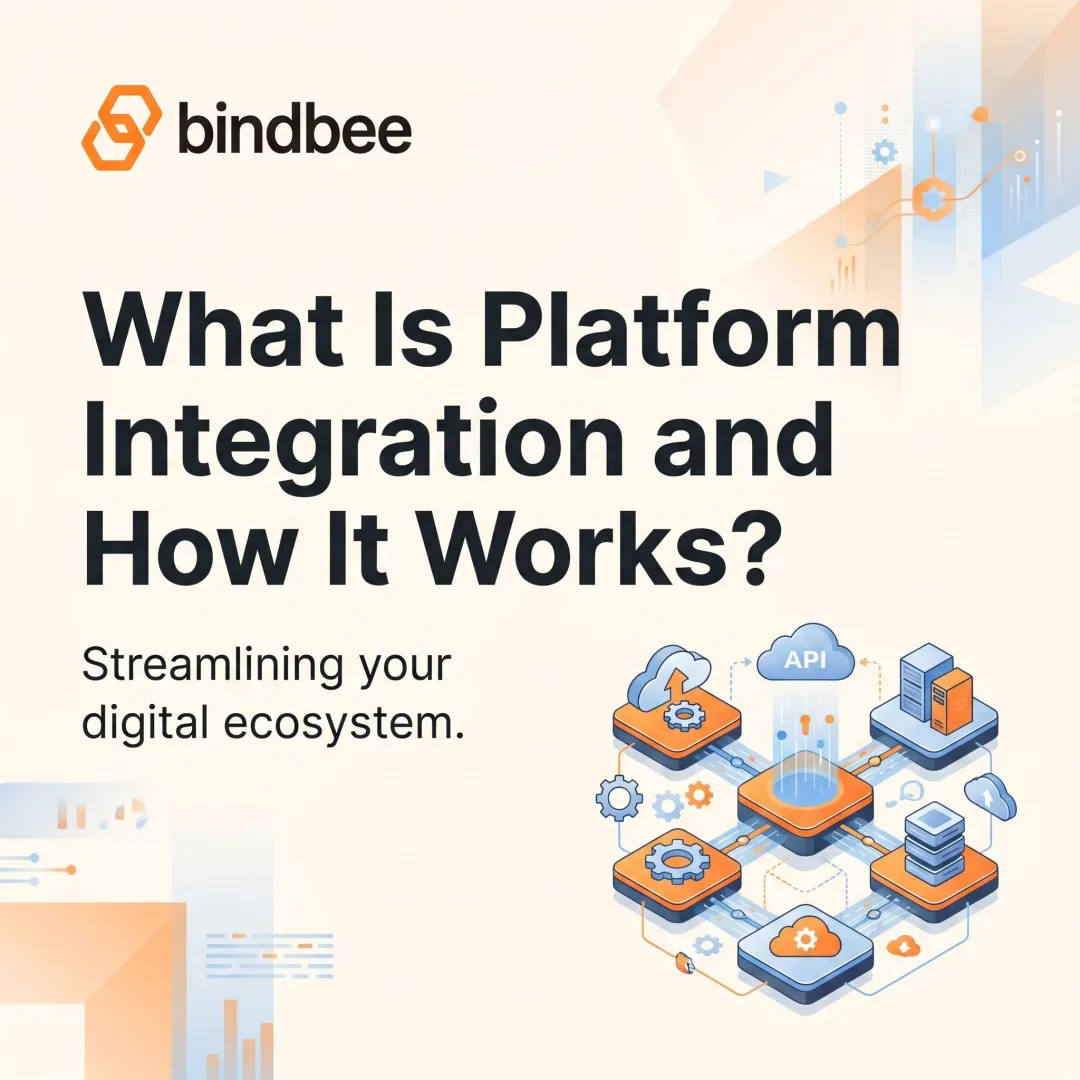
An integration platform is a cohesive set of middleware software products that enables organizations to connect, manage, and automate data flows between diverse applications, systems, and data repositories through a single environment. Rather than building individual connections between each pair of systems, integration platforms provide a centralized layer that handles connectivity, data transformation, workflow orchestration, and monitoring across your entire software ecosystem.
Why Integration Platforms Exist
The operational gap is simple: as organizations adopt more specialized software tools—one for payroll, another for benefits administration, a third for recruiting—the need to make those tools communicate creates enormous engineering overhead. Without a platform, teams build integration logic from scratch for each system combination. Under a point-to-point integration model, connecting just 6 systems requires 15 individual integrations following the n*(n-1)/2 formula, according to AltexSoft's system integration analysis. This "spaghetti integration" pattern becomes dramatically more complex as application counts grow.
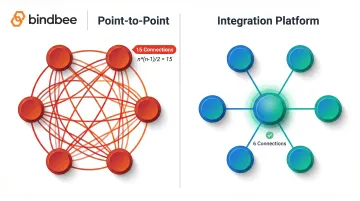
Integration platforms consolidate this connectivity layer so teams don't rebuild it repeatedly. They provide pre-built connectors, standardized data transformation engines, and centralized monitoring. The result: integration becomes a configuration exercise rather than a custom development project for every new system pair.
What Integration Platforms Are NOT
To prevent common confusion, integration platforms are:
- Not a point-to-point API connection — those link two apps in isolation, with no shared logic or monitoring
- Not a data warehouse or analytics tool — those store and query data; integration platforms move it between systems
- Not the same as RPA — robotic process automation mimics human UI actions; integration platforms operate at the data layer
Integration platforms can work alongside all of these technologies but serve a distinct function: enabling reliable, automated data exchange across systems.
Integration Platform vs. iPaaS
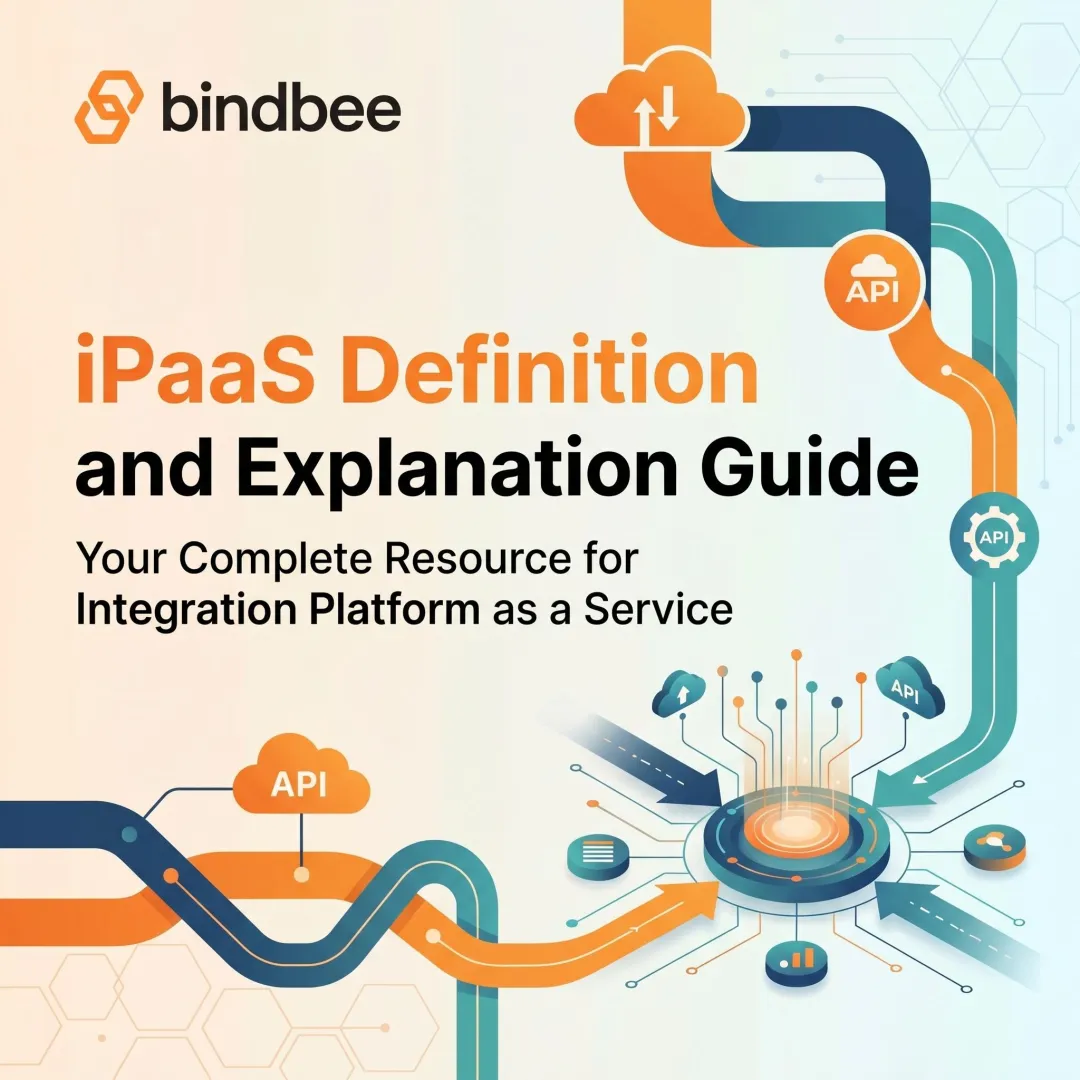
The term "integration platform" is a broad category encompassing on-premises, hybrid, and cloud-based tools. iPaaS (Integration Platform as a Service) is a specific cloud-delivered subset.
Gartner defines iPaaS as "a vendor-managed cloud service that enables end users to implement integrations between applications, services and data sources" with mandatory features including low-code development tools, role-based access control, vendor-managed runtime, and operational monitoring.
In simpler terms: all iPaaS solutions are integration platforms, but not all integration platforms are iPaaS. Traditional enterprise service buses (ESBs) and on-premises middleware fall under the broader integration platform category but aren't cloud-delivered services.
Why Native Connectors Aren't Enough
Many SaaS products now offer native connectors to popular platforms, so why do integration platforms remain essential? Because native connectors typically support only a limited subset of fields and workflows, cannot handle complex orchestration across three or more systems, and don't provide centralized monitoring or error handling. Each native connector operates independently with its own authentication, update schedule, and logging—creating the same operational fragmentation the organization was trying to avoid.
Integration platforms address these gaps by providing a unified control plane for data transformation, workflow logic, and operational visibility across all connected systems. As your stack grows from 10 to 50 to 100+ applications, the maintenance burden of individual connections compounds — in engineering hours, debugging time, and broken data pipelines — in ways a centralized platform is specifically built to prevent.
How Does an Integration Platform Work?
Integration platforms operate through a defined sequence of functional stages, each responsible for a specific part of how data moves between systems reliably and consistently. Understanding these stages reveals how platforms differ in capability and where potential failure points exist.
Connecting Systems
The platform initiates connections through pre-built connectors, APIs, webhooks, or protocol adapters (such as SFTP, SOAP, or EDI) that interface with each application's data layer. MuleSoft's Anypoint Platform, for example, offers over 1,500 pre-built connectors to common enterprise systems, eliminating the need to write custom authentication and API call logic for each connection.
Connections can operate in three modes:
- Event-triggered: A new hire is added in an HRIS, immediately triggering downstream actions
- Scheduled: Nightly batch sync runs at a predetermined time
- Continuous: Real-time streaming maintains constant data synchronization
The distinction matters because different operational use cases require different timing models. Payroll processing might rely on scheduled nightly syncs, while benefits enrollment may require real-time updates when employees make coverage elections.
Transforming and Mapping Data
Different systems store the same information in different formats, field names, and data types. A field called "Employment Status" in one HRIS might be called "Worker Status" with different enumerated values (ACTIVE, INACTIVE) in another system. The integration platform's transformation engine maps and converts data from the source format to the target format so receiving systems can process it correctly.
Consider this concrete example from ADP Workforce Now integrations: ADP uses the field workerStatus with values such as ACTIVE and INACTIVE, while another system might expect a simple Active/Former binary. The presence of a Termination Date in ADP triggers status transformation to "Former" in the receiving system. Without proper transformation logic, this mismatch causes sync failures or incorrect data downstream.
The transformation stage also handles:
- Date format conversion (MM/DD/YYYY vs. YYYY-MM-DD)
- Currency standardization across regions
- Enumeration mapping (mapping "Full-time" to "FT" to "1")
- Privacy controls (excluding fields like SSN from certain syncs)
Orchestrating Workflows
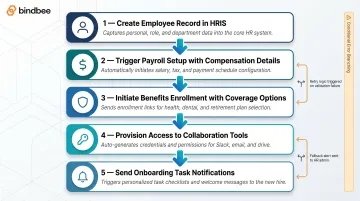
Integration platforms also coordinate multi-step automated processes, triggering actions across multiple systems in sequence based on business logic. When a new employee is hired, the platform might:
- Create the employee record in the HRIS
- Trigger payroll setup with compensation details
- Initiate benefits enrollment with coverage options
- Provision access to collaboration tools
- Send onboarding task notifications
This is workflow orchestration: coordinating a chain of dependent actions across systems with conditional logic and error branching built in. A simple automated task moves data from point A to point B; orchestration manages the entire sequence, determines what happens if step 3 fails, and maintains state across the workflow.
Monitoring and Error Handling
Integration platforms maintain reliability through continuous transaction logging and automated failure detection. When API timeouts, authentication errors, or data format mismatches occur, the platform retries failed operations and alerts teams when manual intervention is required.
This stage prevents silent data failures, where a missed sync goes unnoticed until it creates downstream problems like incorrect payroll runs or stale employee records. Those failures carry a measurable price: according to IBM's research on data quality costs, over 25% of organizations lose more than $5 million annually due to poor data quality, with 7% reporting losses exceeding $25 million. In HR contexts, a termination record that fails to propagate from an HRIS to benefits or payroll systems can result in incorrect payments, compliance violations, and active coverage for former employees.
Effective monitoring provides:
- Real-time dashboards showing sync status across all connections
- Webhook notifications for critical failures
- Audit logs for compliance tracking
- Automatic retry logic for transient errors
Types of Integration Platforms
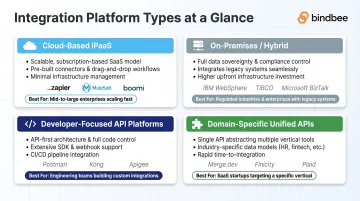
Integration platforms fall into four main categories, each suited to different operational contexts and technical requirements:
| Type | Description | Best For |
|---|---|---|
| Cloud-based iPaaS | Hosted, subscription-based platforms with pre-built connectors and low-code interfaces | SaaS-to-SaaS integration, business-user-driven automation |
| On-premises/Hybrid | Locally hosted tools with high control and customization | Strict data residency requirements, legacy system environments |
| Developer-focused API platforms | Code-first platforms with maximum flexibility and customization | Complex enterprise orchestration, API-led architecture |
| Domain-specific unified APIs | Purpose-built platforms normalizing data across a specific ecosystem | HR Tech, healthcare, fintech companies needing vertical-specific coverage |
Cloud-Based iPaaS
Platforms like Workato, Zapier, Celigo, and Boomi offer fully cloud-hosted environments with low-code or no-code visual development tools. These platforms excel at connecting SaaS applications quickly with minimal technical overhead. Boomi has been recognized as a Leader in Gartner's Magic Quadrant for iPaaS for 11 consecutive years, while MuleSoft holds the same distinction for 10 consecutive years.
On-Premises and Hybrid Integration Tools
Enterprise service buses (ESBs) and hybrid integration platforms like TIBCO, SAP Integration Suite, and IBM App Connect support both on-premises and cloud environments. These tools offer enterprise-grade governance and are suited for organizations with hybrid IT environments or legacy systems that cannot connect to cloud platforms. However, as Celigo notes, ESBs are "expensive and time-consuming to maintain" compared to cloud-native alternatives.
Developer-Focused API Platforms
Platforms like MuleSoft Anypoint and Oracle Integration Cloud provide full-lifecycle API management with design, security, and gateway capabilities. They require dedicated engineering resources. The payoff is maximum flexibility for complex multi-system orchestration and API-led architecture patterns.
Domain-Specific Unified API Platforms
A fourth category targets vertical-specific integration challenges directly: domain-specific unified API platforms that normalize data across a defined ecosystem rather than connecting any system to any other. These platforms offer pre-normalized data models and pre-built connectors for a single vertical.
In HR Tech and Benefits Administration, Bindbee provides a single unified API across 60+ HRIS, payroll, and benefits systems, with benefits-first data models built in:
- Employee Benefits — individual plan elections and coverage details
- Employer Benefits — plan structures and employer contributions
- Dependent Benefits — dependent relationships and coverage elections
This eliminates the engineering overhead of building and maintaining dozens of individual HRIS integrations.
Choosing the right type comes down to use case:
- General business workflows → cloud-based iPaaS (fast, low-code, minimal overhead)
- HR products connecting to employer HRIS systems → domain-specific unified API (no per-integration build or maintenance burden)
Where Integration Platforms Are Used
Integration platforms fit anywhere multiple systems must share data as part of a workflow. Common operational environments include:
- HR Operations: HRIS connects to payroll, benefits administration, identity management, and background check systems — keeping employee lifecycle events in sync across all platforms
- Supply Chain: ERP links to logistics providers and fulfillment centers for real-time visibility into stock levels, order status, and delivery schedules
- Sales and Marketing: CRM connects to email automation, ad platforms, and analytics tools to track customer journeys and campaign performance
- Customer Support: Helpdesk integrates with product databases and knowledge bases so support teams have complete customer context
Where Integration Platforms Perform Best
Integration platforms deliver the highest value when:
- Data moves at high volume between systems of record on a continuous basis
- Records change frequently — employee lifecycle events, customer updates, transaction flows
- The tech stack spans multiple vendors with no native cross-system sync
- Manual data entry has become a bottleneck driving errors and delays
The HR Tech and Benefits Administration Use Case
HR Tech companies and benefits platforms face a structural integration problem: every employer client runs a different HRIS. One uses Workday, the next uses ADP, another uses BambooHR, Gusto, UKG, or one of hundreds of others.
Without a unified integration platform, each new HRIS requires a custom build. Payscale, a compensation management platform, found that each HRIS integration took at least one month to build in-house. After adopting a unified API platform, they launched 11 HRIS integrations in a single month and saw 10% higher customer retention among clients using integrated systems.
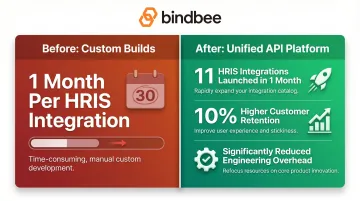
For benefits administration platforms and HR Tech companies, domain-specific unified API platforms eliminate the engineering burden of building and maintaining 60+ individual integrations. This infrastructure becomes critical for companies that want to onboard employer clients quickly without losing deals due to missing HRIS support.
Conclusion
An integration platform is the operational infrastructure that allows systems to share data reliably, automate processes consistently, and scale without proportional growth in engineering overhead. Understanding how it works — through the four functional stages of connectivity, transformation, orchestration, and monitoring — positions teams to make a sharper evaluation: does a general-purpose platform fit, or does a domain-specific unified API better match the product context?
For HR Tech and benefits administration companies specifically, that choice comes down to resource allocation. Will your engineering team spend months building and maintaining individual HRIS connections, or focus on core product development while a platform handles integration infrastructure?
The numbers frame the stakes: 95% of IT leaders struggle to integrate data across systems, and integration work consumes 39% of team time. Organizations that treat integration as infrastructure — rather than custom development — ship faster, onboard clients in hours instead of weeks, and sustain higher data quality across their connected ecosystem.
Frequently Asked Questions
What are integration platforms?
Integration platforms are middleware software that enables different applications, systems, and data sources to connect, share data, and automate workflows without requiring custom point-to-point development for each connection. They provide pre-built connectors, data transformation engines, workflow orchestration, and monitoring in a centralized environment.
What is the difference between API and integration platform?
An API (Application Programming Interface) is a protocol that defines how two systems exchange data — it's an interface for a single connection. An integration platform is a broader layer that uses APIs alongside other connectors. It manages, transforms, orchestrates, and monitors data flows across multiple systems with centralized control and error handling.
What is the primary goal of platform integration?
The primary goal is to eliminate data silos by enabling disparate systems to share information automatically and consistently. This reduces manual work, prevents data discrepancies, and lets business processes run across tools without human intervention.
What are the 4 types of system integration?
The four common types are:
- Point-to-point: Direct connection between two systems; simple but difficult to scale
- Hub-and-spoke: Centralized middleware routing data between multiple systems through one hub
- ESB (Enterprise Service Bus): Complex enterprise routing with distributed architecture
- iPaaS/API-based: Cloud-delivered integration using APIs and pre-built connectors with vendor-managed scaling
What is an example of an integration platform?
Examples span multiple categories: Zapier (cloud-based iPaaS for business workflow automation), MuleSoft Anypoint (enterprise API management and integration with 1,500+ connectors), Boomi (hybrid integration platform recognized as a Gartner Leader for 11 consecutive years), and Bindbee (domain-specific unified API platform for HR Tech and Benefits Administration connecting 60+ HRIS and payroll systems through a single API with benefits-first data models).