


Workato vs Bindbee: Which Integration Model Scales HR Tech
Summarise the blog with AI
If you are comparing Workato vs Bindbee, you are likely past the stage of asking whether integrations are possible and focused instead on how they behave once customers are live.
Most HR Tech and benefits platforms start with horizontal integration tools to cover a wide range of SaaS systems quickly. That approach works early. The friction shows up when HRIS, ATS, and payroll integrations move from demos into production. One-off builds take weeks. Vendor APIs change without notice. Maintenance quietly becomes a permanent engineering commitment. Sales teams lose deals when required integrations are missing or unstable.
This is the point where teams reassess Workato vs Bindbee. Some need orchestration across many internal systems. Others need deep, employment-system accuracy where payroll corrections, lifecycle changes, and benefit deductions must sync cleanly across customers at scale. For many, the real issue is ownership. Product teams want roadmap focus. Engineering teams want predictable integration behavior. Leadership wants fewer deals blocked by integration gaps.
This guide breaks down Workato vs Bindbee through the lens of HR Tech and benefits platforms.
At a Glance
- HRIS, ATS, and payroll integrations break when generic models meet real payroll and lifecycle edge cases.
- Integration success depends on who owns API changes, failures, and long-term behavior in production.
- It suits teams automating workflows across systems rather than owning deep HR data models.
- Deep normalized schemas support payroll, benefits, and employment data at production depth.
- Workato scales with automation usage, while Bindbee scales with customer connections and ARR growth.
What Bindbee Is Built For?
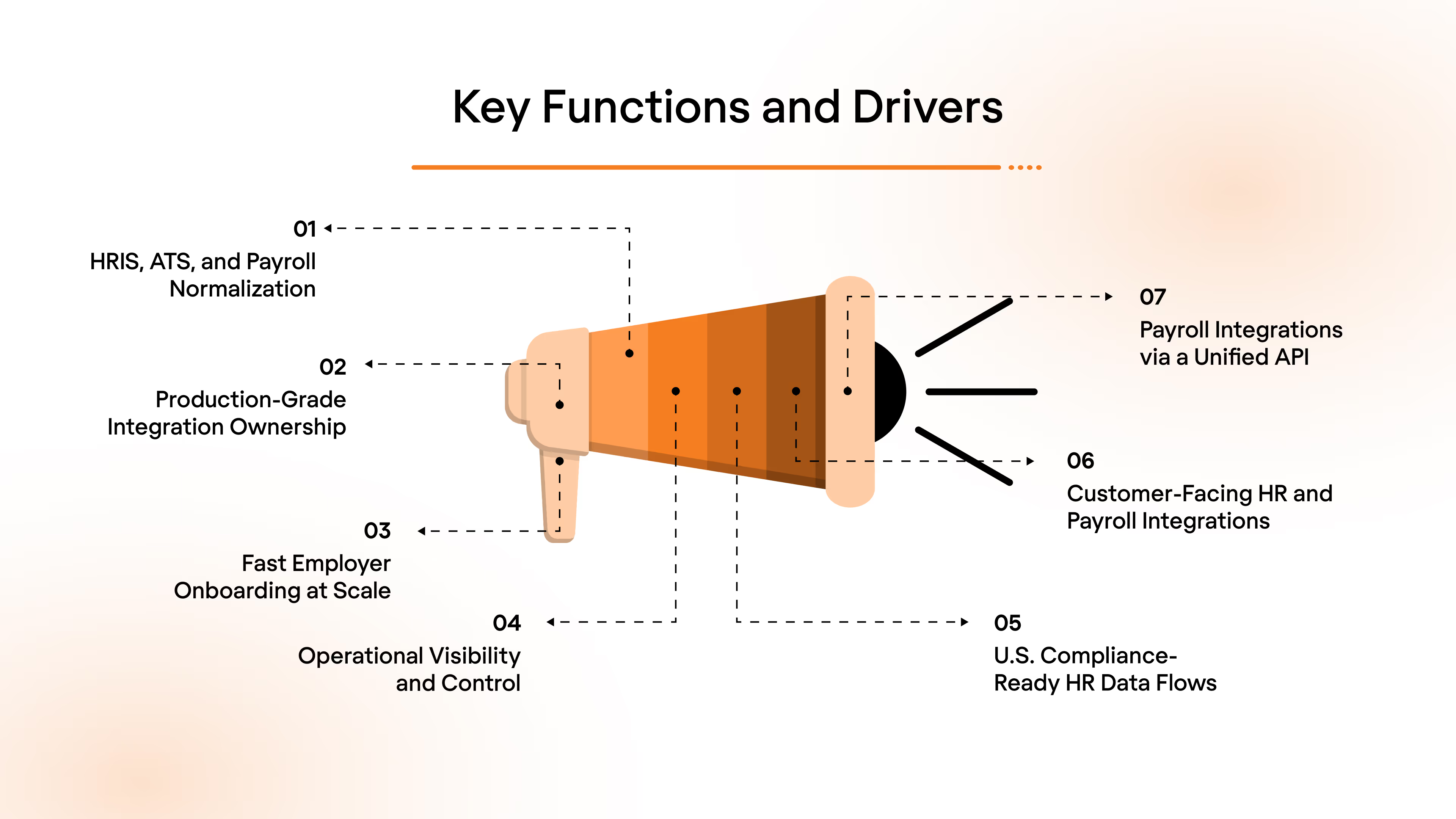
Bindbee is built as a vertical-first HR connectivity layer for B2B HR Tech, benefits, and payroll-adjacent platforms that need deep, reliable integrations without owning long-term maintenance.
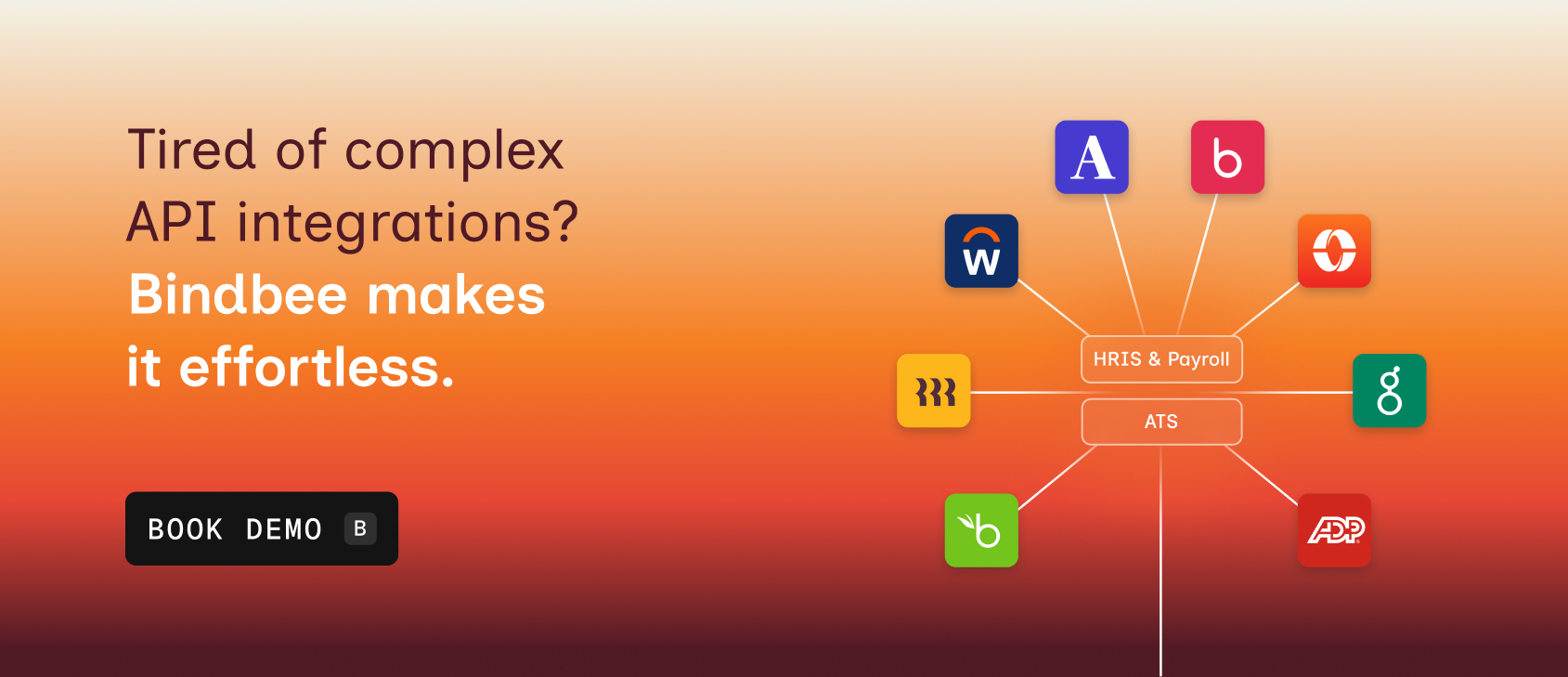
- HRIS, ATS, and Payroll Normalization: Exposes a single, consistent API across 50+ HR systems with deep coverage of employee, employment, compensation, payroll, time-off, dependents, and related models.
- Production-Grade Integration Ownership: Takes responsibility for vendor API changes, version drift, legacy file flows, retries, and failure handling so internal teams do not carry long-term integration risk.
- Fast Employer Onboarding at Scale: Embeddable connection flows and magic-link authentication allow end customers to connect their HR or payroll system in minutes, not weeks.
- Operational Visibility and Control: Provides logs, sync status, affected customer views, webhooks, and self-healing mechanisms that support teams can use without engineering involvement.
- U.S. Compliance-Ready HR Data Flows: Designed for U.S. benefits, payroll, and retirement workflows with security controls, audit trails, and contractual readiness for regulated data handling.
- Customer-Facing HR and Payroll Integrations: Built for products that must connect directly to the HRIS or payroll systems used by their customers, not internal systems, while preserving isolation, security, and per-customer configuration.
- One-to-Many HR and Payroll Integrations via a Unified API: A single integration implementation supports connectivity across dozens of HR and payroll providers, enabling platforms to scale customer coverage without multiplying engineering effort.
Bindbee is purpose-built for companies that treat HR integrations as core infrastructure, not side workflows. It fits teams that want integration depth, predictable upkeep, and faster sales execution without expanding engineering scope.
What Workato Is Built For?
Workato is built as a horizontal enterprise iPaaS designed to orchestrate workflows, automate business processes, and connect large numbers of systems across departments using a low-code, recipe-driven model.
- Cross-System Workflow Automation: Allows event-driven workflows that move data and trigger actions across CRM, ERP, finance, HR, IT, and internal tools using conditional logic and branching.
- Low-Code Recipe-Based Development: Uses visual recipes and prebuilt actions so business technologists and integration teams can build automations without writing full custom code.
- Enterprise Orchestration and Governance: Supports transaction management, rollback, authentication, audit logs, and role-based access controls for regulated enterprise environments.
- Broad Connector Coverage: Offers a large catalog of generic connectors and actions designed to support many categories of SaaS applications rather than deep vertical specialization.
- Embedded Automation for Platforms: Allows SaaS vendors to embed workflow automation and integrations into their products as a configurable extension layer.
- Internal System Integrations: Primarily used to connect an organization’s own systems, such as syncing payroll data into accounting, ERP, finance, or data warehouse platforms.
- One-to-One Integration Construction: Each integration is built as a distinct workflow or recipe, meaning payroll-to-ERP, payroll-to-benefits, and payroll-to-HRIS flows are implemented and maintained separately.
Workato fits organizations that need a single automation layer spanning many business systems and departments. It is optimized for orchestration breadth and governance rather than deep, domain-specific HR and payroll data modeling.
The Integration Problem HR Tech Teams Are Trying to Solve
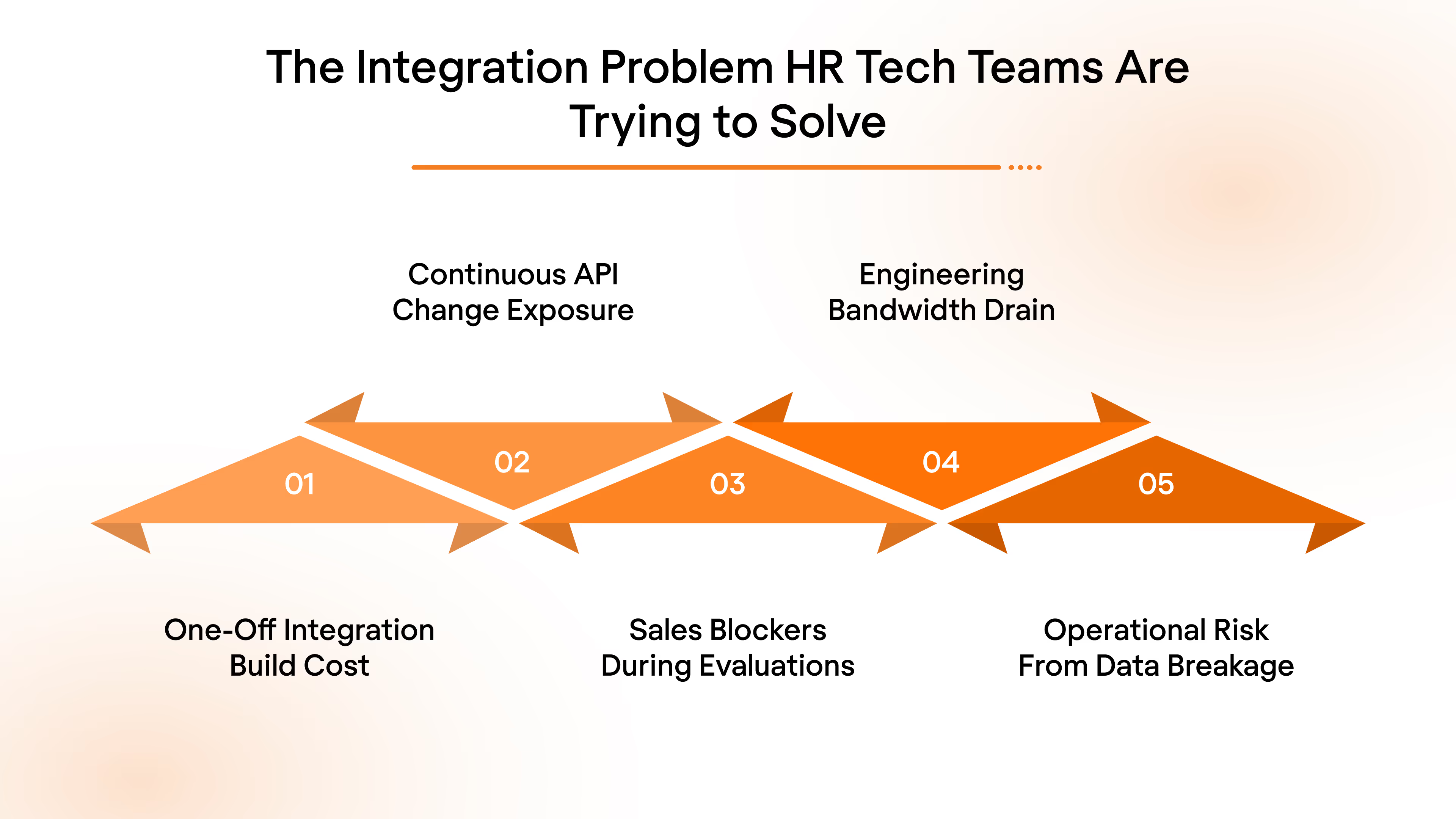
HR Tech platforms operate in ecosystems where every customer runs a different HRIS, ATS, or payroll system. Supporting these systems at production depth creates structural cost, risk, and go-to-market friction that compounds as the customer base grows.
- One-Off Integration Build Cost: Each new HRIS or payroll connector typically consumes four to six weeks of engineering time, with complexity rising for payroll, benefits, and multi-entity data flows.
- Continuous API Change Exposure: Vendor APIs evolve through versioning, field changes, authentication updates, and undocumented behavior shifts, forcing ongoing maintenance and regression testing.
- Sales Blockers During Evaluations: Enterprise and mid-market buyers often require specific HRIS or payroll support during procurement, causing deals to stall or fail when integrations are missing.
- Engineering Bandwidth Drain: Product teams prioritize core features while engineering teams are pulled into integration work, creating roadmap delays and internal delivery tension.
- Operational Risk From Data Breakage: Integration failures lead to incorrect deductions, stale employee records, missed contributions, and downstream support escalations.
For HR Tech teams, integrations become permanent infrastructure, not launch tasks. The real problem is not building connectors once, but owning accuracy, uptime, and change management at scale.
Workato vs Bindbee: Side-by-Side Comparison
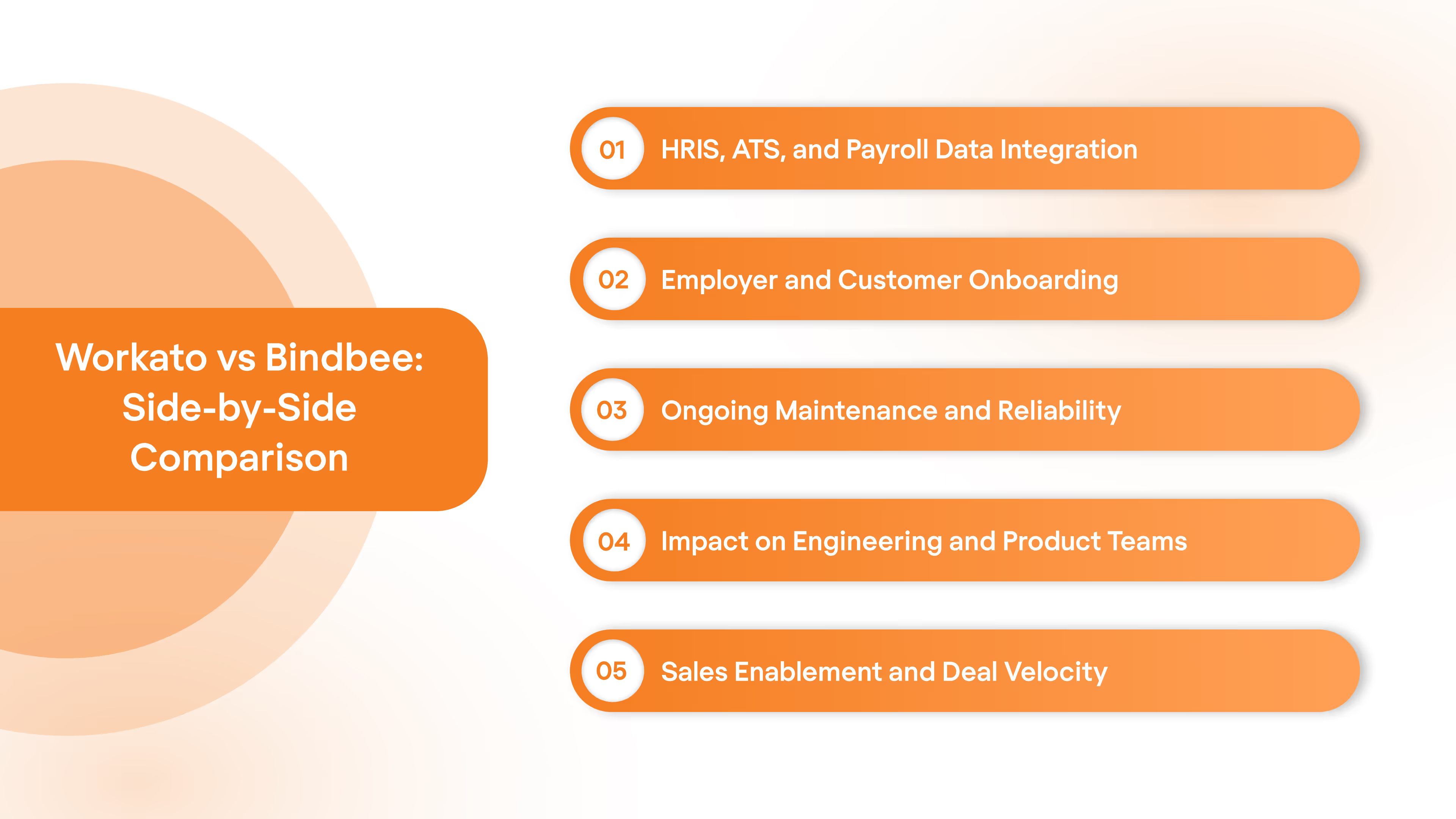
Workato and Bindbee solve integration problems at very different layers. This comparison breaks down how each platform performs across core HR Tech use cases that directly affect engineering load, sales velocity, and operational risk.
1. HRIS, ATS, and Payroll Data Integration
This use case covers syncing employee, employment, compensation, and payroll data between customer systems and HR Tech platforms.
Bindbee
- Deep HR Data Models: Provides ~16–17 normalized HR and payroll models per integration, supporting production-grade lifecycle, payroll, and benefits workflows.
- Unified HR Schema: Exposes a single API across 50+ HRIS, ATS, and payroll systems, reducing vendor-specific branching logic.
Workato
- Action-Based Connectors: Integrations rely on predefined actions and triggers rather than a unified HR data schema.
- Workflow-Centric Mapping: Data structures depend on recipe logic and require manual normalization for complex HR use cases.
2. Employer and Customer Onboarding
This use case evaluates how quickly end customers can connect their HR or payroll systems during onboarding.
Bindbee
- Embedded Connection Flows: White-label SDK and magic-link authentication allow customers to connect systems directly inside the product UI.
- Prebuilt Canonical Mappings: Standard field mappings reduce onboarding from weeks to days for common HR vendors.
Workato
- Integration Setup via Recipes: Connections are typically configured by internal teams using recipes rather than end-user-facing flows.
- Configuration-Heavy Onboarding: Each customer stack often requires custom recipe setup and testing.
3. Ongoing Maintenance and Reliability
This use case focuses on how platforms handle API changes, failures, and long-term integration upkeep.
Bindbee
- Managed API Change Ownership: Bindbee absorbs vendor API versioning, schema drift, and legacy SFTP changes centrally.
- Operational Monitoring Tooling: Dashboards, retries, webhooks, and self-healing reduce manual intervention during failures.
Workato
- Customer-Owned Maintenance: Recipe updates and connector changes typically require internal monitoring and adjustments.
- Enterprise Governance Controls: Strong logging, audit trails, and rollback support enterprise automation standards.
4. Impact on Engineering and Product Teams
This use case measures how the integration strategy affects roadmap delivery and team focus.
Bindbee
- Engineering Offload Model: Integration depth and maintenance are externalized, freeing teams to focus on core product features.
- Predictable Integration Surface: A single API contract reduces internal coordination between product and engineering teams.
Workato
- Internal Automation Ownership: Engineering or operations teams remain responsible for building and maintaining recipes.
- Flexible but Hands-On: Suitable for teams comfortable owning automation logic across departments.
5. Sales Enablement and Deal Velocity
This use case examines how integration readiness influences enterprise and mid-market sales cycles.
Bindbee
- Integration-Led Deal Coverage: Broad HRIS and payroll support removes blockers during procurement evaluations.
- Trial-Ready Validation: 7–15-day trials allow prospects to test real HR data flows before purchase.
Workato
- Platform Credibility: Recognized enterprise iPaaS positioning can support broader digital transformation narratives.
- Indirect Sales Impact: Integration depth for HR use cases depends on custom configuration rather than out-of-the-box coverage.
Bindbee is optimized for HR Tech teams that need deep, standardized HR and payroll integrations with minimal ownership overhead. Workato fits organizations prioritizing cross-department workflow automation, where HR is one of many integration surfaces.
Explore how integration ownership impacts cost, speed, and long-term reliability before committing engineering resources. HR Integrations: Build vs Buy Decision for Maximum ROI
Pricing Structure and Cost Predictability
Workato and Bindbee follow fundamentally different pricing philosophies. Workato prices for horizontal automation at enterprise scale, while Bindbee prices for HR integration ownership and depth, with costs tied directly to customer connections rather than usage volume.
Workato pricing suits enterprises scaling cross-functional automation with variable execution volume. Bindbee pricing fits HR Tech teams that need stable, connection-based costs while externalizing integration depth, maintenance, and operational risk.
See how real HRIS, ATS, and payroll integrations behave in production and decide what fits your roadmap best. Bindbee’s Deep Integrations or Unified’s Half-Baked Models? We’ll let you decide.
Why HR Tech Teams Choose Bindbee as Their Integration Layer
Bindbee is chosen when integrations stop being a feature and start behaving like shared infrastructure. Teams adopt it to remove long-term integration ownership while keeping control over product experience, data quality, and go-to-market speed.
- Integration as Infrastructure, Not Projects: Bindbee treats HRIS, ATS, and payroll connectivity as continuously managed infrastructure rather than one-time builds tied to release cycles.
- Sales-Ready Integration Coverage: Broad vendor support allows sales teams to commit to integrations during evaluations without engineering pre-work or roadmap tradeoffs.
- Operational Control Without Custom Code: Support and ops teams gain visibility into sync health, failures, and customer impact without routing issues back to engineering.
- Designed for Regulated HR Data: U.S.-first compliance posture, audit trails, scoped access, and contractual readiness reduce risk for benefits, payroll, and retirement workflows.
- Predictable Growth Economics: Pricing scales with customer connections, allowing finance and product teams to model costs alongside ARR growth.
Bindbee is selected by teams that want integration depth, ownership offload, and commercial power without turning integrations into an internal platform they must staff and maintain.
Workato vs Bindbee: Which Platform Is Best for HR Tech?
Choosing between Workato vs Bindbee starts with understanding how central HR integrations are to your product and how much operational risk your team can realistically absorb.
Broad automation platforms like Workato fit scenarios where HR data is one of many workflow inputs and integrations remain configurable, internal assets. That model works when surface-level connectivity and orchestration are sufficient.
Bindbee fits a different need. When HRIS, payroll, and ATS integrations power core workflows, influence deal outcomes, and carry compliance risk, depth and long-term reliability matter more than flexibility. In the Workato vs Bindbee decision, Bindbee aligns with teams that want faster go-lives, stable data models, and integration ownership handled outside their engineering roadmap.
If HR integrations affect revenue, trust, and scale, this comparison makes the choice clear. Ready to evaluate Bindbee for production-grade HRIS, ATS, and payroll integrations? Book a demo to see how it fits your stack.
FAQs
1. What is the main difference between Workato vs Bindbee for HR integrations?
The core difference in Workato vs Bindbee is scope versus depth. Workato focuses on cross-application workflow automation, while Bindbee focuses on deep, production-grade HRIS, ATS, and payroll data models with managed maintenance.
2. Is Workato vs Bindbee a comparison of automation or integration ownership?
Workato vs Bindbee is largely a comparison of ownership. Workato requires teams to design, maintain, and update integration logic internally. Bindbee assumes long-term responsibility for HR integration behavior and vendor API changes.
3. Which platform is better for HR Tech SaaS: Workato vs Bindbee?
In Workato vs Bindbee, HR Tech SaaS companies with customer-facing HR integrations usually prefer Bindbee due to normalized HR schemas, onboarding flows, and predictable maintenance. Workato fits internal automation needs better.
4. How does pricing differ in Workato vs Bindbee?
Workato vs Bindbee pricing differs in structure. Workato pricing scales with platform usage and automation execution. Bindbee pricing scales with the number of customer HR system connections rather than API volume.
5. When does Bindbee make more sense than Workato in a Workato vs Bindbee evaluation?
Bindbee makes more sense in a Workato vs Bindbee evaluation when HRIS, payroll, and ATS integrations affect sales outcomes, data accuracy, compliance, or customer trust rather than serving as background workflows.


.avif)