


Employee Benefits Data Integration: Key Challenges & How APIs Fix Them
Summarise the blog with AI
.avif)
Benefits workflows fail for one simple reason: the data feeding them is inconsistent. HRIS systems store employee and dependent data one way; payroll systems store deductions and contributions another.
And when your platform tries to stitch those sources together, every edge case becomes an engineering problem.
Employee benefits data integration solves that by creating a clean, automated pipeline between HR, payroll, and benefits systems.
This guide shows how employee benefits data integration works, the challenges behind it, and the modern approach to simplifying the entire process.
At a glance:
- Fragmented HRIS and payroll systems cause mismatched fields, delayed updates, and manual file fixes that lead to premium disputes and compliance gaps.
- Payroll API integration solves these issues by syncing real-time employment updates, deductions, contributions, and life events directly from payroll with no spreadsheets.
- API-driven workflows create a single source of truth, improving eligibility accuracy, premium calculations, billing consistency, and reconciliation.
- Modern benefits platforms using APIs see fewer support tickets, higher customer retention, and the ability to support complex employers with minimal engineering load.
- Bindbee delivers this infrastructure through a unified API, standardized data, automated syncs, and built-in compliance across 60-plus HRIS and payroll systems.
What Employee Benefits Data Integration Actually Means
Employee benefits data integration is the automated flow of all the information required to determine eligibility, enroll employees, manage dependents, calculate deductions, and keep payroll and carriers aligned. It is more than syncing a roster. It is connecting every data point that influences a benefits plan.
Here is what that includes and why each piece matters.
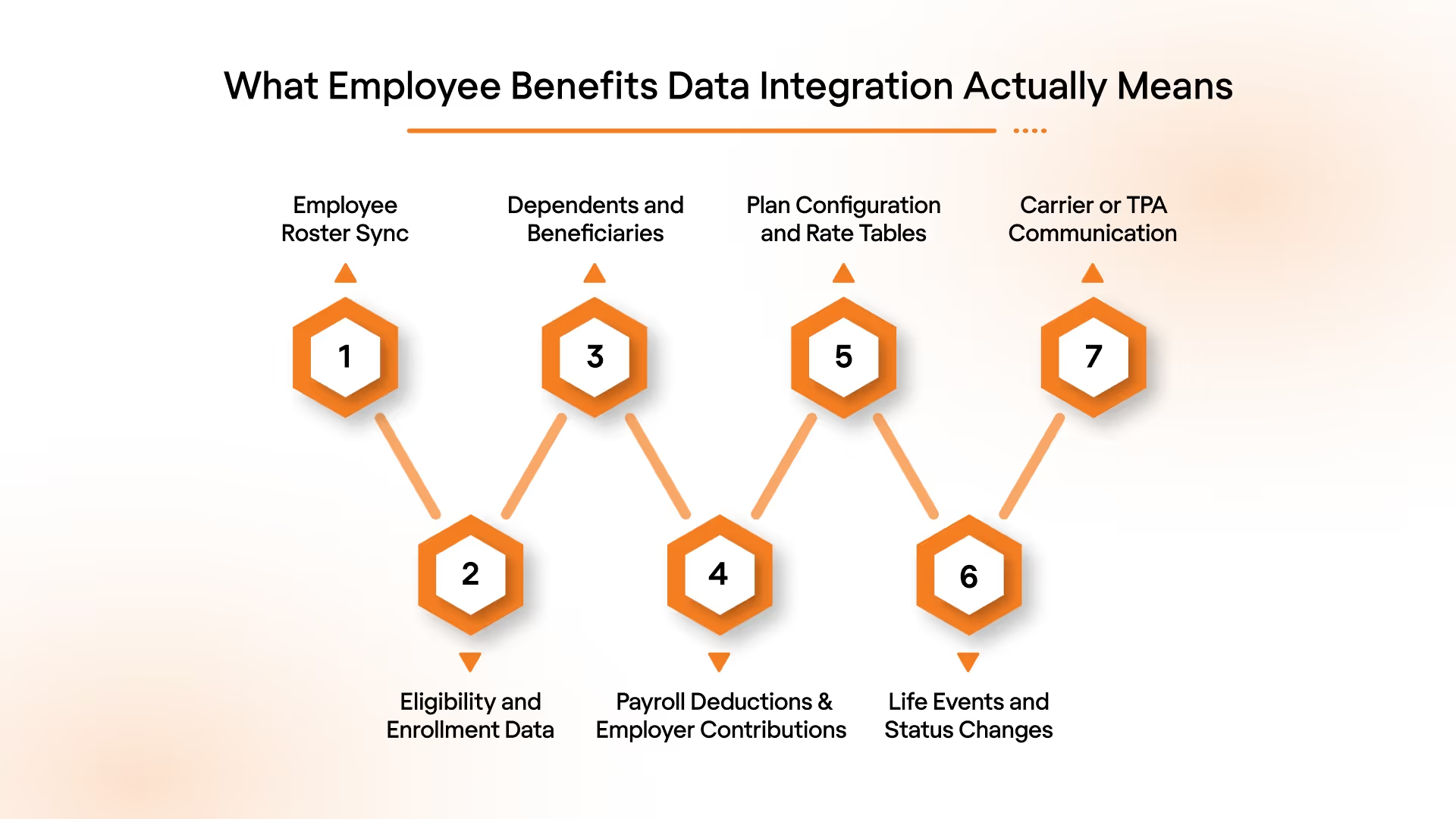
1. Employee Roster Sync
Your system must know who the employee is, where they sit in the organization, and whether they are active, terminated, or on leave. A clean roster is the foundation for eligibility, payroll deductions, and carrier updates.
2. Eligibility and Enrollment Data
Eligibility rules depend on job status, hours worked, hire dates, and pay frequency. Without accurate eligibility data, employees get enrolled too early, too late, or into the wrong plan, which creates compliance and billing issues.
3. Dependents and Beneficiaries
Many plans, including medical, dental, vision, and life insurance, depend on dependent data. Keeping this in sync ensures that coverage tiers and premiums match the employee’s actual household structure.
4. Payroll Deductions and Employer Contributions
Benefits deductions only work when mapped correctly to payroll. If deduction amounts or codes are wrong, payroll miscalculates premiums, employees are overcharged or undercharged, and reconciliation becomes a manual mess.
5. Plan Configuration and Rate Tables
Plans, tiers, contribution splits, and age-banded or region-based rates must match what carriers expect. Even small mismatches cause billing discrepancies or incorrect premium calculations.
6. Life Events and Status Changes
Marriage, childbirth, job changes, and loss of coverage all trigger eligibility changes and require timely enrollment updates. Without automated sync, life events fall through the cracks and create compliance risk.
7. Carrier or TPA Communication
Carriers and TPAs (Third-Party Administrators) need clean, consistent, timely data, not spreadsheets or manual file uploads. Automated data flow ensures premiums, enrollments, and terminations reflect the latest employee changes.
If these data elements are not integrated cleanly, your benefits workflow breaks before it even begins.
Why Benefits Teams Struggle With Data Integration Today
Benefits data sounds simple until you see how fragmented the upstream systems are. Every employer uses a different HRIS or payroll tool, and each of those systems structures employee, dependent, and deduction data differently. That variability is exactly what creates daily operational pain for benefits teams.
- Every client uses a different HRIS or payroll system: Your team is forced to work with dozens of formats, authentication flows, field names, and partial datasets. A new client often means a new integration challenge.
- No standardized formats for benefits or deduction data: Employee contributions, employer matches, coverage tiers, and rate tables rarely follow the same structure. Benefits tools spend hours converting inconsistent fields into something usable.
- Manual exports and file-based workflows: Spreadsheets, CSVs, and SFTP drops still drive most benefits operations. These files break easily, arrive late, or include outdated information that must be fixed manually.
- Delayed or outdated data causing premium mismatches: When eligibility, dependents, or pay rates sync late, premiums do not match payroll. That creates billing disputes, angry employees, and time-consuming reconciliation.
- Errors in deduction mapping across pay types and EINs: Pretax vs post-tax, employer vs employee split, multiple EIN structures, and pay frequencies all introduce complexity. One mapping error leads to incorrect deductions for an entire payroll cycle.
- Growing compliance requirements: HIPAA, SOC 2, ISO, GDPR, and CCPA increase the stakes. Benefits data is highly sensitive, and sending it through manual, inconsistent processes introduces real risk.
- High support burden: Most support tickets originate from bad or late data. Teams spend hours debugging mismatches instead of improving the benefits product.
All of this leads to the same conclusion: manual data handling is no longer sustainable. The only way to reduce errors, compliance risk, and operational drag is through automated benefits data integration.
Also read: Why Data Integration Is Important and Its Benefits
What Payroll API Integration Is and How It Solves These Challenges
Most benefits teams run into the same bottleneck: payroll data is always the last thing to update, yet it is the source of truth for deductions, contributions, and premium accuracy.
Payroll API integration fixes that by creating a live, secure data pipeline between your benefits platform and your customers’ payroll systems. Instead of relying on spreadsheets, delayed exports, or manual mapping, APIs allow benefits data to move instantly, accurately, and consistently.
Here is what that looks like in practice:
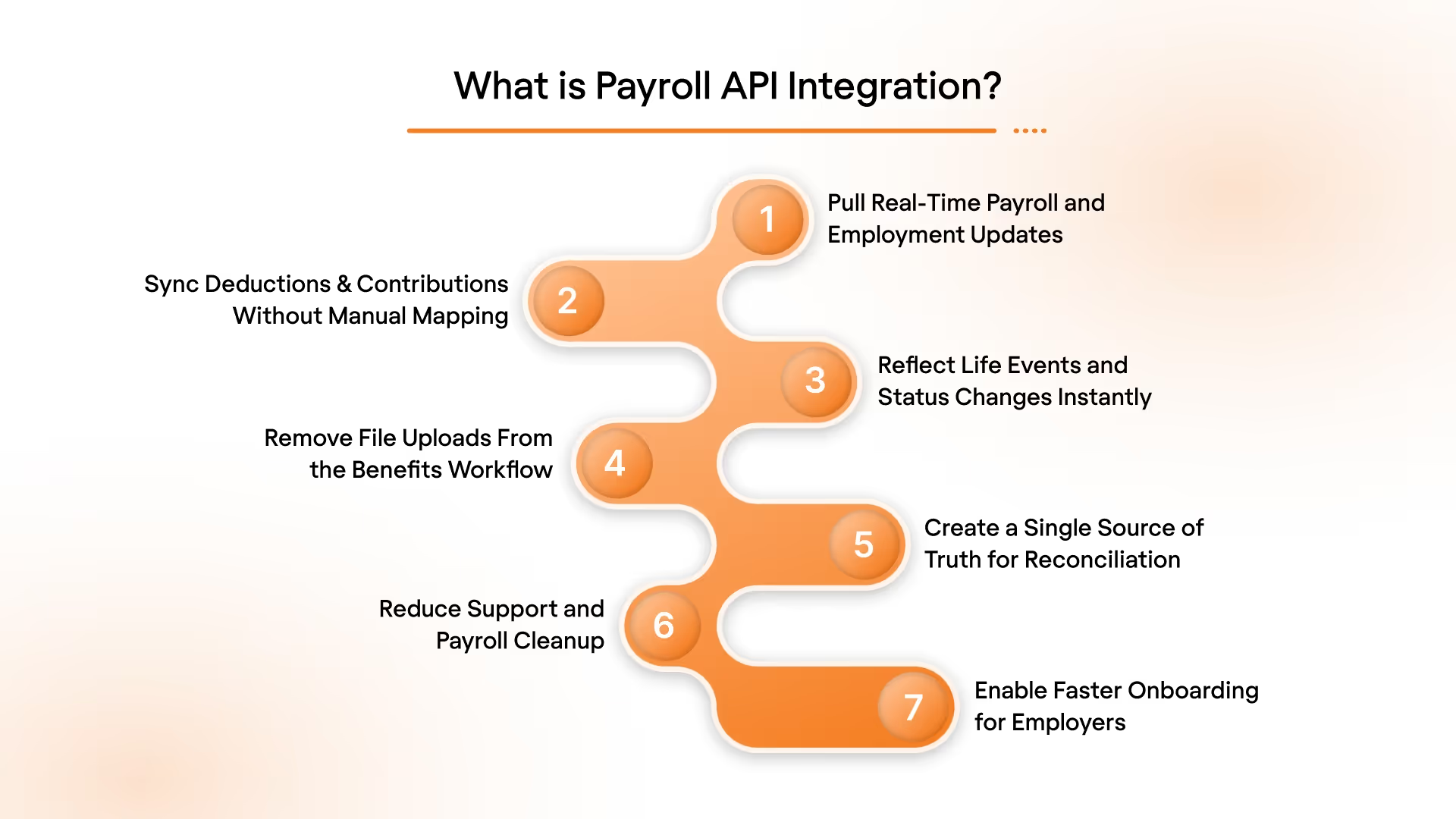
1. Pull Real-Time Payroll and Employment Updates
A payroll API pulls updates the moment they happen: new hires added to payroll, salary adjustments, job title changes, terminations, or shifts in pay frequency. This removes the dangerous lag between HR updating a system and benefits teams seeing the impact.
The Impact:
- Eligibility logic stays accurate
- Enrollment timing matches payroll cycles
- Deductions begin and end when they should
2. Sync Deductions and Contributions Without Manual Mapping
API connections read the employer’s actual deduction codes, contribution rules, pay schedules, and GL mappings rather than relying on spreadsheets or manual inputs.
The Impact:
- No mismatched deduction or contribution codes
- No incorrect premium or payroll amounts
- No downstream adjustments in billing or reconciliation
3. Reflect Life Events and Status Changes Instantly
Qualifying life events — marriage, birth, loss of coverage, dependents added or removed — must update benefits enrollment and payroll deductions at the same time. An API integration keeps these updates in sync so employees are billed correctly and coverage stays compliant.
The Impact:
- Compliance-sensitive events processed on time
- Accurate dependent and coverage data
- No gaps in eligibility or premium collection
4. Remove File Uploads From the Benefits Workflow
Without an API, benefits teams depend on employers to export CSV files, upload spreadsheets, or update deductions manually. With an API, these steps disappear. Data flows continuously behind the scenes with no operational lift for HR teams.
The Impact:
- HR teams stop acting as manual data couriers
- Fewer input or formatting errors
- Operations avoids hours of file cleanup each cycle
5. Create a Single Source of Truth for Reconciliation
Since the payroll system and benefits platform share the same synchronized data, monthly, quarterly, and annual reconciliations become straightforward. Deduction totals match premiums without manual intervention.
The Impact:
- Clean billing cycles
- Fewer carrier or TPA disputes
- Smoother renewals and reconciliation
6. Reduce Support and Payroll Cleanup
Most benefits-related support tickets originate from outdated or incorrect payroll data. APIs solve that root problem, giving real-time visibility into changes and preventing inconsistencies before they escalate.
The Impact:
- Fewer escalations
- Faster resolution times
- Lighter support and operations workload
7. Enable Faster Onboarding for Employers
An API-based process detects employer pay groups, deduction codes, pay cycles, and employee data instantly. There is no waiting for HR teams to configure or send anything manually, which significantly speeds up time-to-value.
The Impact:
- Faster go-lives
- Shorter sales cycles
- A smoother onboarding experience
In short, payroll API integration turns benefits operations from a manual, error-prone process into a predictable, automated workflow. It eliminates the disconnect between HRIS data, enrollment data, and payroll data — the same disconnect that creates the majority of benefits-related issues today.
Also read: How APIs Simplify Integration: 9 Key Benefits You Should Know
Business Benefits You’ll See With API-Powered Benefits Integration
API-driven employee benefits data integration does more than clean up data. It strengthens your product, improves employer outcomes, and delivers measurable value across your entire benefits operation.
Here’s what modern benefits platforms gain when payroll data flows automatically.
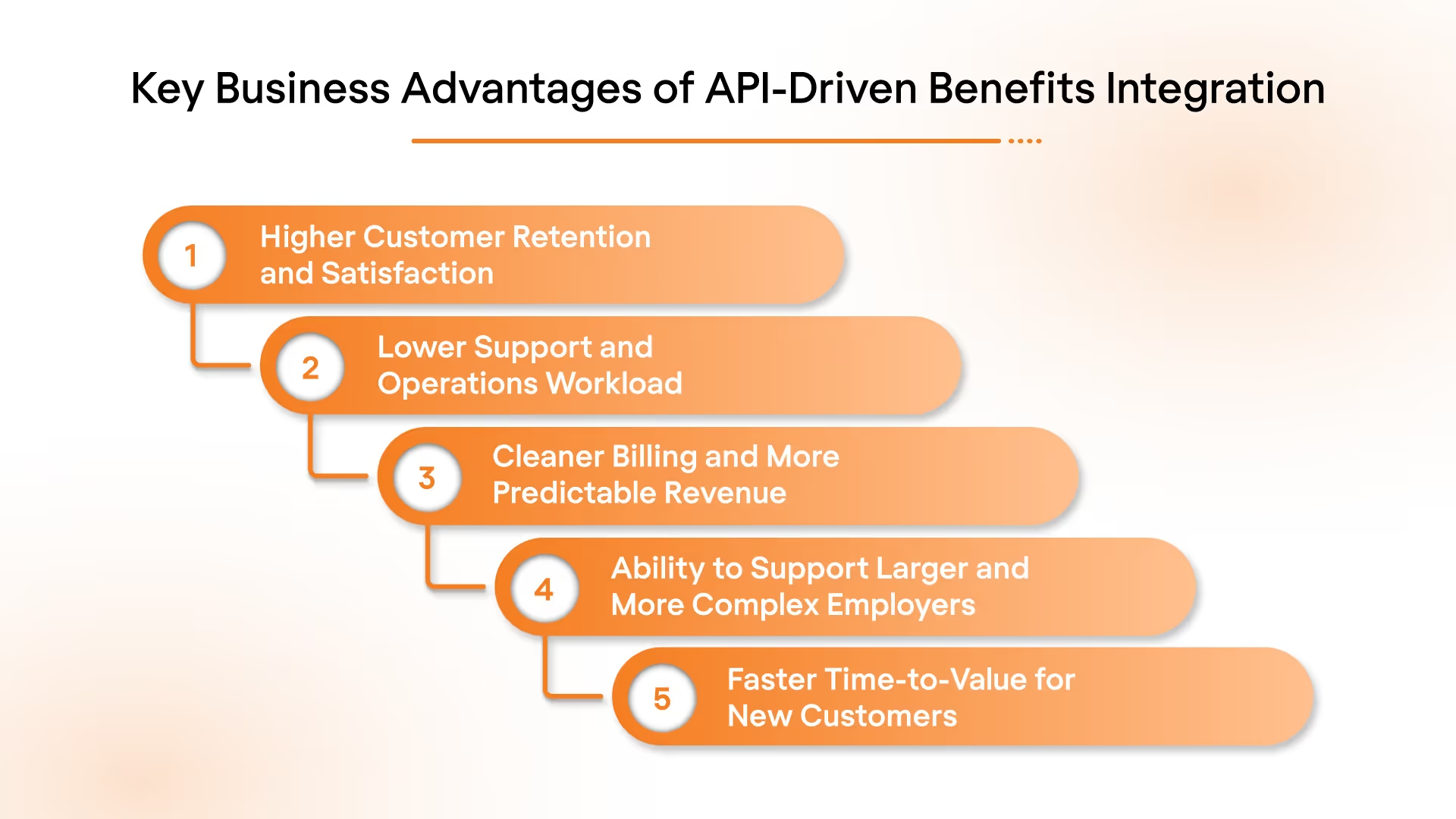
- Higher Customer Retention and Satisfaction: When coverage, payroll deductions, and eligibility sync automatically, employers experience fewer errors and a smoother workflow. This leads to lower churn, stronger NPS, and fewer renewal risks.
- Lower Support and Operations Workload: Incorrect deductions and outdated information are the biggest drivers of benefits-related support volume. With APIs, those issues disappear at the source, reducing support workload and speeding up resolutions.
- Cleaner Billing and More Predictable Revenue: With accurate payroll data, premium totals match what employees owe. Billing becomes predictable and free from the disputes that typically delay cash flow.
- Ability to Support Larger and More Complex Employers: API integrations can handle multi-EIN setups, multiple pay groups, and intricate benefit configurations. This makes it easier to win and retain enterprise accounts without additional engineering load.
- Faster Time-to-Value for New Customers: API-based connections help employers get up and running quickly, without the delays caused by manual files or deduction configuration. This accelerates activation, improves early product adoption, and shortens your time-to-value.
All of these gains are only possible when your benefits platform has a reliable, real-time data foundation powering it — and that’s exactly what Bindbee delivers.
How Bindbee Simplifies Employee Benefits and Payroll Data Integration
Instead of building dozens of HRIS and payroll connectors, your product integrates once with Bindbee and instantly gains access to clean, standardized employee and payroll data across 60-plus systems.
Bindbee removes the complexity that slows onboarding, breaks workflows, and creates billing and eligibility errors.
Here’s how.
- Standardized Employment and Benefits Data: Bindbee normalizes messy HRIS data into one consistent schema for employees, dependents, payroll runs, deductions, and contributions. This cuts edge cases, prevents billing errors, and keeps workflows clean.
- Real-Time and Automated Daily Syncs: Status changes, demographics, enrollments, and contributions sync automatically. Eligibility stays accurate, deductions match payroll cycles, and HR avoids manual data checks.
- Faster Integrations and Customer Onboarding: Pre-built connectors and Magic Link let employers connect their systems in minutes. Integration timelines shrink, customers see value faster, and onboarding friction disappears.
- Automated Monitoring and Self-Healing Operations: Logs and Issues provide real-time visibility into syncs, with automated retries handling common failures. Support escalations drop, and data flows stay reliable.
- Compliance Built Into the Platform: SOC 2, ISO, GDPR, and HIPAA safeguards keep sensitive payroll and benefits data secure. Your team avoids maintaining its own compliance infrastructure.
- Scales With Any Employer Tech Stack: Bindbee supports both modern HRIS tools and legacy payroll systems. Unified data enables scaling across employer sizes, multi-EIN setups, and new product lines without rebuilding integrations.
Together, these capabilities give you a stable, scalable foundation for clean data, faster onboarding, and reliable payroll alignment across every employer they serve.
Take Control of Your Benefits Data Flow Now
Employee benefits data integration only works when the data behind it does. API integration removes the slow, error-prone steps that derail eligibility, deductions, billing, and employee trust.
For benefits platforms, the goal isn’t just cleaner data — it’s a smoother product, faster onboarding, and fewer operational fires.
Bindbee gives you the integration layer teams spend years trying to build: one API, standardized data, real-time sync, and reliable payroll alignment across every employer.
Curious what this looks like? Connect now.
FAQs
1. Why is payroll data important for benefits administration?
Payroll data determines who is eligible, how much employees owe, what employers contribute, and when deductions should start or stop. Without accurate payroll data, benefits billing, coverage, and enrollment timelines quickly fall out of sync.
2. What problems occur when benefits and payroll systems are not integrated?
Teams face incorrect deductions, outdated employee rosters, coverage gaps, premium mismatches, manual reconciliation work, and a surge in support tickets. Errors compound quickly because each system updates at different times.
3. How does API-based integration improve accuracy?
APIs sync data instantly and consistently from the source system, eliminating file delays and manual edits. This ensures deductions, contributions, eligibility updates, and life events are always accurate across platforms.
4. Is API-based benefits integration secure?
Modern unified APIs follow strict frameworks like SOC 2, ISO 27001, GDPR, and HIPAA. Sensitive data is encrypted, access is controlled, and systems follow region-specific storage rules to meet compliance requirements.