


What Is an Integration Partner? Explained
Summarise the blog with AI
.avif)
Ever wondered why some companies scale their product fast while others get stuck building endless connections?
In HR Tech, benefits, and payroll-adjacent products, integrations are the backbone of your client experience. Whether you're trying to support a customer’s HRIS, synchronize payroll data, or automate deductions, the right integration partner can determine how fast you ship, how many deals you win, and how much engineering time you save.
If you’re leading engineering, product, or operations at an HR Tech SaaS, benefits platform, or 401(k) provider, this blog explains what an integration partner actually is, why it matters, and how it can transform the way you deliver integrations at scale.
Key Takeaways
- An integration partner helps HR Tech and benefits platforms connect with HRIS, payroll, and ATS systems through a single, unified connection.
- They replace the need to build dozens of vendor-specific integrations and handle ongoing API changes, data syncing, normalization, and monitoring.
- HR-Tech companies use integration partners to speed up go-lives, reduce engineering workload, improve data reliability, and close deals that depend on system compatibility.
- There are different types of integration partnerships, including API-based, embedded, unified APIs, and hybrid (SFTP + API), each serving different product needs.
- Choosing the right partner requires evaluating vendor coverage, data quality, API maintenance, compliance, and onboarding experience.
What Is an Integration Partner?
An integration partner is a connectivity provider that helps your product connect with external HRIS, ATS, payroll, and benefits systems through a unified framework. Instead of building and maintaining every connector internally, you use a partner that already supports these integrations and keeps them up to date. This gives your customers reliable access to clean employee and payroll data without adding engineering overhead.
For HR Tech SaaS teams, product leaders, and benefits operations, this means no more wrestling with vendor-specific APIs, custom builds, or nonstop maintenance. You onboard employers faster, support more systems as you scale, and free your engineering team to focus on the core product instead of integration.
Now that you understand what an integration partner is, let’s look at why they’ve become essential.
Why Do HR-Tech Companies Use Integration Partners?
HR-Tech companies and benefits platforms use integration partners because building and maintaining HRIS and payroll connectors in-house drains engineering time, slows delivery, and creates ongoing operational risk.
Here are 5 key reasons why teams depend on integration partners:
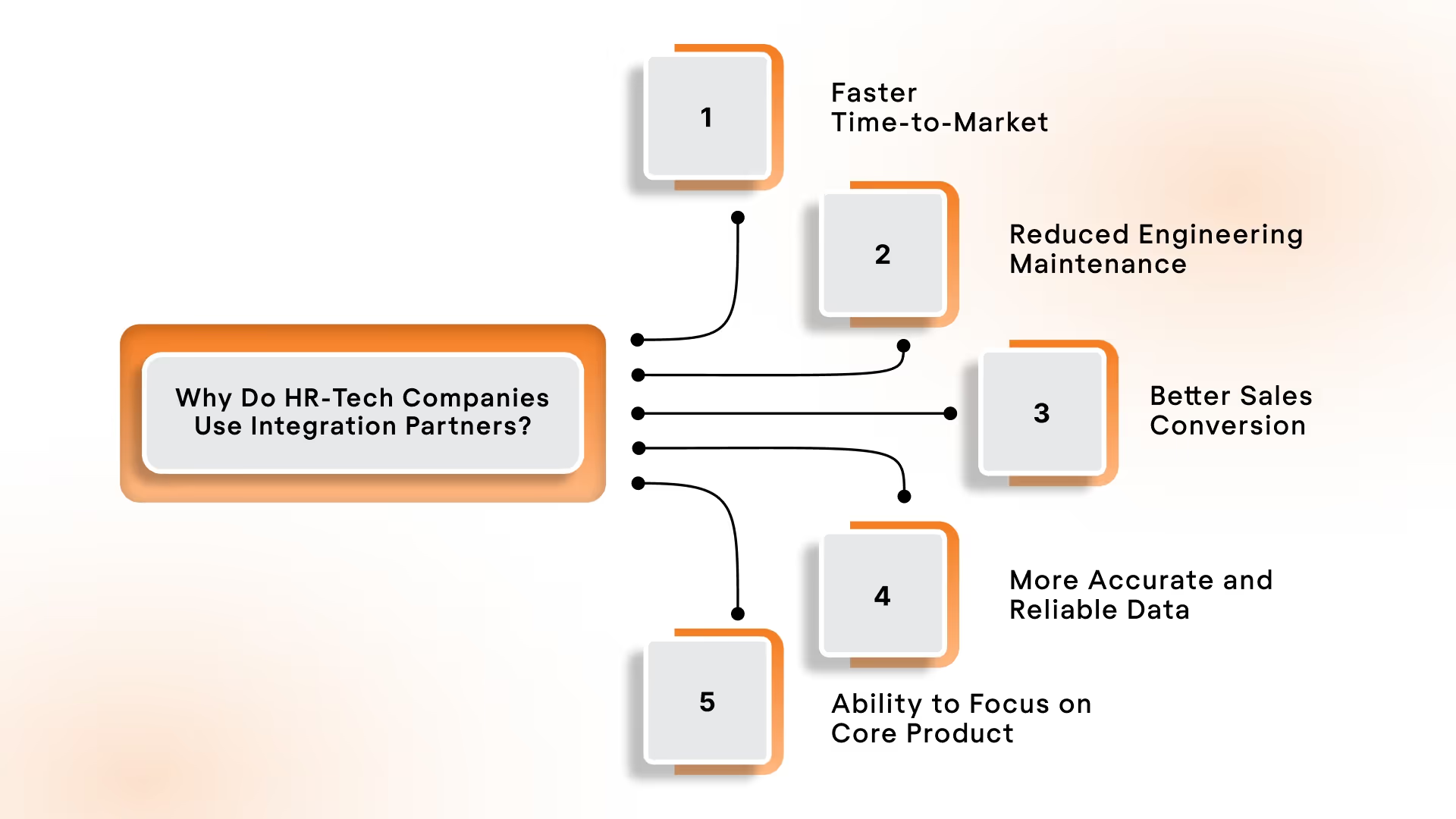
1. Faster Time-to-Market
Building a single HRIS or payroll integration can take your team 1–1.5 months. With an integration partner, you ship support for multiple vendors in a fraction of that time. This helps you respond faster to your client's demands.
2. Reduced Engineering Maintenance
Vendor APIs change constantly, and every update creates more work for your team. An integration partner handles version changes, edge cases, and SFTP/file workflows for you. This reduces the ongoing maintenance load that slows your roadmap.
3. Better Sales Conversion
Prospects often require specific HRIS or payroll support before signing. When you can instantly support dozens of systems, you remove a major sales blocker. This leads to shorter cycles and higher conversion rates.
4. More Accurate and Reliable Data
HR, payroll, and benefits data are messy across vendors. Integration partners normalize fields and maintain data quality, so you avoid deduction errors, eligibility issues, or delayed payroll updates. This improves your product experience and reduces support tickets.
5. Ability to Focus on Core Product
Your engineers stay focused on features that move your product forward. By outsourcing integrations, you free up time for innovation, customer requests, and competitive differentiators. This leads to a stronger product and faster growth.
Now that you know why integration partners matter, let’s break down what they actually do.
Also Read: 11 Common Integration Challenges And How to Overcome Them
What Does an Integration Partner Actually Do?
Instead of spreading your engineering team thin across dozens of APIs, SFTP formats, and vendor-specific quirks, you rely on one platform that takes responsibility for building, maintaining, and updating those connections. This helps you deliver stable data flows, reduce integration delays, and keep employer accounts running smoothly.
Here’s what a strong integration partner typically handles for you:
1. Prebuilt Connectors Across HR, Payroll, and Benefits Systems
They maintain ready-made integrations with top vendors like Workday, ADP, Gusto, Rippling, Paychex, BambooHR, and others. Supporting these systems becomes instant; you don’t need months of engineering effort or custom one-off builds.
2. Replaces Dozens of Vendor Schemas
Instead of working with different data structures for each HRIS or payroll platform, you send and receive data through a single unified API. With this, employee records, compensation, deductions, time-off balances, and employment details are presented in a consistent format, simplifying downstream logic.
If you’re looking for a platform that already handles this at scale, Bindbee provides a deeply normalized schema across 60+ HR, payroll, and benefits systems. It replaces vendor-specific chaos with a single, consistent model your product can trust.
3. End-to-End Data Syncing Workflows
They manage how data moves between systems, including API calls, webhook triggers, SFTP file exchanges, delta syncs, and reconciliation processes. This keeps your product aligned with live HR and payroll changes without relying on manual intervention.
4. Data Cleaning, Mapping, and Normalization
Every vendor structures data differently, and fields are often incomplete or inconsistent. The integration partner resolves these inconsistencies before the data reaches your platform. This reduces errors in deductions, eligibility, and payroll-linked workflows and gives you a stable foundation to build on.
5. Operational Monitoring and Troubleshooting
They provide monitoring dashboards, automatic retries, sync health checks, and alerts. When an issue occurs, such as a vendor outage, a failed file import, or a missing field, the partner detects it and initiates recovery steps. Your ops teams get visibility without having to escalate everything to engineering.
6. Security, Compliance, and Audit Controls
Since HR and payroll data are sensitive, the partner ensures secure data handling through certifications such as SOC 2 or ISO 27001, role-based access controls, encrypted transfers, and activity logs. This lowers your compliance burden and strengthens employer trust in your product.
7. Employer Authorization and Connection Flows
They offer UI components or SDKs that let employers authenticate and connect their HRIS or payroll accounts directly within your product. This replaces manual onboarding steps and shortens implementation timelines for every new customer.
8. Handling All Vendor Maintenance and API Changes
When a vendor makes changes to their API, like updating data formats, removing old features, or changing how things work, your integration partner takes care of it. This means your team doesn’t have to fix broken connections or update code every time something changes. You stay focused on building your product, not managing integrations.
Now that you know what an integration partner does, let’s look at the different types of integration partnerships.
Types of Integration Partnership?
Integration partnerships take different forms depending on how your product connects with HRIS, payroll, or benefits systems. Some partners focus on direct API connectivity, while others help you embed workflows or support legacy employer setups. Understanding these models helps you choose the approach that actually fits your technical roadmap and customer needs.
Here are the main types of integration partnerships:
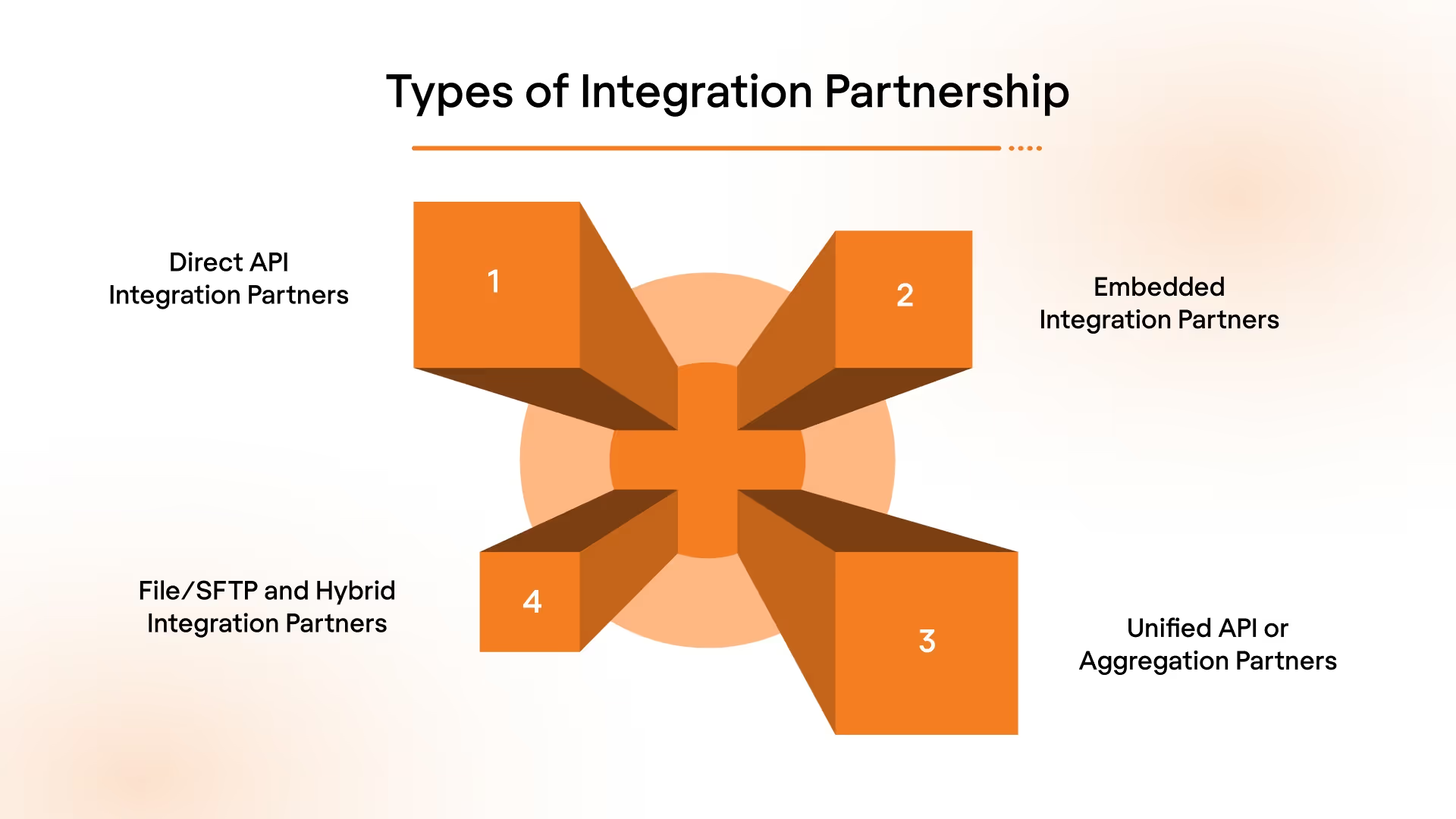
1. Direct API Integration Partners
These partners provide API-based connectivity to HRIS and payroll systems using a standardized interface. You integrate once, and they handle authentication, data models, sync logic, and vendor-specific quirks behind the scenes.
This is ideal when you need reliable, scalable access to employee, payroll, and benefits data without writing custom code for each vendor.
2. Embedded Integration Partners
These partners offer prebuilt connection flows you can embed directly into your product via SDKs or UI components. Employers connect their HR or payroll system to your app in a few clicks.
This reduces onboarding friction, removes manual setup work, and gives your benefits ops or implementation teams a faster way to activate new customers.
3. Unified API or Aggregation Partners
These partners combine dozens of HRIS and payroll systems into one unified API. Instead of managing separate endpoints for ADP, Workday, BambooHR, Paychex, or Gusto, you work with a single consistent schema.
This model is best when your product needs to support many different systems, and you want predictable data structures across all customers. Bindbee is the best example of this model, offering a single unified API that connects you to 60+ HRIS, payroll, and ATS platforms with deep, normalized data coverage.
4. File/SFTP and Hybrid Integration Partners
Some employers still operate on legacy file-based pipelines. Hybrid integration partners support both SFTP workflows and modern APIs, giving you a single operational layer across all employer configurations.
This is especially helpful for benefits platforms that manage payroll deductions, census updates, or eligibility files, which often still run through flat-file transfers.
Now that you know the different types of integration partnerships available, the next step is understanding how to choose the one that’s right for your product and team.
Also Read: What Is an API Connector and How It Works
How to Choose the Right Integration Partner
Evaluating an integration partner is not just about checking technical features; it’s about making sure they can support your product, your customers, and the real-world HRIS/payroll complexity you deal with every day. As a product lead or Benefits Ops owner, you need a partner who reduces your workload, not adds more to it.
Here are the key criteria you should evaluate before choosing an integration partner:
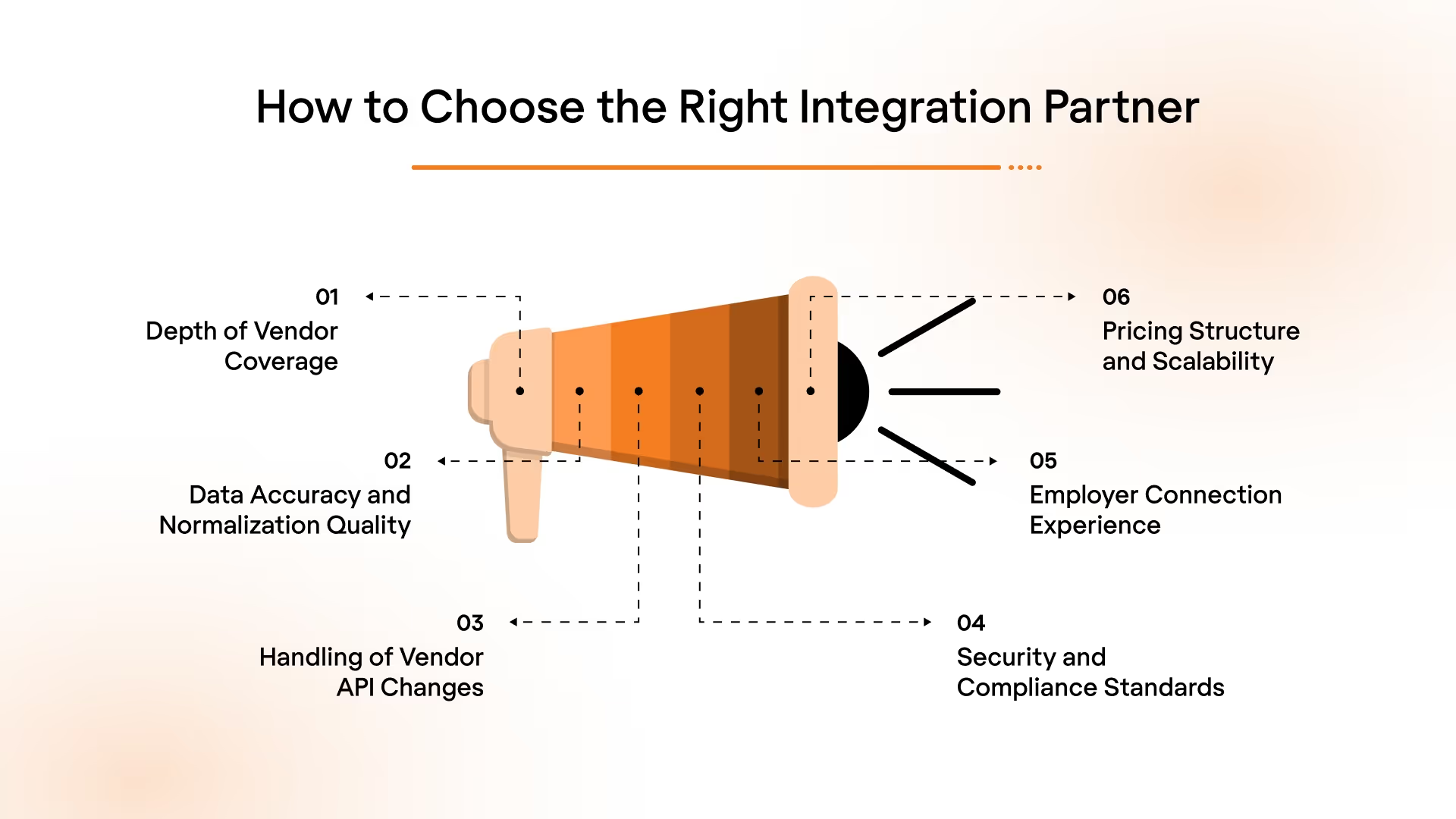
1. Depth of Vendor Coverage
Check how many HRIS and payroll systems they support and how deep each integration goes. You need more than basic employee profiles; look for employment, compensation, deductions, time-off, dependents, and payroll runs.
2. Data Accuracy and Normalization Quality
Ask how they map fields across vendors and handle missing or inconsistent data. Clean, normalized data prevents deduction errors, eligibility issues, and messy downstream logic in your product.
3. Handling of Vendor API Changes
Confirm whether they actively monitor and patch integrations when vendors update or break their APIs. This is critical to avoid emergency fixes and engineering fire drills.
4. Security and Compliance Standards
Check for SOC 2, ISO 27001, HIPAA readiness, encryption practices, and data access controls. You must ensure they can securely handle sensitive HR and payroll information.
5. Employer Connection Experience
Evaluate whether they provide an embeddable UI, SDK, or magic-link flow to allow quick employer onboarding. Smooth connections reduce implementation time for your team.
6. Pricing Structure and Scalability
Ensure the pricing model aligns with your growth, whether per-connection, per-company, or annual subscription. You should be able to scale without unpredictable costs.
Once you know what to look for in a partner, the next step is choosing one that actually delivers on it, and that’s where Bindbee stands out.
Why Bindbee Is the Right Integration Partner?
Bindbee is a unified API platform purpose-built to solve the integration headache for HR-Tech and benefits companies. Instead of building and maintaining 60+ custom connectors to different HRIS, ATS, and payroll systems, Bindbee gives you a single standardized interface so you can integrate once and access dozens of systems.
Whether you run a modern HR Tech SaaS, a benefits platform, or a 401(k)/TPA/record-keeping product, Bindbee lets you ship integrations quickly, maintain them with minimal overhead, and ensure data accuracy, all without diverting your engineering team from core product work.
Here are the key reasons why Bindbee is the best choice for your HR Tech or benefits platform:
1. Unified API: One connection gives you access to data from multiple HRIS and payroll systems. You don’t need to build separate integrations or manage vendor-specific logic.
2. Real-Time Syncing: You receive instant updates for employee contributions, status changes, and demographic changes. This helps you keep payroll, benefits, and lifecycle workflows accurate.
3. Standardized Data: Bindbee simplifies operations with consistent data formats across all vendors. You get clean models for employees, employment, job titles, work location, and more without dealing with inconsistent schemas.
4. Faster Integrations: Pre-built mappings help you go live much faster. Instead of spending weeks normalizing fields, you can rely on ready-to-use mappings directly from Bindbee.
5. Reliable Operations: Bindbee offers automated monitoring that detects and fixes broken data flows before they create real issues. This reduces outages, support tickets, and manual troubleshooting for your team.
6. Enterprise-Grade Security & Compliance: Bindbee is built to meet built-in compliance support for GDPR, CCPA, HIPAA, and SOC 2 security and compliance expectations, with certifications and compliance readiness suitable for HR, payroll, benefits, and sensitive employee data.
Also Read: Unified API: The Secret to Effortless Integrations
Wrapping Up
An integrated HR–payroll ecosystem is essential for HR Tech SaaS, benefits platforms, and payroll‑adjacent products. These integrations simplify complex HRIS and payroll connectivity, reduce engineering overhead, and improve data accuracy. From unified APIs and normalization to real‑time syncs and automated monitoring, the right partner helps you deliver reliable employer experiences without carrying the full integration burden internally.
If you’re looking for a solution that delivers exactly that, Bindbee stands out. We offer a unified API that supports 60+ HRIS, ATS, and payroll systems, with deep, normalized data models and real‑time syncing. Its dashboard, embeddable connection flows, webhooks, and built-in monitoring make integrations smooth and reliable.
So, if you want to eliminate integration bottlenecks and scale your product faster, Bindbee can help you get there.
Book a demo today and see how simple HR and payroll connectivity can be!
FAQs
1. Will using an integration partner reduce manual errors and data silos?
Yes. A good integration partner ensures data flows automatically between systems with normalization and validation. That reduces manual entry and human error and ensures consistency across HR, payroll, and benefits data.
2. Are integration partnerships only useful for small companies or startups?
No. Integration partnerships can benefit companies of all sizes, especially mid-market and larger HR Tech/benefits firms, by simplifying integrations, enabling faster scaling, and reducing maintenance overhead.
3. Can integration partnerships help improve customer retention and product “stickiness”?
Yes, by offering integrations with tools and platforms your customers already use (HRIS, payroll, benefits systems), you reduce friction and increase the chance they'll stay with your product long-term.