

Unified Alternatives: The Top 10 Platforms to Consider in 2026
Summarise the blog with AI
.avif)
If you’ve been evaluating Unified, you may have already run into its biggest tradeoff.
A horizontal API covers many categories, but once you start working with HRIS, payroll, ATS, or benefits data, you often need more structure and depth than a broad model can offer. Multi-EIN setups, payroll corrections, contribution workflows, and job-level changes quickly expose what a generic normalization layer can and cannot handle.
That’s usually when teams begin comparing Unified alternatives.
Sometimes they want deeper employment coverage. Sometimes they want tighter performance. Sometimes they just need a model that fits their product’s long-term architecture better.
This guide breaks down the strongest competitors, where each one excels, and how to pick the platform that actually fits your integration roadmap.
At a glance:
- Teams look for Unified alternatives when horizontal APIs fall short on HRIS, payroll, and ATS depth. Employment data needs precise modeling, and generic connectors often create extra mapping work, unreliable syncs, and higher engineering overhead.
- Bindbee, and other alternatives like Finch, Merge, and Kombo offer stronger employment coverage with normalized HR, payroll, and ATS objects and dependable workflows for roster sync, pay runs, deductions, contributions, and candidate data.
- Tray.ai, Paragon, and Zapier fit teams that need broad automation or low-code workflows across many SaaS tools rather than domain-specific employment coverage.
- Apideck and Nango are better suited for products that prioritize connector breadth, flexible integration logic, and lighter normalization.
- Refold AI serves enterprise environments that need adaptive, AI-driven integrations for both modern SaaS and legacy systems.
Why Businesses Look for Unified Alternatives
Most teams exploring alternatives to Unified aren’t looking for more connectors. They’re looking for more depth. Unified is built as a horizontal API, which works well if you need surface-level coverage across many categories. But when your roadmap depends on accurate employment data, the tradeoffs become harder to ignore.
- Too broad for employment-focused products: If you’re only integrating HRIS, payroll, ATS, or benefits systems, a wide connector library adds complexity rather than value.
- Higher total cost of ownership: You pay for categories you never touch, and engineering still ends up building custom logic on top of generic models.
- Limited depth on HR and payroll objects: Key fields are often missing or oversimplified, which creates edge cases around compensation, job changes, or multi-EIN structures.
- Extra mapping work for employment-specific workflows: Teams spend time re-normalizing data they expected the platform to handle out of the box.
- Not built for real-time employment operations: Contribution updates, deduction changes, PTO sync, retro payroll corrections, and onboarding events require workflows that horizontal APIs rarely support well.
If your product lives inside the employment ecosystem, horizontal APIs slow you down.
Suggested read: Understanding API Integration Cost: Factors and Estimation
Top 10 Unified Alternatives & Competitors to Use Instead
When teams outgrow a horizontal API like Unified, they usually look for one of two things: deeper employment data coverage or tighter control over how integrations behave inside their product.
Below is a breakdown of the strongest Unified alternatives, what they offer, and when they make sense.
1. Bindbee
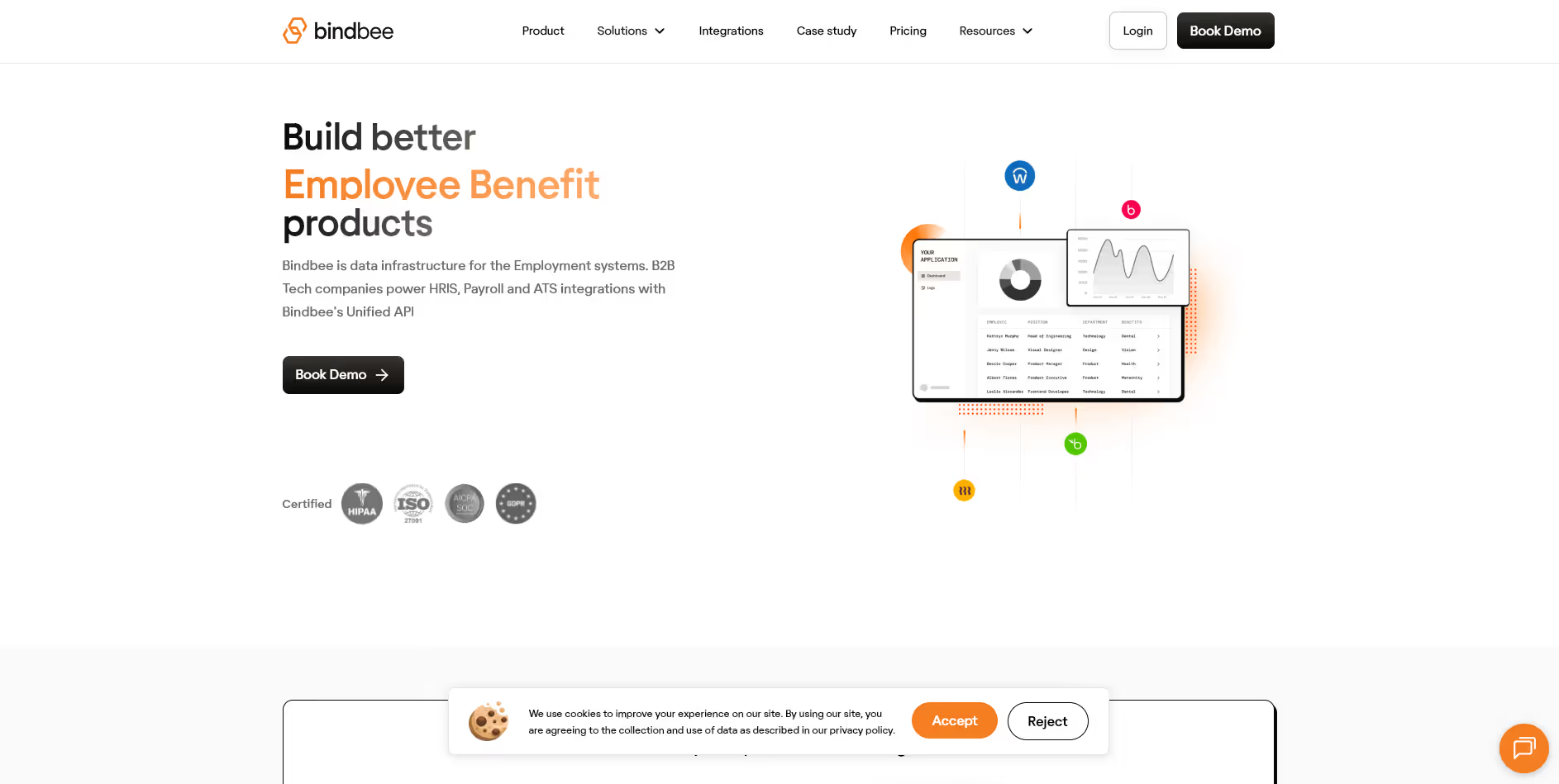
Bindbee is a vertical unified API designed specifically for employment systems. Instead of spreading across unrelated categories, it focuses on deep, reliable integrations with HRIS, payroll, ATS, benefits, and time systems. B2B tech companies use Bindbee to power roster sync, payroll and tax data, benefits enrollment, ATS workflows, timesheets, and other employment operations without managing dozens of one-off integrations.
Key Features:
- One API for 60+ HRIS, payroll, ATS, and benefits systems with consistent, normalized employment objects
- Under 5-minute integration setup with built-in connection flows and UI-embeddable components
- Robust employment workflows including roster sync, dependents and benefits enrollment, job and candidate data, contributions and deductions, time off, and payroll runs
- Real-time and daily syncs at scale, battle-tested with 100,000+ recurring data syncs
- Visibility and troubleshooting with dashboard-level integration logs and issue resolution without digging into code
- Enterprise-ready security with SOC 2, ISO, GDPR, HIPAA certifications, and optional on-prem deployment
Best suited for: B2B HR tech, benefits, fintech, insurance, time/attendance, and compliance products that rely heavily on accurate employment data and need deep, domain-specific integrations rather than broad generic coverage.
2. Tray.ai

Tray.ai is a low-code visual iPaaS that helps teams connect apps, automate workflows, and orchestrate AI-driven processes across different systems. It is built for companies that want to automate operations without managing individual integrations manually.
Key Features:
- Drag-and-drop or low-code builder for creating multi-step workflows across many APIs
- A large library of pre-built connectors that reduces the need to build integrations yourself
- Ability to add AI agents to automate tasks, approvals, triggers, and decision flows
- Governance, security, compliance, monitoring, and orchestration for enterprise and regulated environments
- Flexible automation across CRM, ITSM, finance, support, HR, operations, and other functions
- Faster deployment compared to custom point-to-point integrations when the goal is workflow automation
Best suited for: Organizations that need broad automation across multiple business systems and prefer visual, low-code integrations over deep domain-specific modeling.
3. Apideck
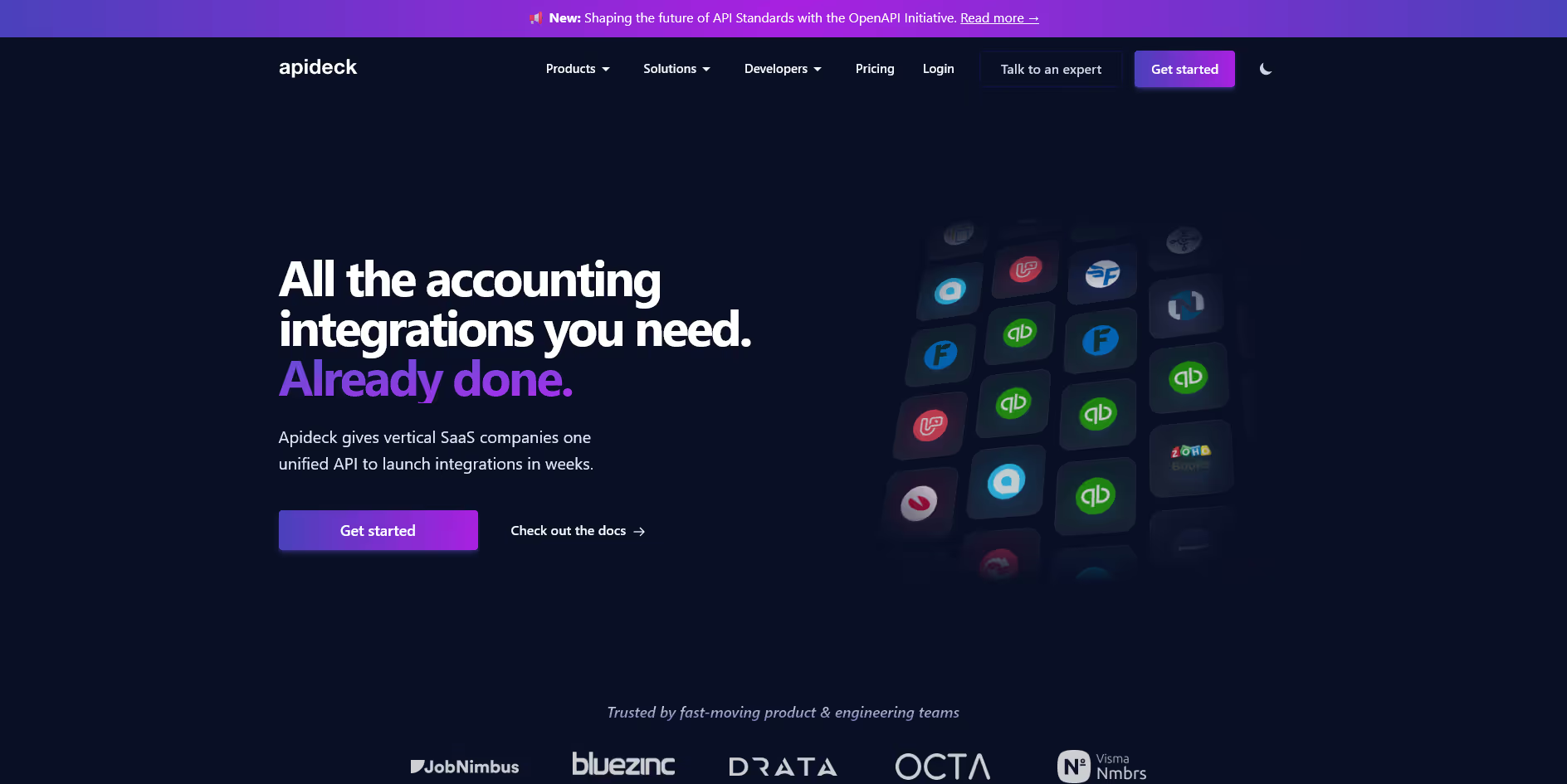
Apideck is a unified API built for vertical SaaS companies that need quick access to accounting, payments, invoicing, and other finance-related integrations. It simplifies complex external APIs into a single, consistent abstraction so teams can launch integrations much faster.
Key Features
- Unified endpoints for accounting, payments, invoicing, expense management, vendor bills, and receivables that simplify financial workflows
- Handles OAuth, token refresh, error handling, logging, and other integration plumbing to reduce engineering overhead
- Allows teams to launch integrations in weeks instead of building every connector individually
- Offers an integration marketplace to list and package connectors as part of your product
- Straightforward pricing that works well for early-stage or mid-sized SaaS companies
- Supports multiple integration categories, including accounting, finance, payments, and, in some cases, CRM or HR
Best suited for: Vertical SaaS companies focused on accounting, payments, invoicing, or financial features where fast launch and lower integration complexity matter more than deep employment or HR data models.
4. Nango
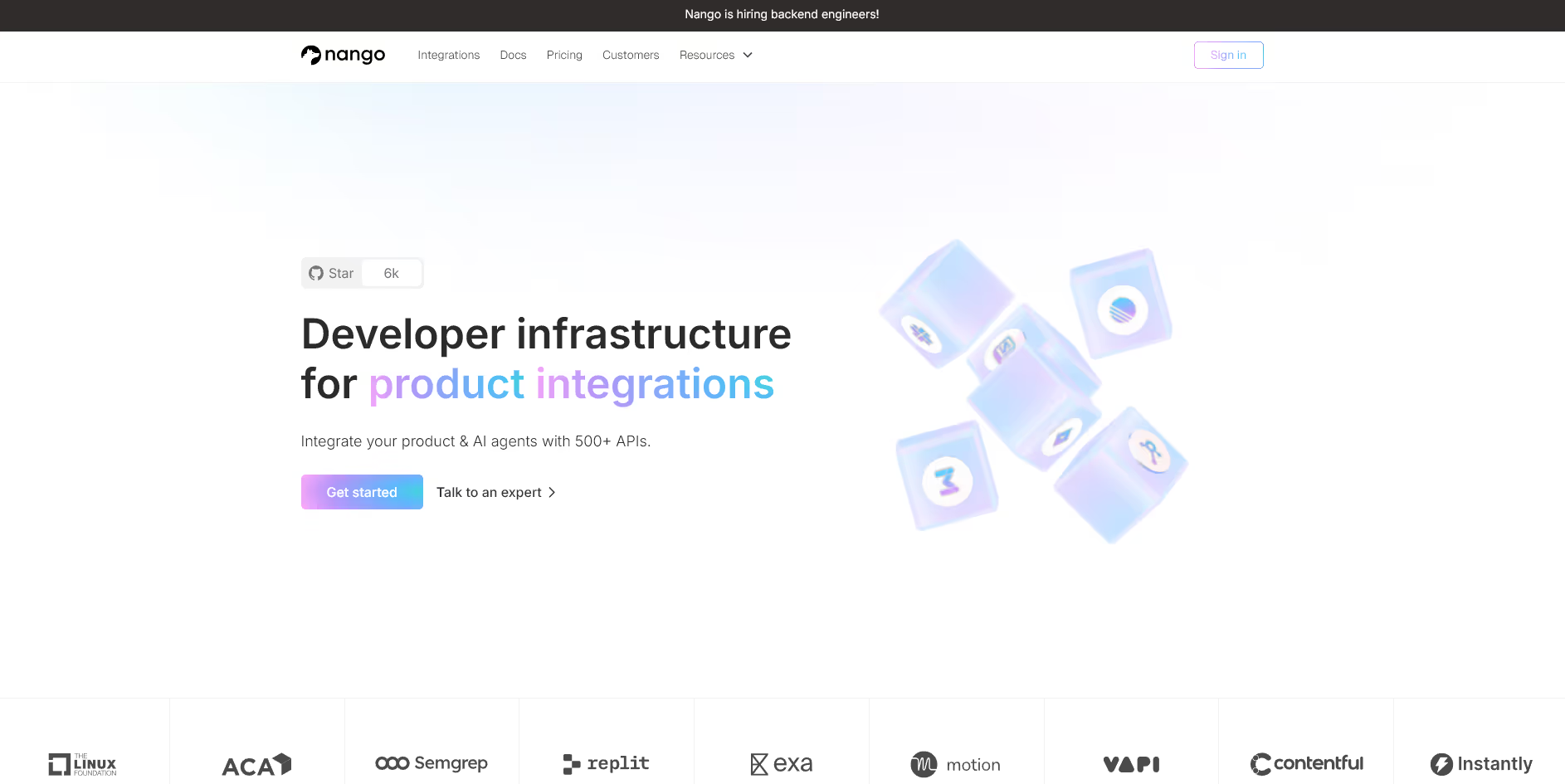
Nango is a connector-as-a-service platform that provides a unified API surface for more than 500 services across CRM, HR, finance, e-commerce, marketing, dev tools, and other categories. It is designed to handle all the low-level integration work so teams can focus on features, not plumbing.
Key Features
- More than 500 out-of-the-box APIs across a wide range of SaaS categories, giving broad coverage
- Handles authentication, token management, rate limits, pagination, webhooks, and retries to reduce boilerplate
- Allows teams to request or configure custom connectors when needed
- Useful for features that need to communicate with many different SaaS tools
- Flexible approach that lets teams adopt only the connectors they need
- Strong fit for prototypes and early builds due to quick setup for authentication and data access
Best suited for: Platforms that need to integrate with many different third-party SaaS tools, such as marketplaces, multi-domain SaaS products, or tools offering integration catalogs where breadth and flexibility matter more than deep domain modeling.
5. Merge
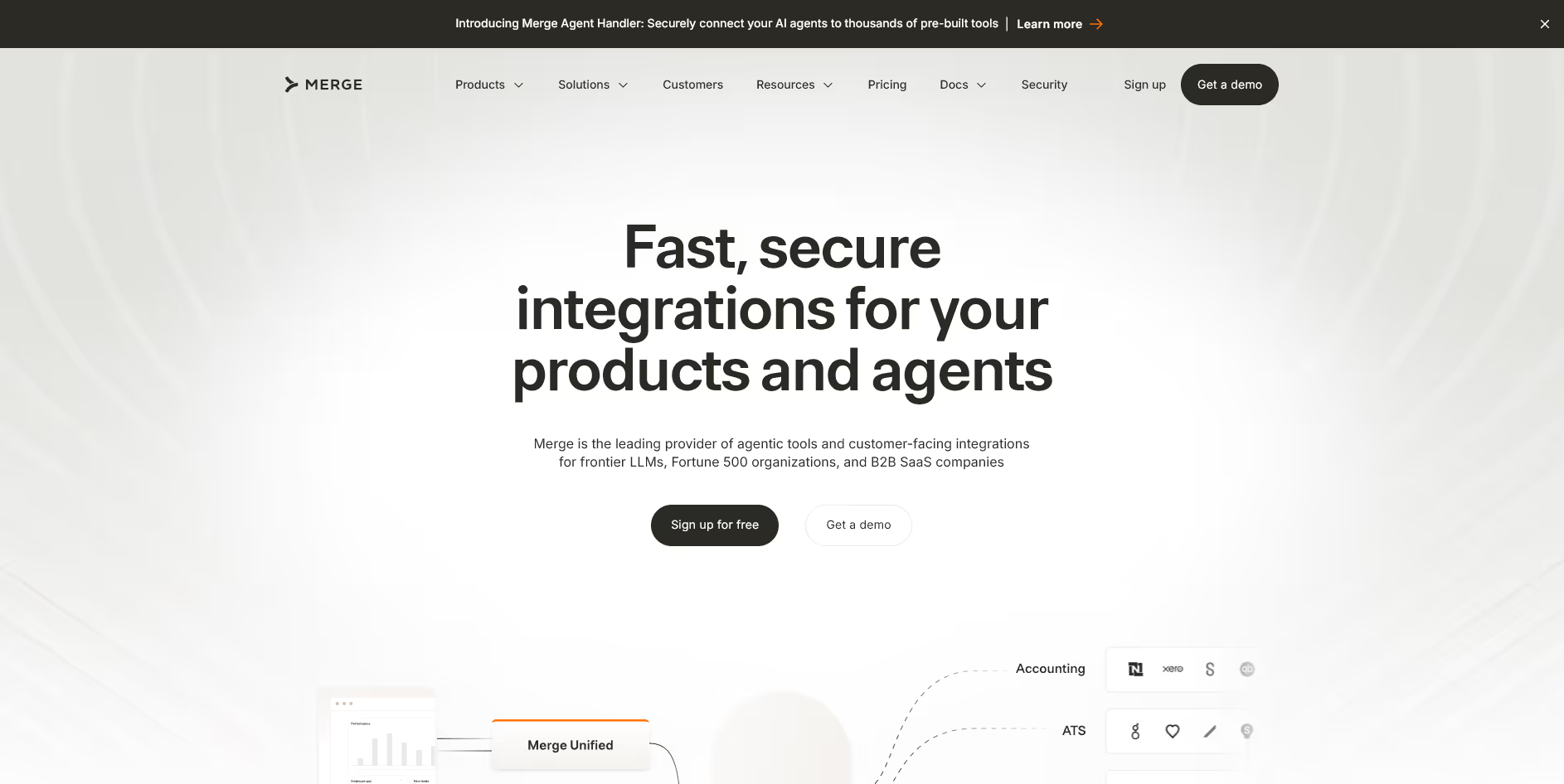
Merge is a unified API built for HR, payroll, ATS, accounting, and directory data. It unifies employee and company data from multiple systems into a single model so teams do not have to build each integration individually.
Key Features
- Access to a broad set of HR, payroll, ATS, accounting, and directory system integrations through one API
- Normalizes employees, payroll runs, employment records, and accounting data across providers
- Supports apps that need payroll data, HRIS sync, or employee metadata, especially in SMB and mid-market segments
- Provides curated connector coverage, onboarding assistance, and enterprise-grade go-to-market support
- Reduces integration launch time from months of custom work to days or weeks
- Covers core HR object normalization, including employees, companies, payroll runs, accounting codes, taxes, and basic deductions
Best suited for: SaaS tools, fintech products, HR or payroll startups, and embedded benefits platforms that need reliable access to HR and payroll data across multiple providers and value breadth across HR systems.
6. Finch
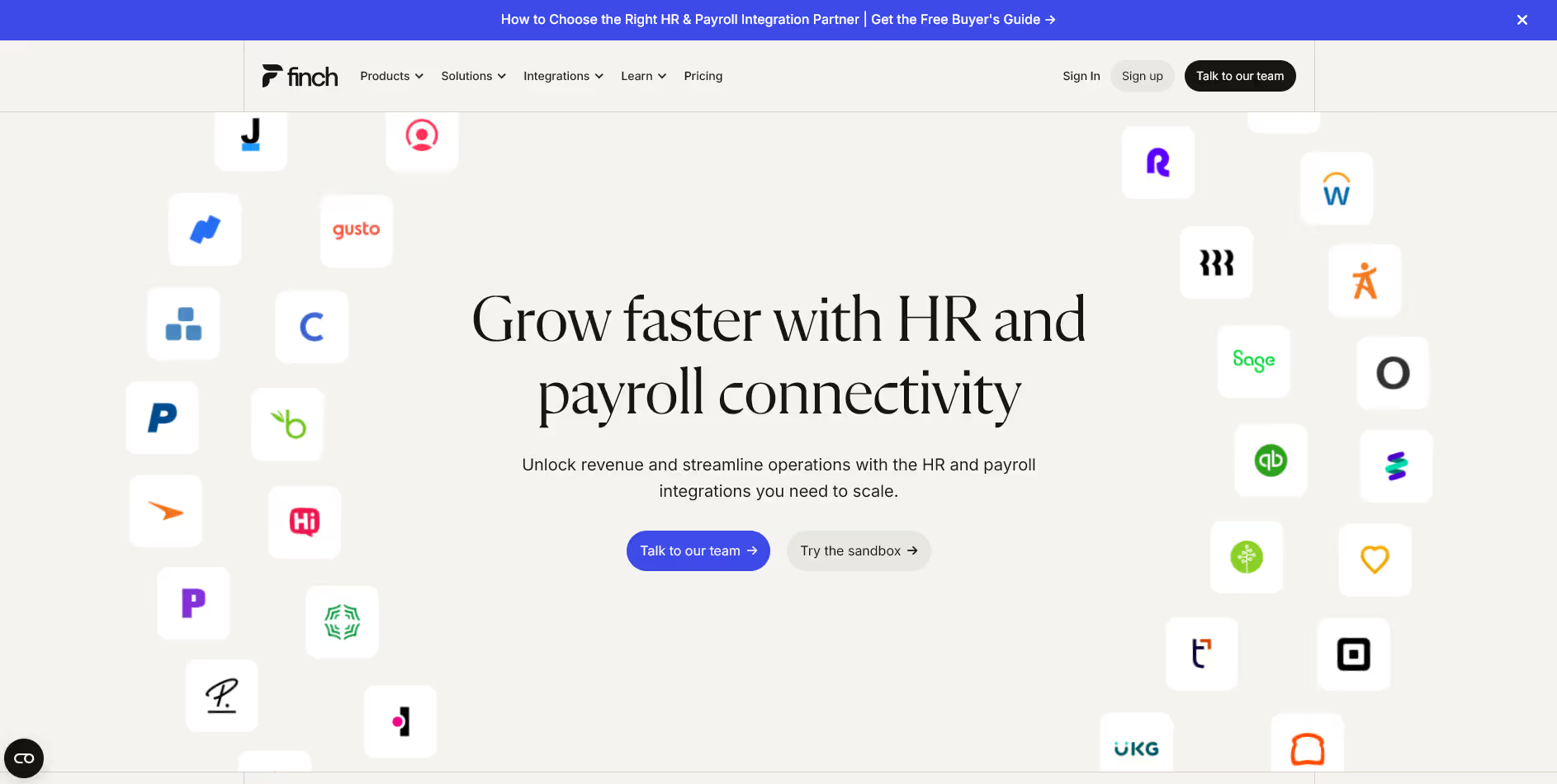
Finch provides a unified API for HRIS and payroll systems with a mix of direct API integrations and assisted connections. It is designed for teams that need payroll and people data without building custom integrations for each provider.
Key Features
- Connects to more than 220 HRIS and payroll systems through one interface
- Normalizes core objects such as organizations, employees, pay runs, pay statements, deductions, and taxes
- Exposes detailed payroll data, including gross and net pay, hours, taxes, and benefit deductions
- Supports reading and, for eligible providers, writing of employer deductions and contributions
- Provides Finch Connect, a secure employer-facing onboarding flow for authentication
- Works well for benefits, payroll analytics, verification, compliance, and fintech products that rely on clean payroll data
Best suited for: Teams that need consistent HR or payroll data across many providers and want a unified access layer without managing individual integrations.
Suggested read: See How Bindbee Compares to Finch
7. Kombo
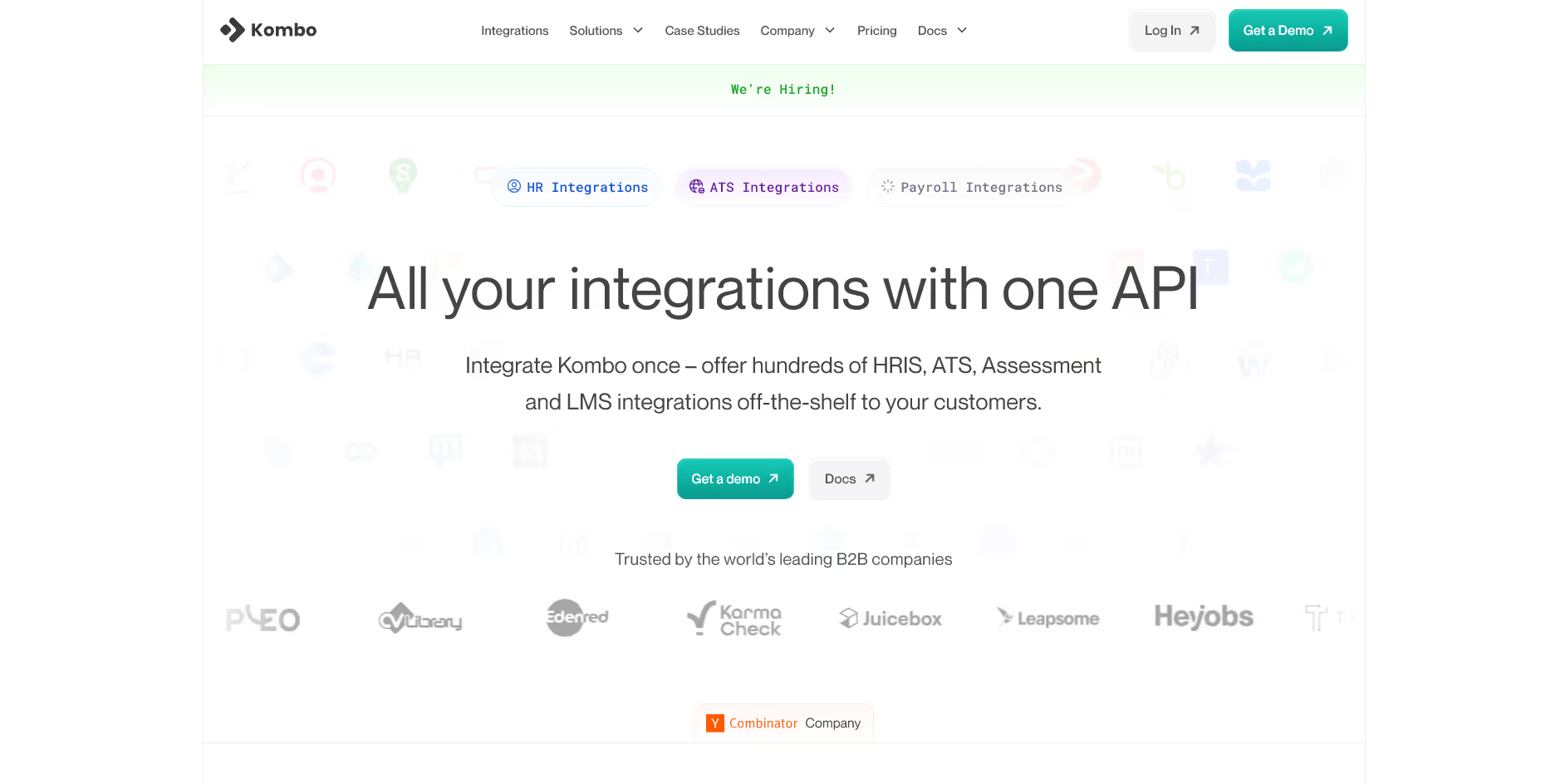
Kombo is a unified API built for HRIS, ATS, and payroll systems. It helps SaaS teams integrate once and support multiple HR and recruiting platforms without managing separate connectors.
Key Features
- Unified API for HR, payroll, and ATS providers with a consistent data model
- Normalized objects for employees, org structures, jobs, applications, candidates, and payroll metadata
- ATS-specific workflows such as fetching jobs, retrieving applicants, and syncing application status
- Automated roster provisioning and deprovisioning to keep user access aligned with HRIS data
- Read and write support across supported HR and ATS systems
- Developer-friendly tools, including SDKs, clear docs, and an OpenAPI specification
Best suited for: SaaS products in HR, recruiting, people operations, or workforce management that want consistent HR and ATS connectivity without building individual integrations.
8. Refold AI
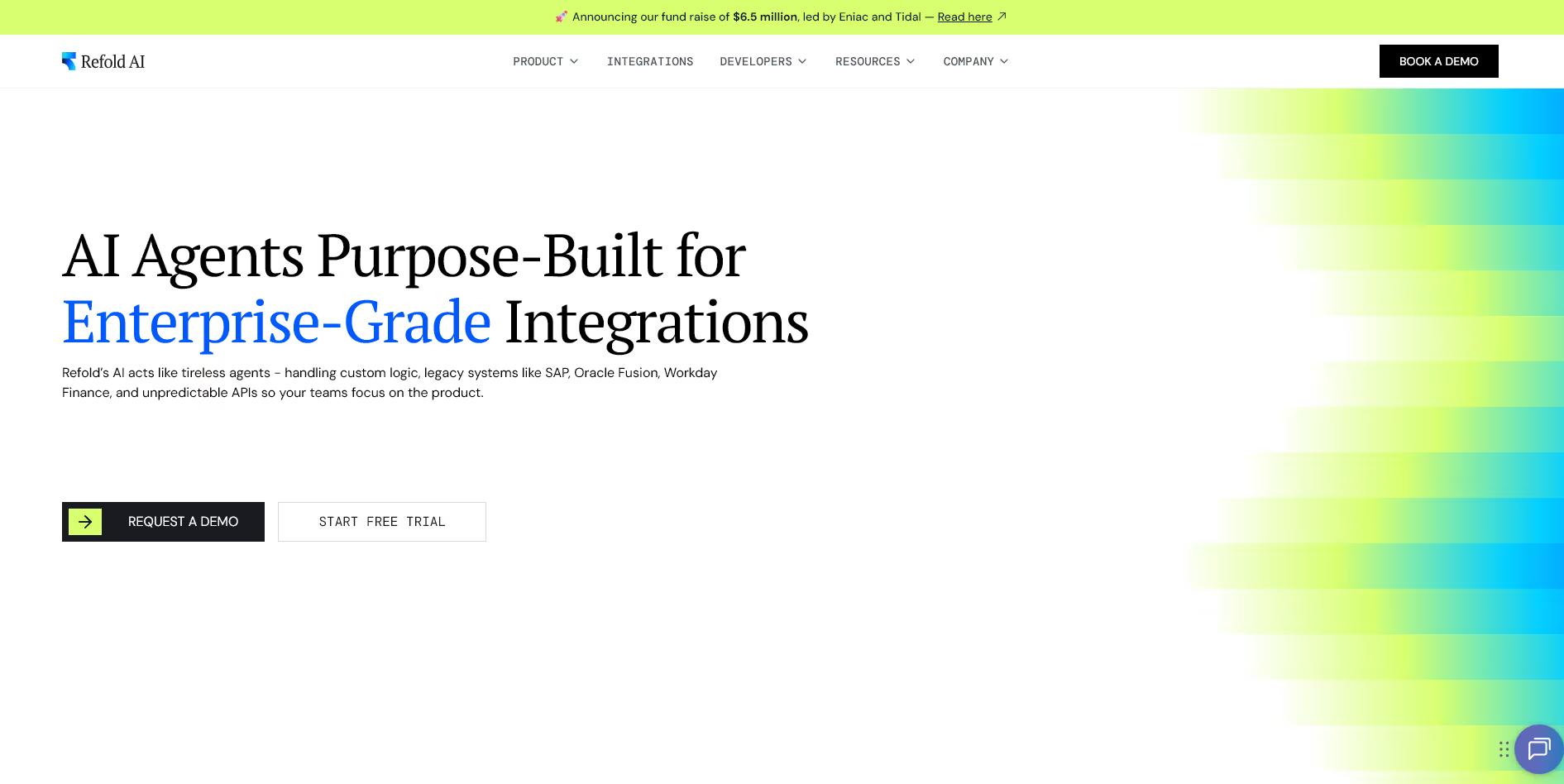
Refold AI is an AI-driven integration platform that uses autonomous agents to build, maintain, and adapt integrations across both modern and legacy enterprise systems. It focuses on reducing manual integration work for complex environments.
Key Features
- AI agents that automatically generate and maintain integration workflows
- Self-healing behavior that detects failures and adapts to API or schema changes
- Support for hybrid enterprise environments, including legacy ERPs, financial systems, and modern SaaS
- Flexible deployment options, including cloud, self-hosted, or customer-environment deployment
- Workflow orchestration with logging, auditing, version control, and testing tools
- Optimized for large-scale integration workloads and long-term reliability
Best suited for: Enterprise teams or software vendors that need to manage complex integrations across diverse systems and prefer an adaptive, AI-assisted approach rather than manual connector maintenance.
9. Paragon
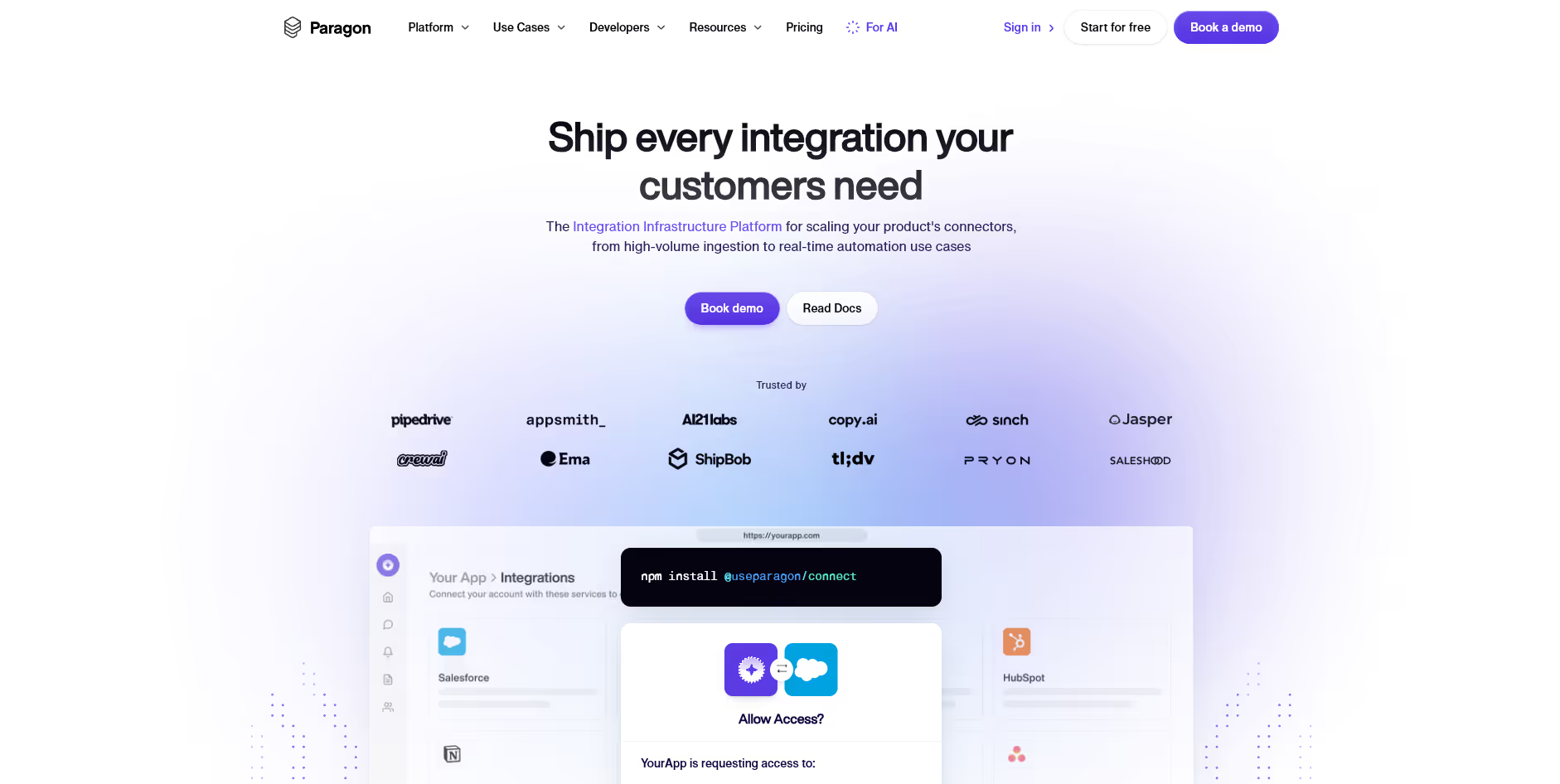
Paragon is an integration platform that helps SaaS and B2B products connect to third-party applications without building each integration from scratch. It provides a unified framework for authentication, connector logic, and data synchronization to reduce ongoing maintenance.
Key Features
- Large connector library covering many widely used SaaS tools, enabling quick integration coverage
- Handles authentication, token management, rate limiting, and other integration plumbing
- Offers UI components that let customers authorize integrations directly in your product
- Supports custom integration logic and data mappings when teams need more control
- Includes monitoring, logging, and error handling tools to maintain integration reliability
- Helps teams ship integrations faster by combining prebuilt connectors with flexible workflow support
Best suited for: SaaS products and B2B platforms that want to offer integrations as a core feature and prefer a managed approach to connector development and maintenance.
10. Zapier
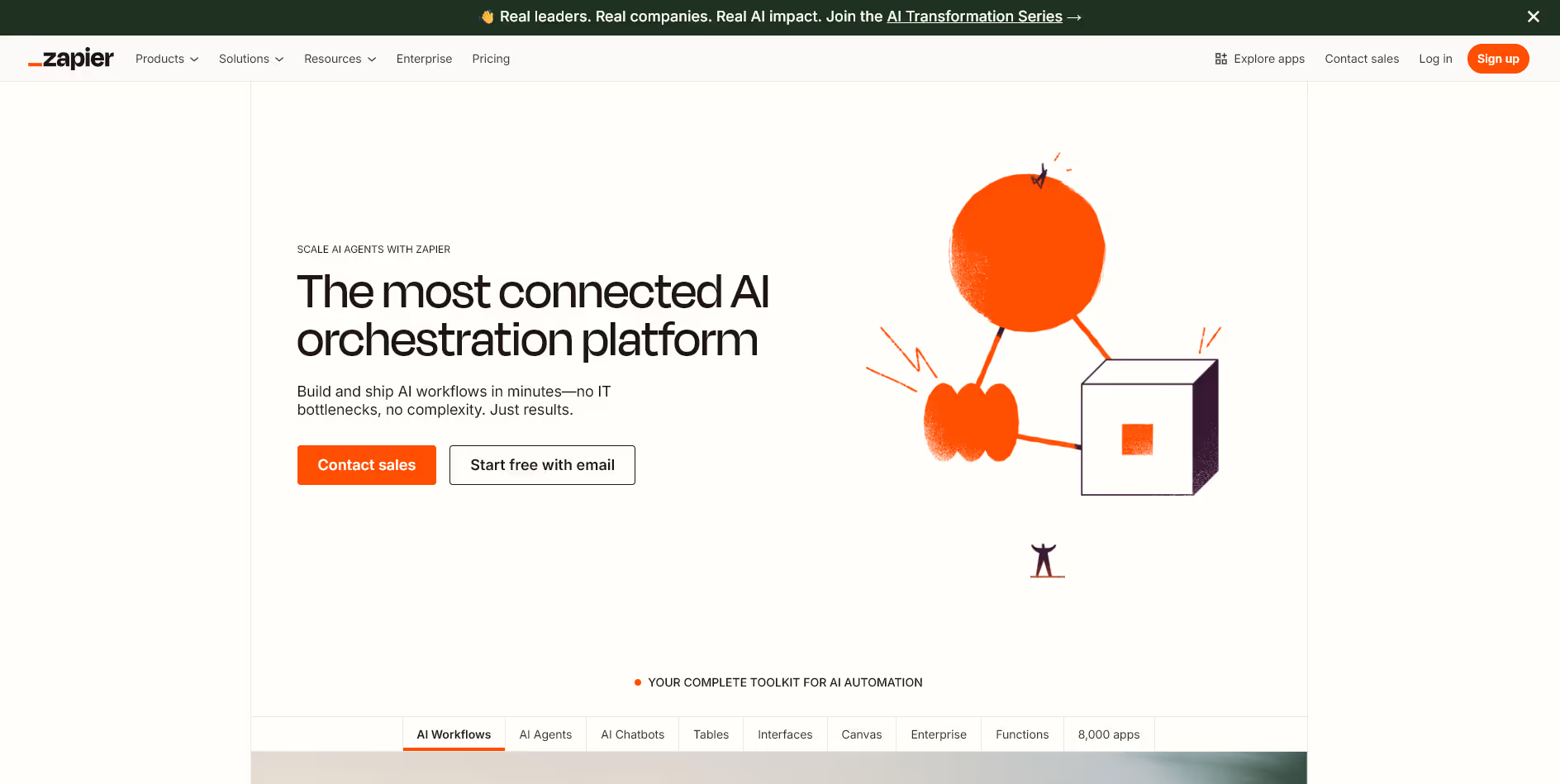
Zapier is an automation platform that connects thousands of SaaS applications through simple triggers and actions. It is designed for teams that want to automate workflows quickly without writing code and do not need deep domain-specific data models.
Key Features
- Large library of connectors across CRM, marketing, support, finance, HR, and other SaaS categories
- Automation builder that allows users to create multi-step workflows using triggers and actions
- No-code interface that enables non-technical users to set up integrations independently
- Support for webhooks, custom logic, and advanced filtering for more complex workflows
- Shared folders, team permissions, and usage monitoring for collaboration and governance
- Fast to deploy, making it suitable for lightweight integrations or quick workflow automation
Best suited for: Teams that need simple, non-technical automation between everyday SaaS tools. Works well for basic workflows, marketing ops, support ops, CRM updates, and general task automation where speed and ease of use matter more than deep system-level integrations.
Conclusion
Choosing a Unified alternative starts with understanding your real integration needs.
Broad automation platforms work well when you need quick connectivity across many SaaS tools. Unified APIs offer more structure when you want consistent data models. And domain-focused platforms shine when the data you rely on is complex or operationally sensitive.
Employment systems fall into that last category. HR, payroll, and ATS data require depth, accuracy, and predictable syncs.
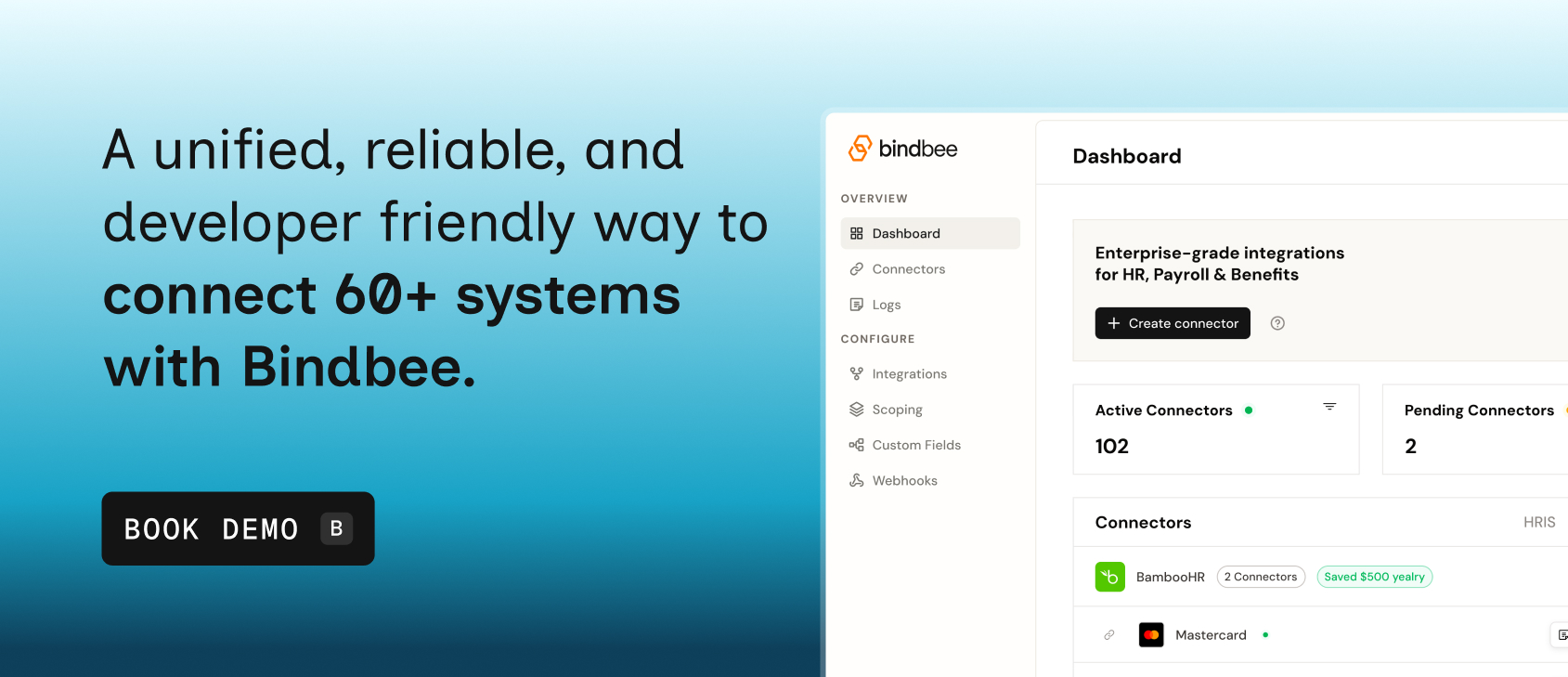
This is exactly what Bindbee is built for. Its vertical approach gives you cleaner employment data, faster integration setup, and more reliable workflows across HRIS, payroll, and recruiting tools.
Ready to simplify your HRIS and payroll integrations? Bindbee can help. Book your demo now!
FAQs
1. What makes a good alternative to Unified?
A good alternative provides the right balance of coverage, data depth, and maintenance effort for your specific product. Some tools prioritize breadth, while others specialize in structured models for complex domains like employment data.
2. How do horizontal and vertical unified APIs differ?
Horizontal APIs cover many software categories with lighter data models, while vertical APIs focus on a single domain and deliver deeper, more reliable structures. Employment systems usually require vertical depth because HR, payroll, and ATS data are highly structured and inconsistent across vendors.
3. Which tools are best for HR, payroll, and ATS data?
Bindbee, Finch, Kombo, and Merge are stronger fits for HR, payroll, and ATS data because they offer normalized employment objects and workflows that general-purpose platforms do not handle as well.
4. Does Bindbee work as a Unified alternative?
Yes. Bindbee works as a Unified alternative for teams that rely on accurate HRIS, payroll, ATS, benefits, or time-tracking data and want deeper employment-specific models.
5. How do I choose the right platform for my product?
Start by identifying which systems your customers use and how critical employment data is to your workflow. From there, choose the platform that matches the level of data depth, reliability, and long-term integration maintenance your product requires.