

A Guide to Using Employee APIs
Summarise the blog with AI
Managing employee data across multiple HR, payroll, and benefits systems is often more complicated than it seems. Organizations frequently deal with fragmented systems, inconsistent data formats, and delayed updates, which not only consume engineering resources but also create operational risk. In fact, 95% of IT leaders say integration challenges are holding back automation efforts, a clear signal that data connectivity is still a major blocker.
This is where employee APIs come in. By providing a unified way to access and sync employee data across systems, they reduce manual work, ensure data consistency, and allow teams to focus on higher-value tasks. With real-time access, automation of key HR workflows, and improved reporting, employee data APIs are quickly becoming essential for modern HR tech and benefits platforms.
In this guide, we’ll break down what an employee API really is, how it works, where challenges typically arise, and how you can adopt them effectively.
Key Takeaways:
- Employee APIs centralize employee data across HR, payroll, and benefits systems, reducing manual work, data inconsistencies, and operational risk.
- Multiple API types, including REST, SOAP, file-based, webhook, and unified APIs, support different data access patterns, system maturity levels, and automation needs.
- Employee APIs work by securely connecting to vendors, extracting and normalizing data, syncing changes in real time, and providing operational monitoring and error handling.
- Successful adoption requires addressing integration complexity, vendor changes, security and compliance risks, and applying best practices for reliability, visibility, and scalability.
What is an Employee API and Why It Matters?
An employee API is a set of programmable interfaces that lets you connect different software systems and exchange employee data easily. This includes information such as personal details, employment status, payroll records, time-off balances, benefits enrollments, and compensation data.
Here’s why it matters:
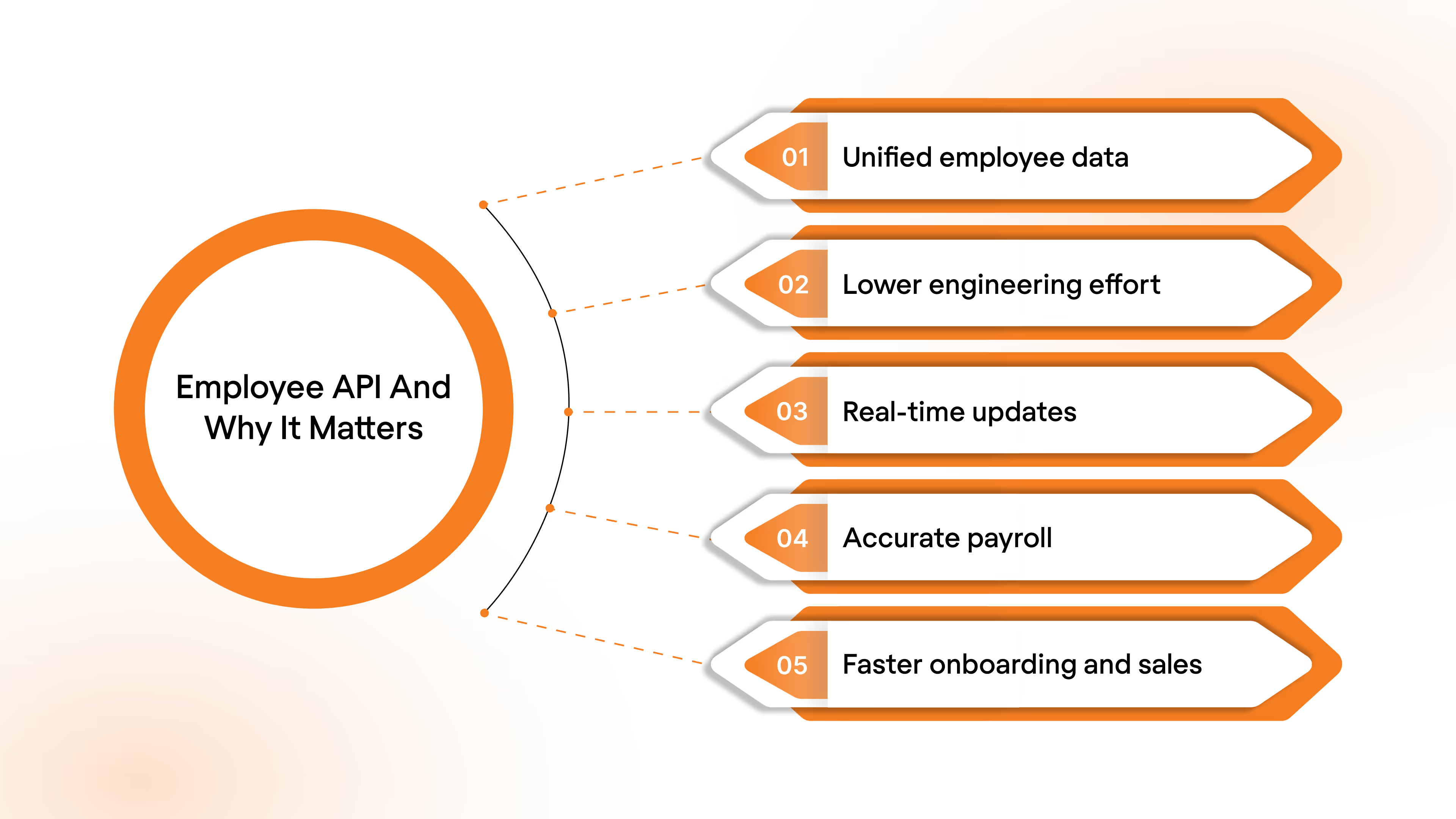
- Unified employee data: Keeps employee records consistent across HR, payroll, and benefits systems, reducing errors that impact payroll accuracy and compliance.
- Lower engineering effort: Removes the need to build and maintain one-off integrations, saving weeks of development and ongoing maintenance work.
- Real-time updates: Ensures employee changes sync quickly across systems instead of relying on delayed, manual, or batch processes.
- Accurate payroll and benefits workflows: Supports reliable deductions, contributions, and eligibility decisions using current employee data.
- Faster onboarding and sales: Helps you support required HRIS and payroll systems sooner, shortening onboarding timelines and preventing lost deals.
The goal of an Employee API is to provide you with a unified, structured, and standardized way to access the information across multiple HR and payroll platforms.
Also Read: Understanding the Role of APIs in Employee Benefits Administration
In the next section, let's explore the different types of employee APIs and when to use each.
Types of Employee APIs
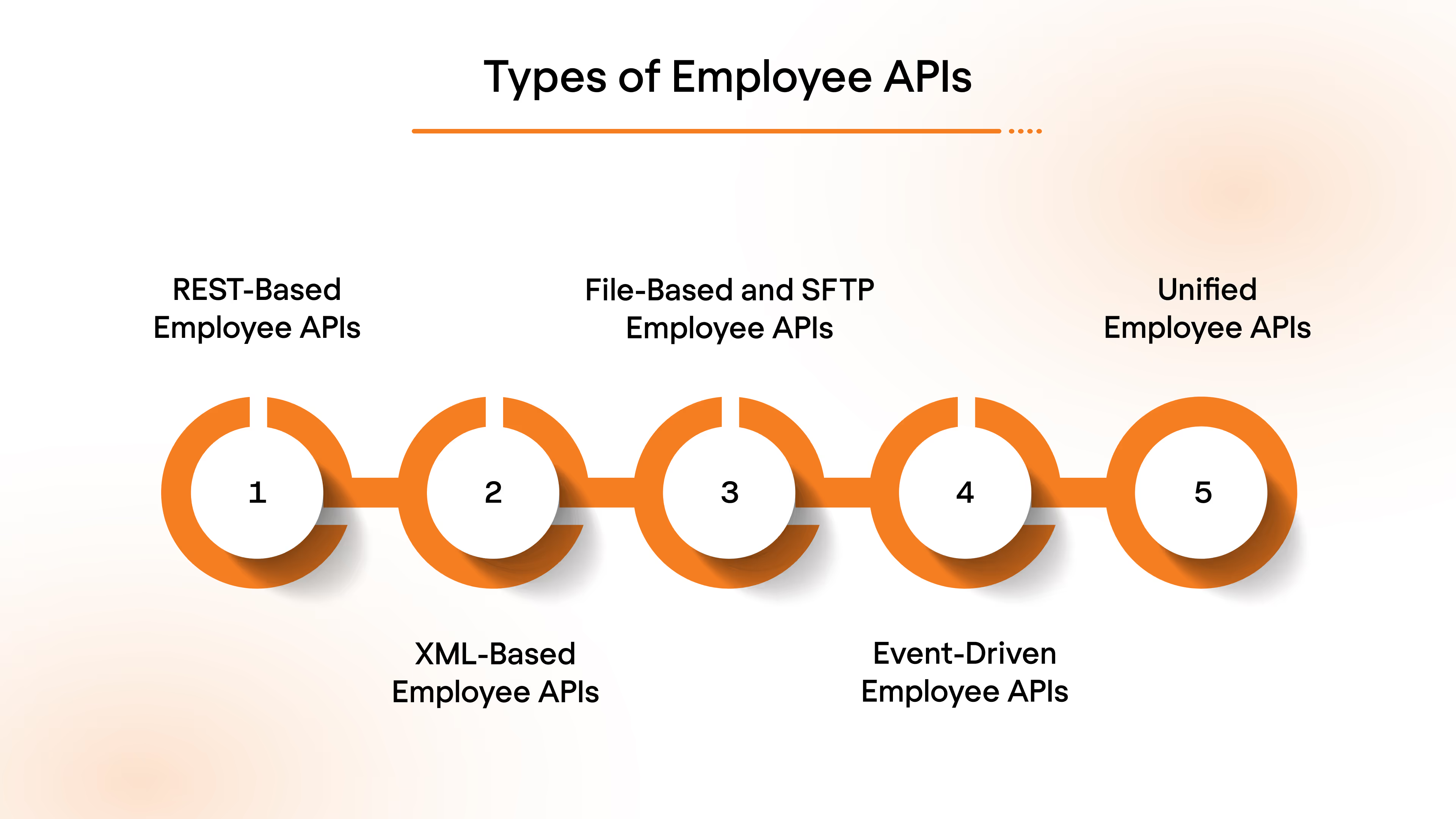
Employee APIs come in different forms depending on the depth of data access and integration patterns. Understanding the types helps you choose the right approach for your business needs.
1. REST-Based Employee APIs
REST APIs are the most common way modern HR and payroll systems expose employee data. They allow you to request structured employee information like profiles, job details, compensation, and time-off balances through predictable HTTP endpoints with JSON responses.
While REST APIs are developer-friendly, each HR or payroll vendor implements them differently. Field names, endpoint structures, pagination rules, and rate limits often vary, which increases your integration effort as you add more systems.
Ideal use-case scenario: When you need on-demand access to employee data from modern HRIS or payroll platforms.
Example: Fetching active employee records from BambooHR or Rippling via REST endpoints.
2. SOAP and XML-Based Employee APIs
Some enterprise and long-standing HR and payroll platforms still rely on SOAP or XML-based APIs.These APIs are more rigid, verbose, and harder to work with compared to REST, often requiring additional parsing, transformation, and error handling logic.
Despite their limitations, SOAP APIs remain vital for companies supporting large employers or legacy payroll providers. Ignoring them can block your access to high-value customers.
Ideal use-case scenario: When you must integrate with older enterprise payroll or HR systems that have not modernized their APIs.
Example: Pulling employee job and payroll data from an older enterprise payroll system using SOAP requests.
3. File-Based and SFTP Employee APIs
Not all employee data flows through real-time APIs. Many payroll and benefits vendors still rely on scheduled file exchanges delivered over SFTP, often in CSV or fixed-width formats. These files usually represent batch snapshots of employee data.
These file-based integrations introduce delays and operational risk, but you may not be able to avoid them in certain payroll and benefits workflows. A robust employee data API can abstract these file transfers into normalized data models, so you don’t have to manage file logic directly.
Ideal use-case scenario: When dealing with payroll vendors or benefits providers that only support batch-based data exchange.
Example: Receiving a nightly payroll deduction file over SFTP from a legacy payroll provider.
4. Webhook and Event-Driven Employee APIs
Webhook-based employee APIs push data changes to your system in real time instead of requiring constant polling. When an employee is hired, terminated, or updated, an event is triggered immediately.
This approach improves data freshness and reduces synchronization lag, which helps you maintain payroll accuracy, benefits eligibility, and workforce scheduling.
Ideal use-case scenario: When real-time updates are required for mission-critical workflows.
Example: Receiving instant notifications when an employee’s employment status changes in Workday.
5. Unified Employee APIs
Unified employee APIs abstract all vendor-specific complexity behind a single, normalized interface. Instead of integrating separately with dozens of HRIS and payroll systems, you integrate once and access standardized employee data models across all supported vendors.
This approach reduces engineering time, lowers maintenance costs, and gives your product and operations teams consistent, reliable access to employee data without vendor-specific logic.
Ideal use-case scenario: When your product must support many HR and payroll systems without scaling integration overhead.
Example: Using one unified API to sync employee, payroll, and time-off data across ADP, Gusto, Workday, and Paychex.
Selecting the right API type depends on the systems you use, the complexity of your HR workflows, and the level of automation you need. Modern platforms increasingly rely on RESTful and vertical-specific APIs to support flexibility, scalability, and real-time synchronization.
Next, let’s break down how these APIs operate in practice to keep your systems connected and data accurate.
How Employee APIs Work?
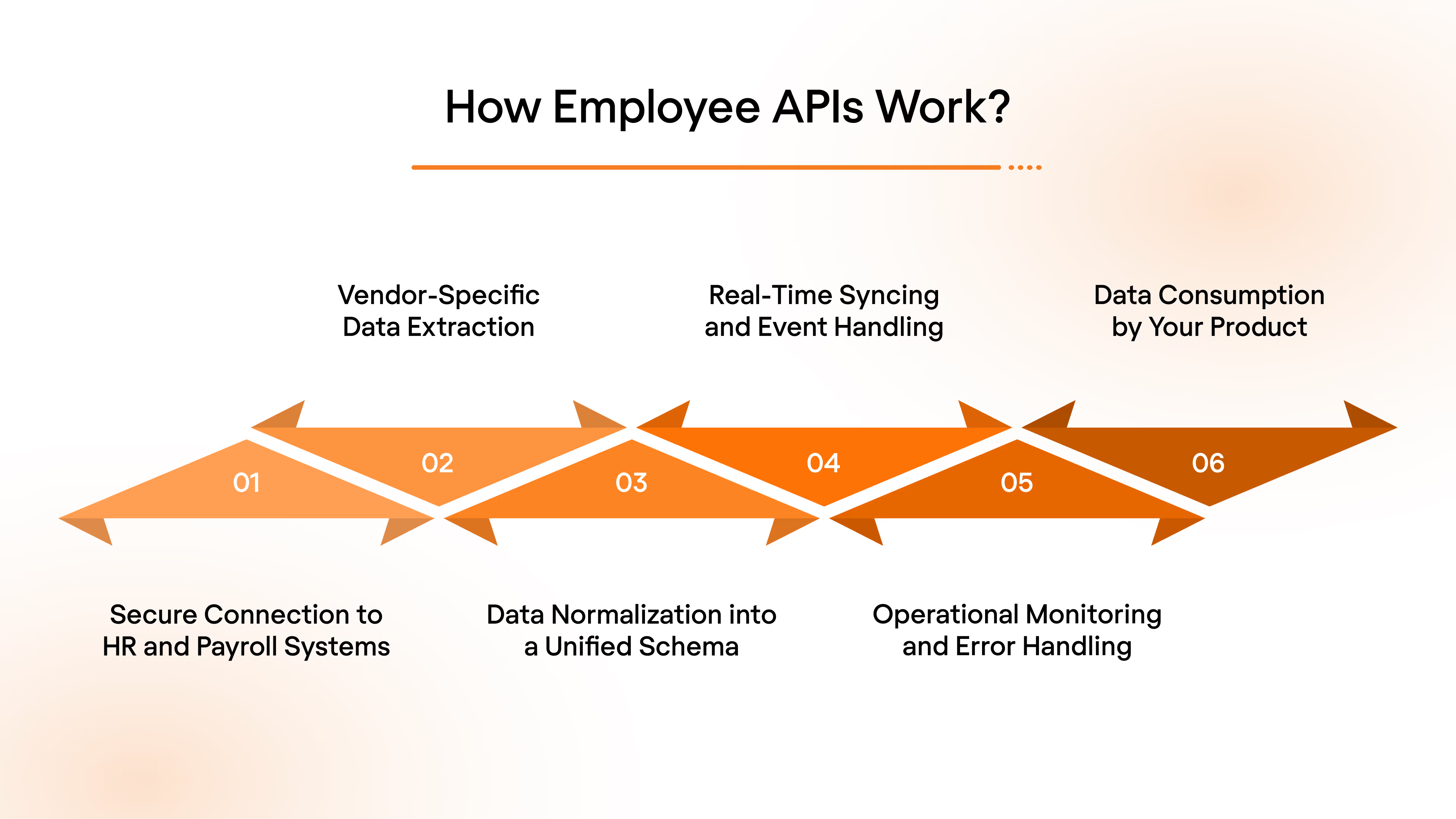
Employee APIs act as the connective tissue between HR systems, payroll platforms, and downstream applications. Instead of every system talking to each vendor differently, the API creates a consistent, predictable way to access and sync employee data.
Below is how the process typically works in practice.
Step 1: Secure Connection to HR and Payroll Systems
Employee APIs first connect securely to each HRIS, payroll, or benefits provider you use. Authentication usually happens through OAuth or secure magic-link flows, which give you scoped access without exposing sensitive credentials. This setup allows you to connect systems quickly while still meeting strict security requirements.
Step 2: Vendor-Specific Data Extraction
Once connected, the API actively pulls employee data from each system in its native format. This can include employee profiles, employment status, compensation details, deductions, time-off balances, and payroll runs. Because every vendor structures data differently, you often see complexity emerge here if handled in-house.
Step 3: Data Normalization into a Unified Schema
The extracted data is then transformed into a standardized model that you can rely on. A strong employee data API maps vendor-specific fields into consistent entities like employee, employment, compensation, payroll run, time off, and dependents. This normalization is critical because it allows your product to work the same way regardless of which HR or payroll system your customers use.
Step 4: Real-Time Syncing and Event Handling
Employee APIs keep your systems up to date using real-time webhooks and scheduled polling where required. When an employee changes roles, updates personal information, or enrolls in benefits, you see those changes immediately reflected downstream. This reduces delays that often cause payroll errors, missed contributions, or incorrect benefits coverage.
Step 5: Operational Monitoring and Error Handling
Modern employee APIs provide you with operational visibility by tracking data flow health. Dashboards show you failed syncs, affected customers, and retry attempts. Automated retries and self-healing workflows resolve many issues without manual intervention, which prevents small errors from turning into support escalations.
Step 6: Data Consumption by Your Product
Finally, your application consumes the normalized data through clean API endpoints. Your product, payroll, and benefits workflows can rely on consistent data without managing vendor-specific logic. This makes it easier for you to launch new features, onboard employers faster, and support enterprise customers without increasing engineering overhead.
By standardizing models, using event-driven updates, and providing robust developer tooling, employee APIs help you manage workforce data accurately, securely, and at scale.
Suggested Read: Pulling Employee Data from BambooHR API: Complete Guide
In the following section, let’s discuss where integration challenges and risks can arise.
5 Hidden Bottlenecks in Employee API Integrations
While employee APIs offer clear advantages, you may still face challenges during implementation. Being aware of these hurdles ensures smoother adoption and long-term success.
- Integration Complexity: Different HRIS, payroll, and benefits platforms have unique schemas, authentication methods, and data structures. Complex integrations can take months to implement if you attempt to build point-to-point connections internally.
- Vendor API Changes: APIs evolve over time. Vendors may update endpoints, change authentication protocols, or introduce new fields. Without continuous monitoring, you risk broken integrations, data inconsistencies, and higher operational overhead.
- Security and Compliance Risks: Employee data is sensitive, and you must comply with HIPAA, GDPR, and other regulations. Building secure integrations in-house requires expertise in encryption, access control, and audit logging. Failure to implement robust security measures can lead to regulatory violations and reputational damage.
- Operational Overhead: Monitoring integrations, managing failed syncs, reconciling data mismatches, and troubleshooting errors often fall on your internal teams. This pulls engineering and operations away from strategic work, slows product development, and increases support workload.
- Time-to-Market Pressure: In HR Tech and benefits platforms, your ability to support specific vendor integrations can directly affect sales outcomes. Prospects may require compatibility with their HRIS or payroll system before signing a contract. Delays in integration can result in lost deals.
Recognizing these challenges upfront allows you to plan for prebuilt connectors, operational tooling, and support workflows, which reduces risk and helps you bring integrations to market faster.
Next, let’s examine best practices that ensure reliable and scalable integrations.
Best Practices for Using Employee APIs
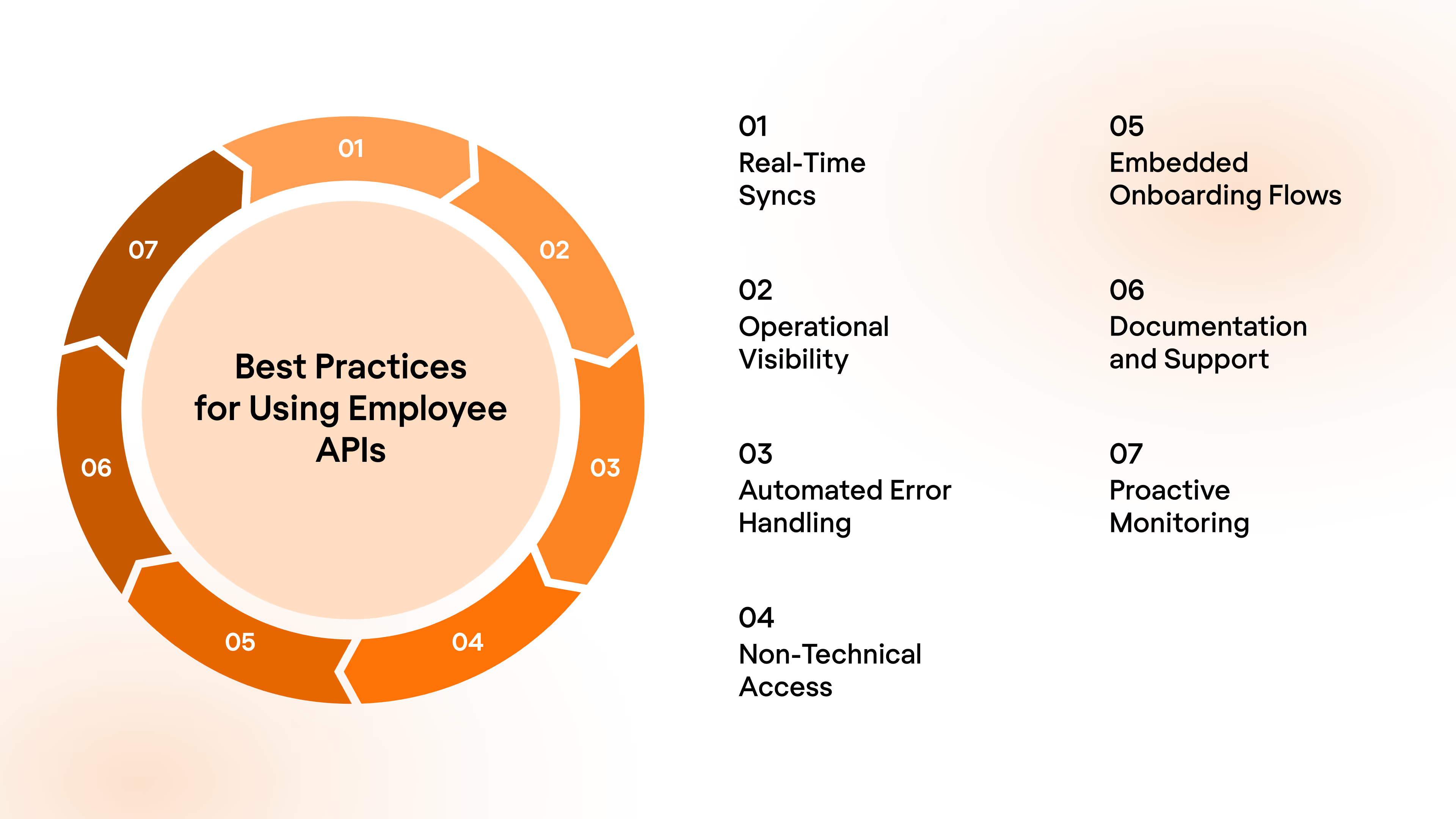
To maximize the value of an Employee API, below are some practices that you can adopt to reduce breakage, improve accuracy, and keep teams focused on outcomes instead of firefighting integrations.
- Real-Time Syncs: Ensure updates to employee status, compensation, and deductions are reflected immediately to prevent errors and delays.
- Operational Visibility: Use dashboards and alerts to monitor sync failures, delays, and affected users for quicker issue resolution.
- Automated Error Handling: Implement retries and self-healing to manage transient failures and reduce manual intervention.
- Non-Technical Access: Provide clear status indicators and logs so operations and support teams can handle issues without developer help.
- Embedded Onboarding Flows: Use SDKs and magic-link authentication to let customers connect HR/payroll systems quickly and easily.
- Documentation and Support: Provide clear API docs, code samples, and developer tools to accelerate implementation and troubleshooting.
- Proactive Monitoring: Set up alerts for anomalies, mismatched data, or failed contributions to catch issues before they impact employees.
Following best practices ensures your employee data API implementation delivers maximum efficiency, accuracy, and scalability.
How Bindbee Can Simplify Employee API Integrations?
Bindbee is designed specifically to remove the complexity and operational burden of connecting HR, payroll, and benefits systems. By providing a vertical-first employee data API, it allows organizations to integrate once and access multiple platforms reliably.
Here’s how we can help you:
- Prebuilt Connectors to 50+ Platforms: Bindbee comes with ready-made integrations for major HRIS, ATS, and payroll systems, including Workday, ADP Workforce Now, Gusto, Rippling, BambooHR, and more. These connectors reduce engineering effort from months to days while supporting deep data models for employees, payroll, benefits, time-off, and compensation.
- Unified, Deep Data Models: Every integration exposes a standardized schema across ~16–17 key models, such as employee, payroll run, pay_group, time-off balance, and dependents. This ensures consistent, reliable data across all systems and removes the need to build custom mappings for each vendor.
- Embedded Connection Flows: With Bindbee’s white-label SDK and magic-link authentication, clients can embed HR/payroll connection flows directly into their platforms. Employers can connect systems in minutes, improving onboarding speed and supporting faster sales cycles.
- Real-Time Syncs and Operational Tooling: Bindbee provides event-driven updates, automated retries, dashboards, and self-healing mechanisms. Support and operations teams gain visibility into issues without writing code, minimizing downtime and reducing operational risk.
- Compliance and Security by Design: With SOC 2 and ISO 27001 indicators, U.S.-first hosting, GDPR readiness, HIPAA support, and standard contractual documentation (DPA, BAA, MSA), Bindbee ensures that sensitive data is protected and regulatory obligations are met.
- Specialized Workflows for Benefits and Retirement: Bindbee goes beyond basic HR data syncing. For benefits platforms, it automates payroll deductions, enrollment, and dependent eligibility. For 401(k) and retirement providers, it ensures accurate contributions, demographic updates, and sponsor onboarding automation.
By centralizing these capabilities, Bindbee makes Employee API integrations faster, safer, and more reliable, allowing your teams to focus on delivering value rather than maintaining connectors.
Wrapping Up
Employee APIs have become essential tools for HR Tech and benefits companies looking to streamline operations, improve data accuracy, and enhance the employee experience. By automating data syncs, standardizing models, and enabling real-time access to employee information, these APIs allow teams to focus on product innovation rather than repetitive maintenance tasks.
For organizations that rely on multiple HR and payroll systems, solutions like Bindbee make this process faster and more reliable by providing prebuilt connectors, embeddable integration flows, operational dashboards, and compliance-first design.
Book a demo with us today to see how your HR Tech or benefits platform can connect to multiple systems effortlessly, securely, and in real time.
FAQs
1. How do Employee APIs differ from traditional HR databases?
Employee APIs provide real-time, system-to-system data exchange, enabling applications to sync employee information automatically. Traditional HR databases store data in silos and often rely on manual exports or batch updates, making them slower, less flexible, and harder to integrate across platforms.
2. Which authentication methods are recommended for securing Employee APIs?
OAuth 2.0 is the most widely recommended method, as it supports token-based access and granular permission control. Other secure options include API keys combined with IP whitelisting, JWT-based authentication, and mutual TLS for high-sensitivity employee data environments.
3. How do you test Employee APIs before deploying them in production?
Testing typically includes validating endpoints with tools like Postman, checking authentication and authorization flows, and simulating real-world data scenarios. Teams also run load testing, error handling checks, and sandbox testing to ensure stability, accuracy, and performance under expected usage.
4. What are common use cases for Employee APIs in workforce analytics?
Employee APIs support workforce analytics by feeding real-time employee data into BI tools. Common use cases include headcount tracking, attrition analysis, performance trend monitoring, skills gap analysis, and linking HR data with finance or productivity systems.
5. How do you troubleshoot common issues like 401 unauthorized errors in Employee APIs?
401 errors usually indicate authentication failures. Troubleshooting involves checking token expiration, validating client credentials, confirming required scopes or permissions, and ensuring headers are correctly formatted. Reviewing API logs and retrying requests with refreshed tokens often resolves the issue.